


Share this Article


Whether it’s tackling tougher terrain or simply adding stability, non-motorised attachments are generally simpler to maintain and can be more budget-friendly than their powered counterparts. From front-end hand-cycle conversions to specialised push-rims, these products are designed to complement your current wheelchair. Below, we’ll look at four main categories explain how they work.
Breakdown of non-motorised attachments
- Hand-cycle (front-end) attachments
- Free-wheel & all-terrain front attachments
- Anti-tip & stabiliser bars
- Push-rim & grip modifications
1. Hand-cycle (front-end) attachments
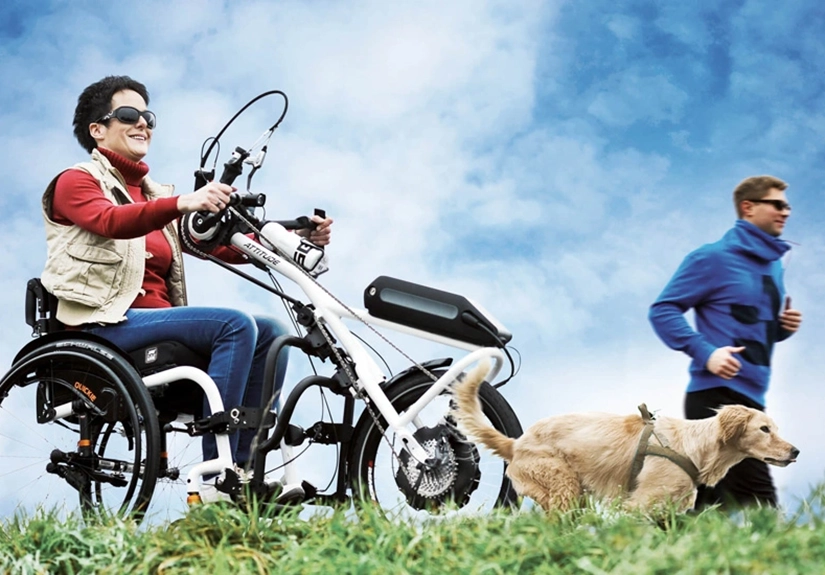
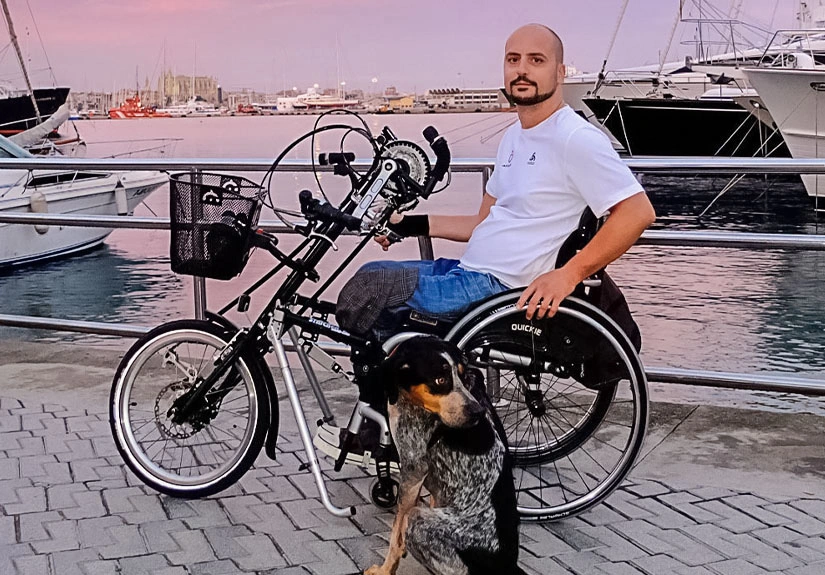
What they are: Handcycle attachments take over from you wheelchair’s front casters with a hand-pedalled wheel, effectively transforming your chair into a small hand-driven cycle.
How they benefit you:
- Ideal for staying active and building upper-body strength.
- Offers speed and freedom on smooth roads or paths.
- Easily detached so you can revert to using your wheelchair as normal.
Models you might see:
- Quickie Attitude Manual – A clamp-on system with a lightweight build.
- Stricker Handbikes (Manual Series) – Known for adjustable gearing and user-friendly mounting.
Possible Issues:
- Can be very large and awkward to transport in vehicles.
- Hand-bike attachments while excellent for fitness, do require reasonable upper body strength.
2. Free-wheel & all-terrain front attachments
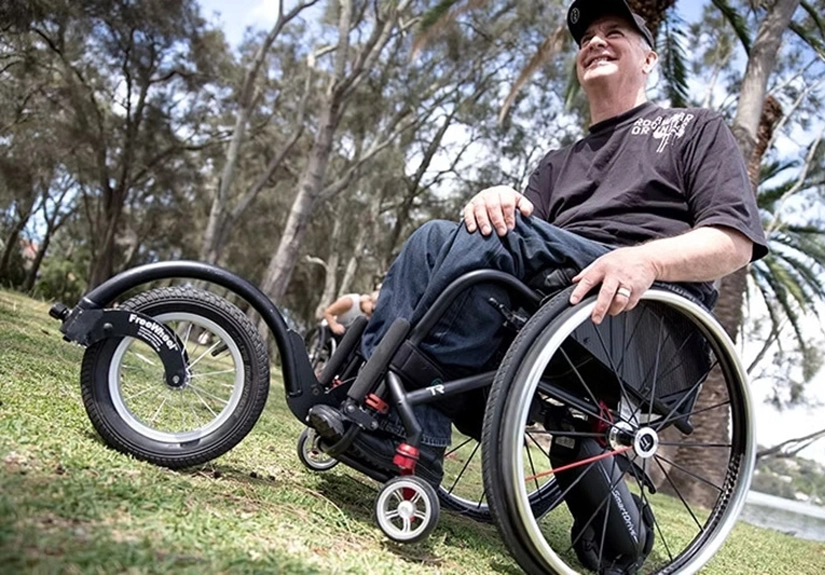
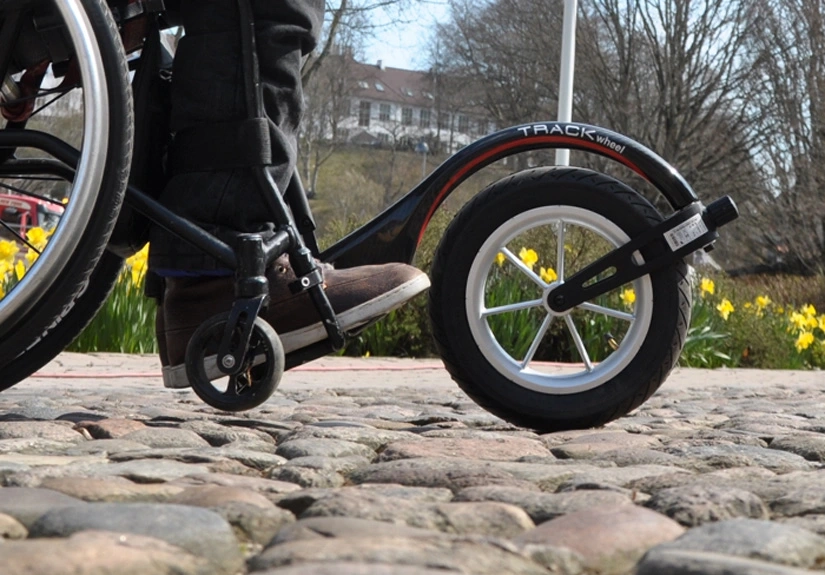
What they are: A single, large front wheel or specialised caster replacements that elevate your small casters off the ground, making it easier to roll over uneven surfaces. These usually clamp to your footplate or the front bars of your chair.
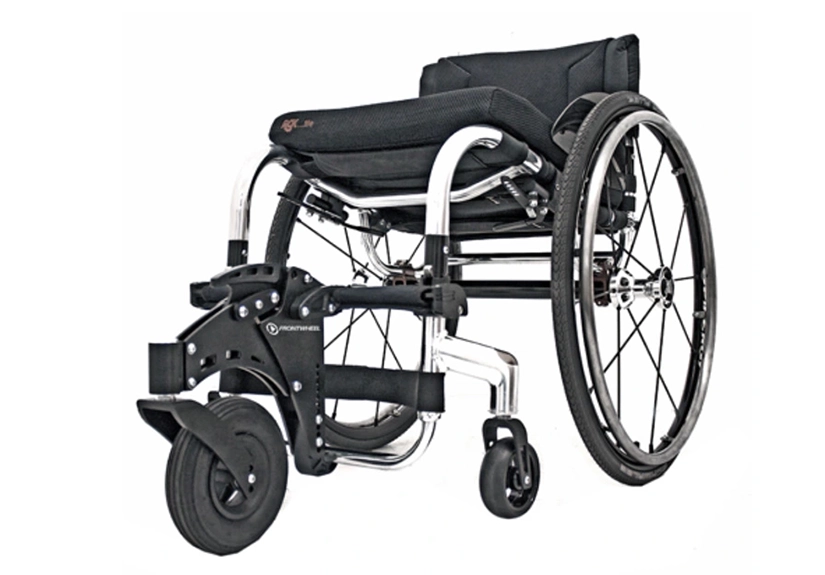
How they benefit you:
- Reduces the chance of front casters getting stuck on bumps, gravel, or grass.
- Adds flexibility for rough or outdoor environments.
- Usually easy to attach and remove but depends on the type of footplate or wheelchair you have.
Models you might see:
- FreeWheel – A popular, widely recognised choice for off-road mobility.
- RGK Front Wheel – An alternative on the FreeWHeel and attaches to the front bars of your chair which might offer more stability.
- Track Wheel – A double-arm alternative that’s a mix between the FreeWheel and FrontWheel.
Possible issues:
- The FreeWheel clamps to your footrest and works very well but can be tricky with non-standard footplates.
- Sometimes takes a bit of tweaking to make sure the setup is stable and your front casters are raised off the ground enough.
- May not fit onto all chairs well like manufacturers claims.
3. Anti-tip & stabiliser bars
What they are: Small bars or extensions attached to the back (or sometimes front) of the chair to reduce the risk of tipping.
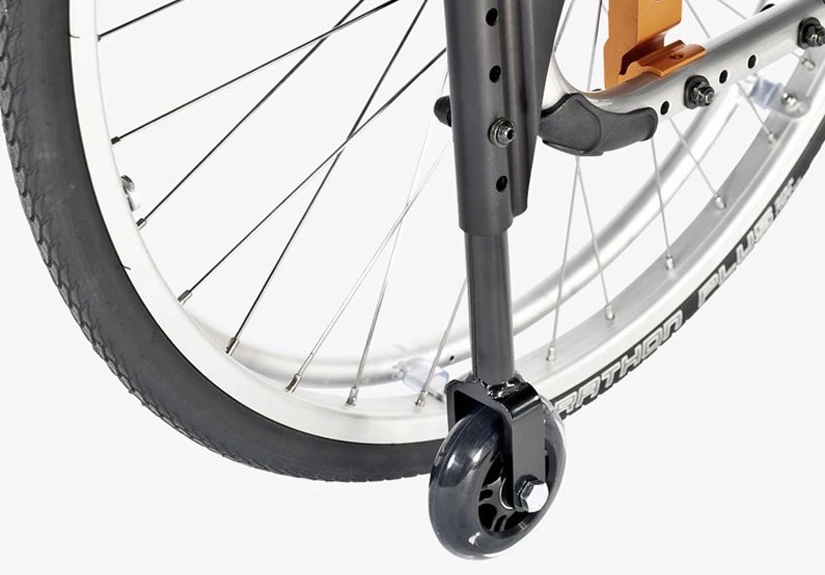
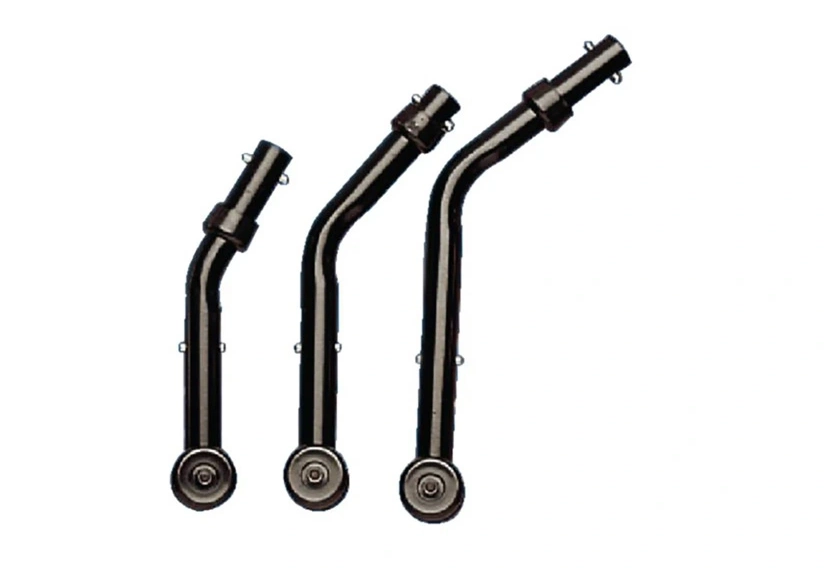
How they benefit you:
- Offers added security on ramps or while transferring.
- Helps you feel more confident over uneven ground.
- Often adjustable to match your chair’s angle and height.
Models you might see:
- Quickie anti-tip device – Compatible with many Quickie chairs and adaptable for others.
- Invacare rear anti-tippers – Standard stabiliser arms with adjustable height settings.
Possible issues:
- Can impeded chair operation if not fitted correctly.
- may not provide a strong enough support as they are detachable.
4. Push-rim & grip modifications
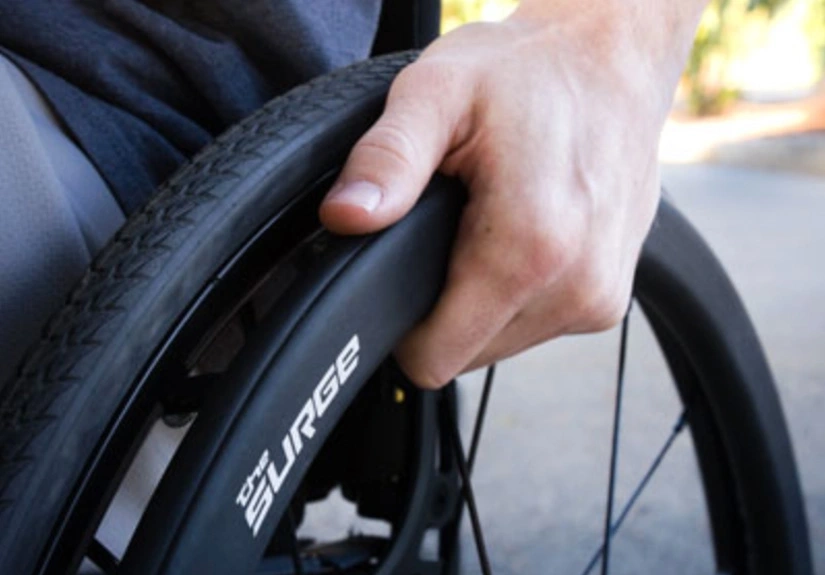
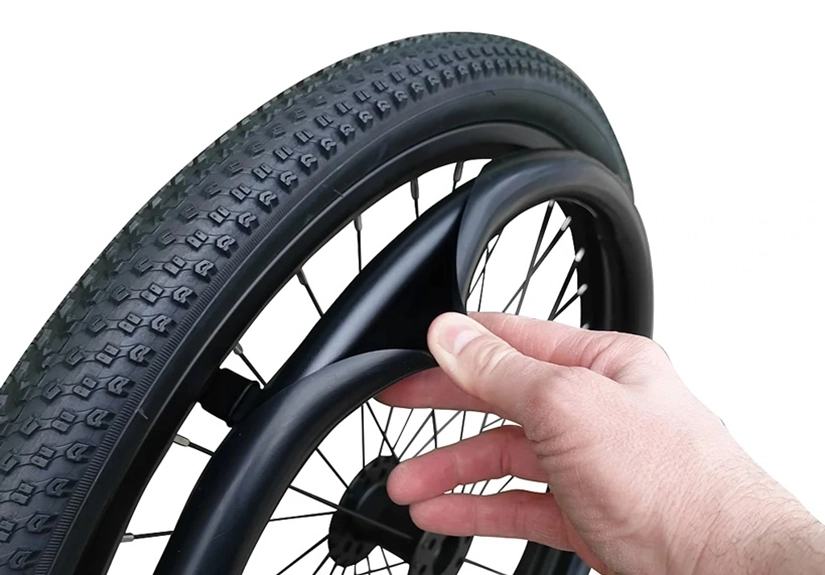
What they are: Enhanced push-rims or grip coatings that improve traction for your hands on the wheel rims.
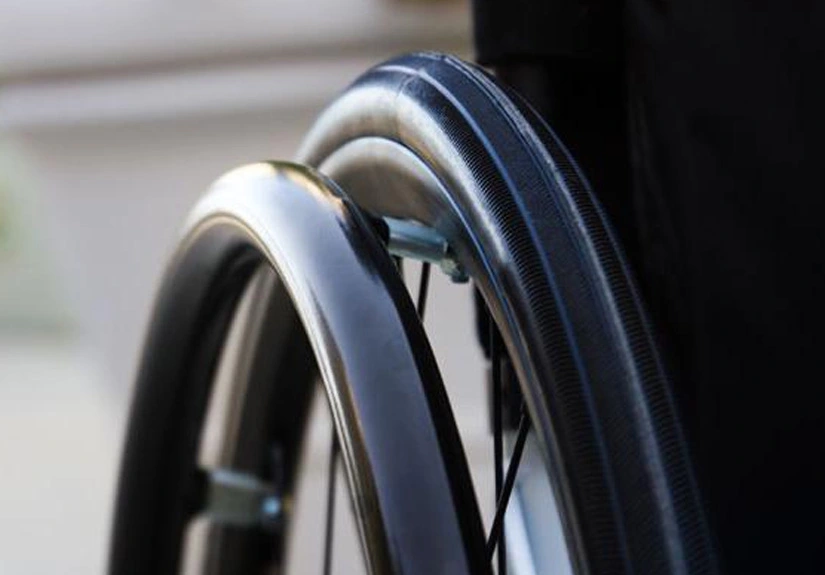
How they benefit you:
- Makes pushing less strenuous, especially in wet conditions.
- Can reduce hand and wrist fatigue with added grip or ergonomic shapes.
- Typically a simpler, lower-cost upgrade.
Models you might see:
- Surge push rims – Rubberised top-strip on an oval push-rim for stronger drive and better grip.
- Q-Grip – Coated rims noted for lasting traction.
- PushGrip – Ultra Grip rim covers.
Possible issues:
- Can be harsh on your hands and may cause blistering if not used to pushing.
- Can lose grip or effectiveness over time/wear and tear.
- Surge rims are very popular but are particularly expensive.
Conclusion
When selecting a non-motorised attachment, consider how you use your chair and what you want to achieve. If you’re an avid explorer looking for a workout, a hand-cycle attachment might be just the ticket.
On the other hand, if you mainly need some extra help on uneven surfaces or want to minimise tipping risk, anti-tip bars or all-terrain wheels could be your best bet. Push-rim modifications are great if you’re after just a small bit of extra assistance.
Above all, it’s worth checking in with a professional like an occupational therapist to ensure compatibility with your specific wheelchair and to get advice tailored to your needs. With the right attachment, you’ll find it easier to travel, exercise, and go about your day in the way that suits you best.
Image credits:
Freewheel
Invacare
PushGrip
Stricket Handbikes
Sunrise Medical
Rehasense
RGK Wheelchairs