


Share this Article


These devices can give you the extra drive needed on inclines or longer journeys, though it’s important to consider transport and battery specifications.
Breakdown of motorised attachments
- Power Attachments (Front)
- Hybrid Attachments (Front)
- Rear Power Attachments
1. Power Attachments (Front)
What they are:
Power attachments are motorised devices that mount on the front of your wheelchair. They offer extra propulsion through a range of attachment methods—be it clamp‐on systems or under‐seat fittings—designed to attach securely to your chair.
These devices can give you the extra drive needed on inclines or longer journeys, though it’s important to consider transport and battery specifications.
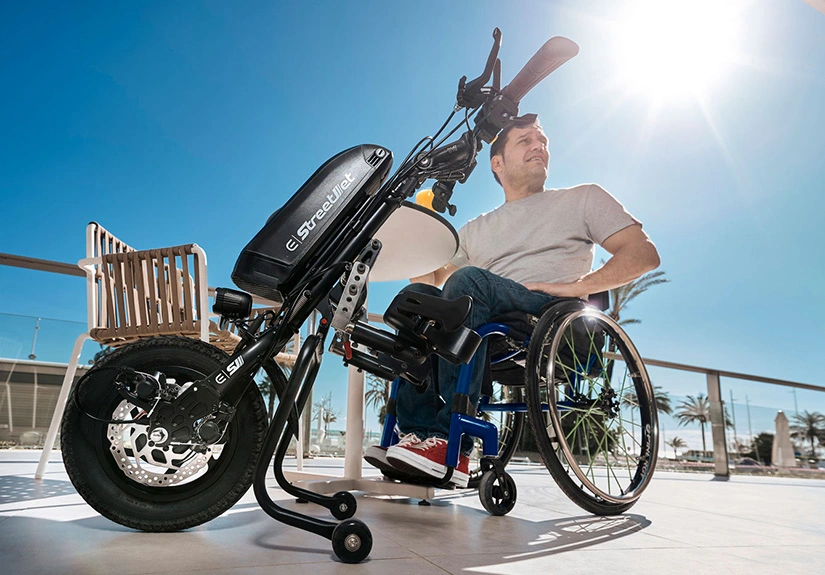
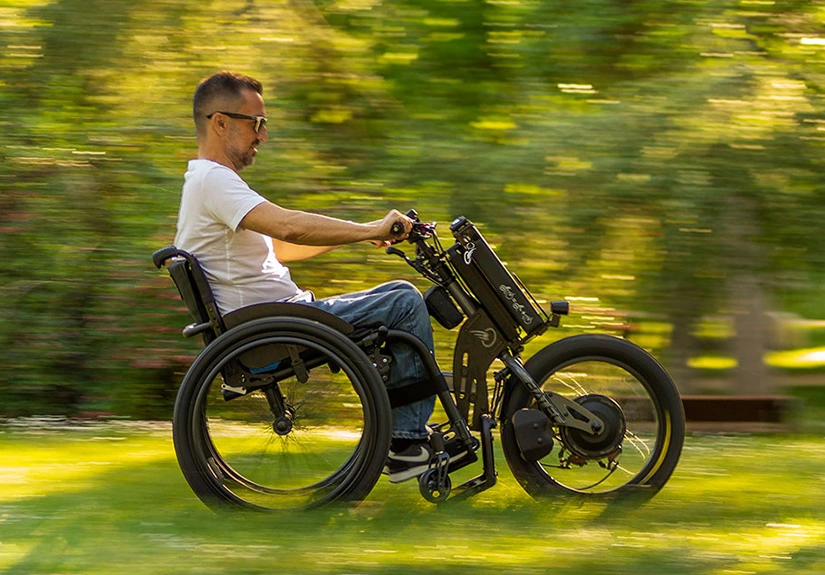
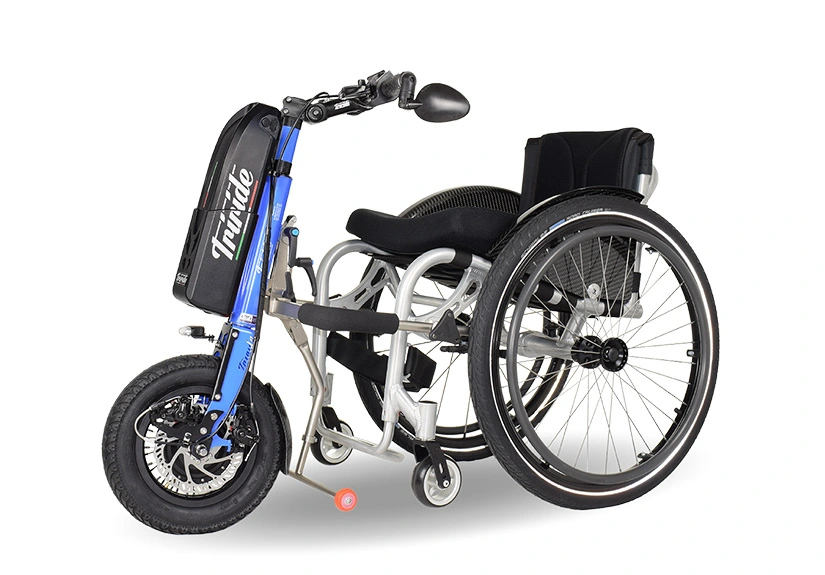
How they benefit you:
- Provide an extra burst of power for challenging terrain and extended journeys.
- Can be easily detached when you wish to revert to manual propulsion.
- Enhance overall independence and reduce fatigue on long trips.
Models you might see:
- RGK Streetjet: Renowned for its dynamic design and power efficiency.
- Batec Scrambler 2: Engineered to handle tougher terrains with reliable mounting options.
- Triride Light: Offers a lightweight solution that doesn’t add significant bulk, making it easier to transport.
Possible issues:
- Ensure that weight is considered carefully. Some models are bulkier and heavier than others so lifting and transport can be an issue.
- Battery sizes must be checked if you are planning to fly. Batteries must be under 300Wh for aviation clearance.
- Increased power assistance may require additional maintenance and periodic professional checks.
2. Hybrid Attachments (Front)
What they are:
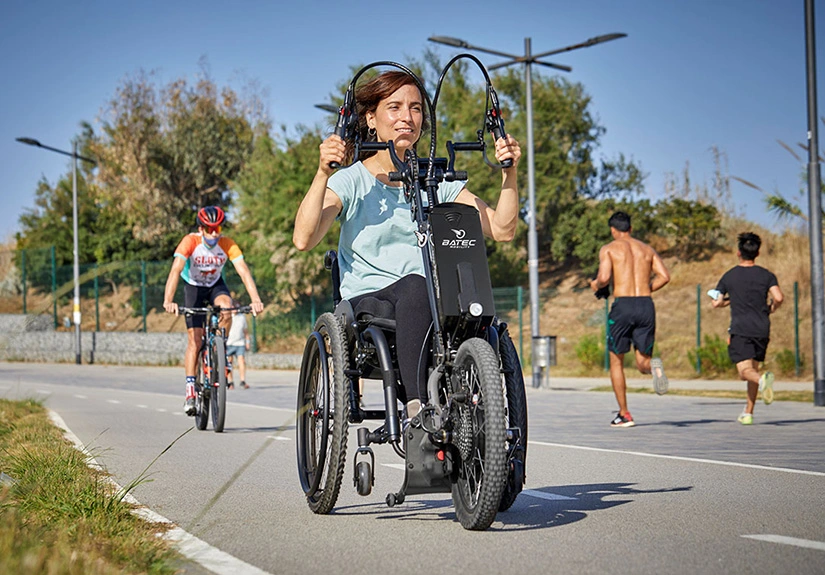
Hybrid attachments combine the benefits of manual hand‐cycling with motorised assistance. This approach means you can use the device as a hand cycle for exercise while engaging the power drive when extra propulsion is needed.
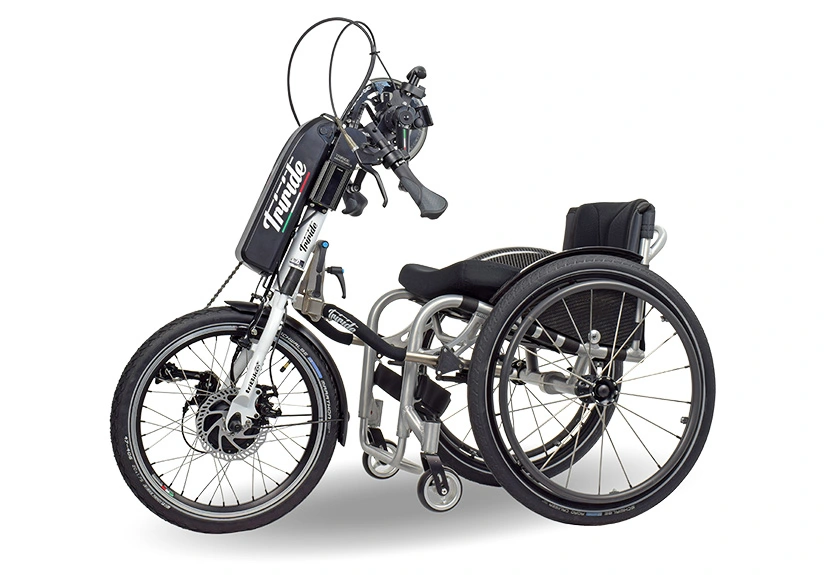
How they benefit you:
- Offers the flexibility to choose between a workout and motorised assistance.
- Provides a balanced blend of exercise and convenience, catering to varied mobility needs.
- Ideal for those who want to maintain upper-body strength without compromising on power when tackling challenging routes.
Models you might see:
- Tribike E Hybrid: Enables a seamless switch between manual and powered modes, suitable for diverse terrains.
- Batec Hybrid 2: Ensures a smooth transition from hand-cycling to motor assistance, ideal for both urban and off-road adventures.
Possible issues:
- Hybrid models are generally heavier than purely manual attachments.
- Battery capacity and overall weight need careful evaluation.
- Professional fitting might be required to optimise performance and ensure safety.
3. Rear Power Attachments
What they are:
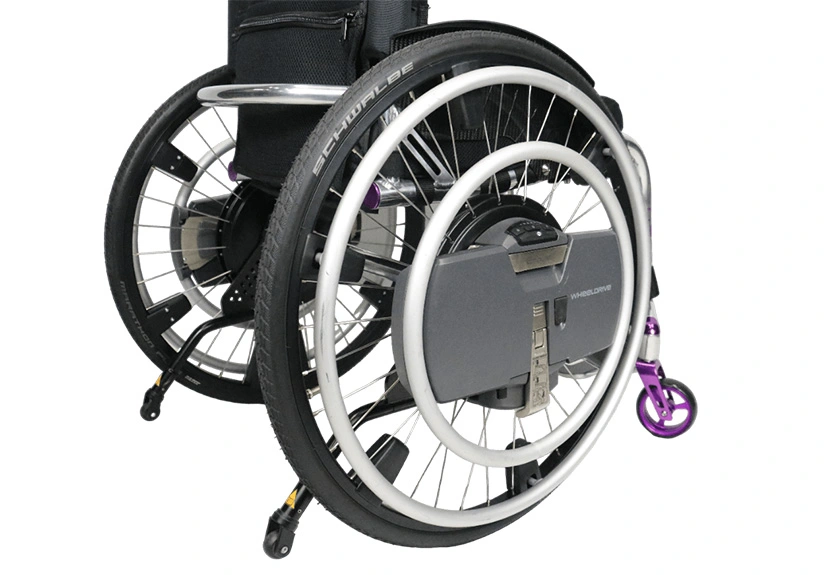
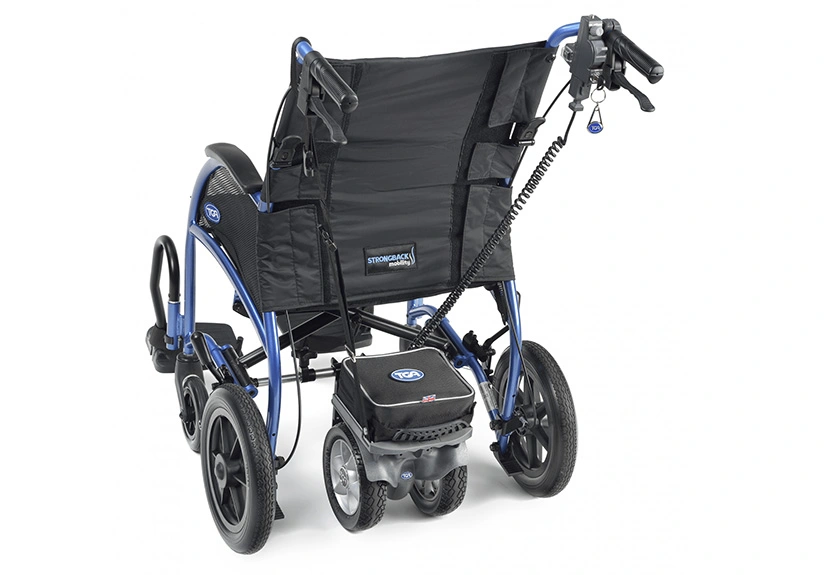
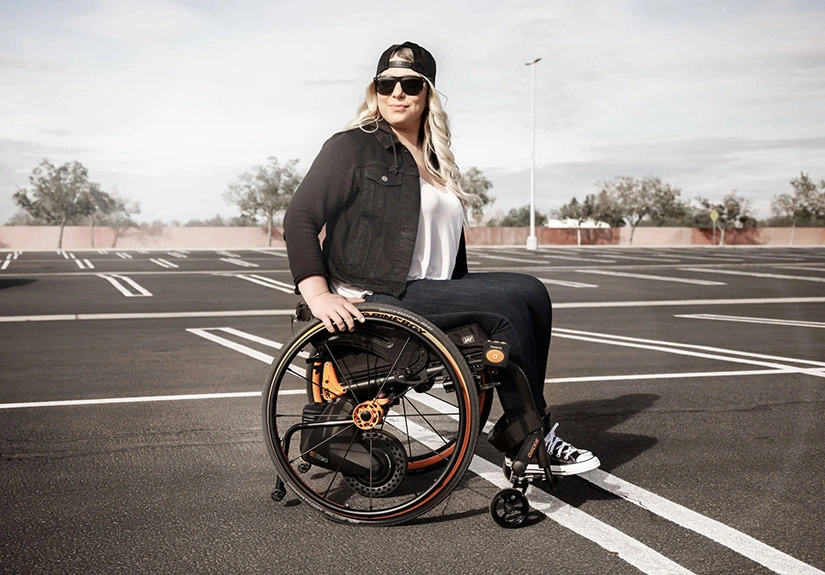
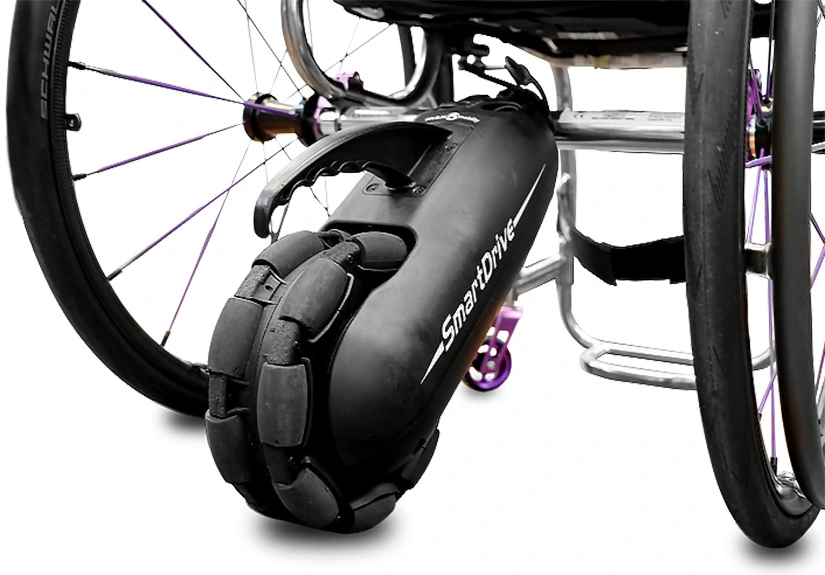
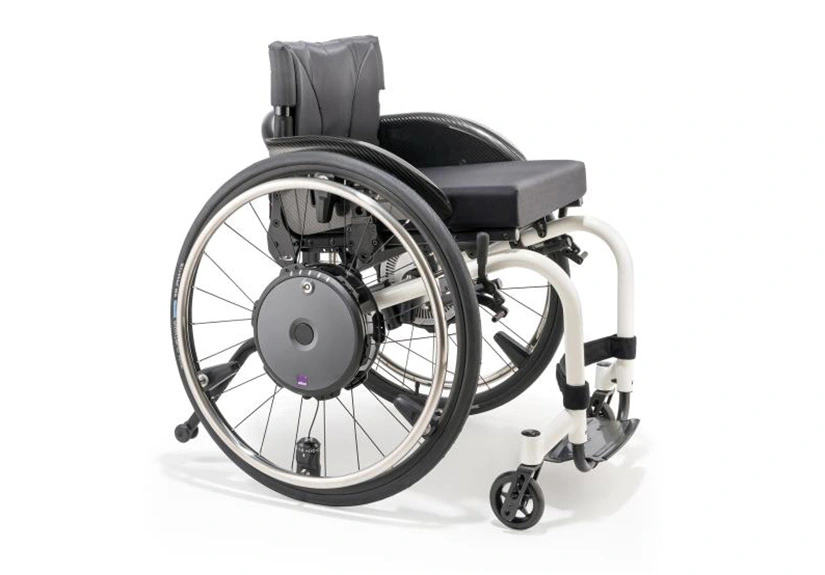
Rear power attachments offer propulsion from the back of your wheelchair. They can either attach directly to the rear or incorporate motorised wheels that provide pushing assistance. Notably, one model—the TGA Mobility Twin-Wheel—equips caregivers with a power assist option rather than relying solely on the wheelchair user.
How they benefit you:
- Enhance stability and offer added pushing assistance on inclines and uneven surfaces.
- Reduce physical strain by providing extra power where it’s needed most.
- Particularly useful in settings where manoeuvrability is challenged by terrain or extended distances.
Models you might see:
- Empulse R90 Power Assist: Robust support on steeper inclines and longer journeys.
- RGK Smart Drive: Integrates with your chair for responsive rear power assistance.
- Alber e-motion M25: Engineered for rear propulsion and enhanced user comfort.
- RGK Wheel Drive: Straightforward integration and consistent power output.
- TGA Mobility Twin-Wheel: Provides a power assist option for caregivers, offering an alternative support method.
Possible issues:
- Weight and battery specifications require careful consideration.
- The added power unit may affect the overall balance of your chair, necessitating professional fitting.
- Motorised systems may require more frequent maintenance compared to non-motorised attachments.
Conclusion
When it comes to motorised attachments, your choice should reflect your everyday mobility needs and the type of journeys you usually undertake. Whether you require a powerful front attachment, a versatile hybrid option, or a rear assist system to ease the strain on challenging routes, there is an option available to suit your lifestyle.
As always, consulting with an occupational therapist or mobility specialist is recommended to ensure compatibility with your specific wheelchair and to receive personalised advice. With the right motorised add-on, you can take your mobility to the next level while enjoying a more dynamic and independent lifestyle.
Image Credits:
Batec
Invacare
Recare
RGK
Triride