


Share this Article


Accessibility has improved, particularly in large shopping centres, but there are still many hurdles that can make buying clothes more difficult than it needs to be.
From my own experience, one of the first challenges is simply getting into a shop. I have often arrived at a store to find a step at the entrance or a heavy door that seems determined to test my upper-body strength. In one small-town shop, I had to wait for a staff member to come out to help because the door felt like it was made from lead.
The Changing Room challenge!
Once inside, navigating the shop can be tricky. Clothing rails are sometimes packed so tightly together that I feel like I’m attempting a difficult driving test rather than browsing for a new outfit. I have often spotted something I liked only to discover it was hidden behind a maze of rails that would challenge even the most skilled wheelchair user.
Trying on clothes can be another challenge. Some changing rooms are labelled “accessible” but are either too small to manoeuvre comfortably or have become temporary storage cupboards.
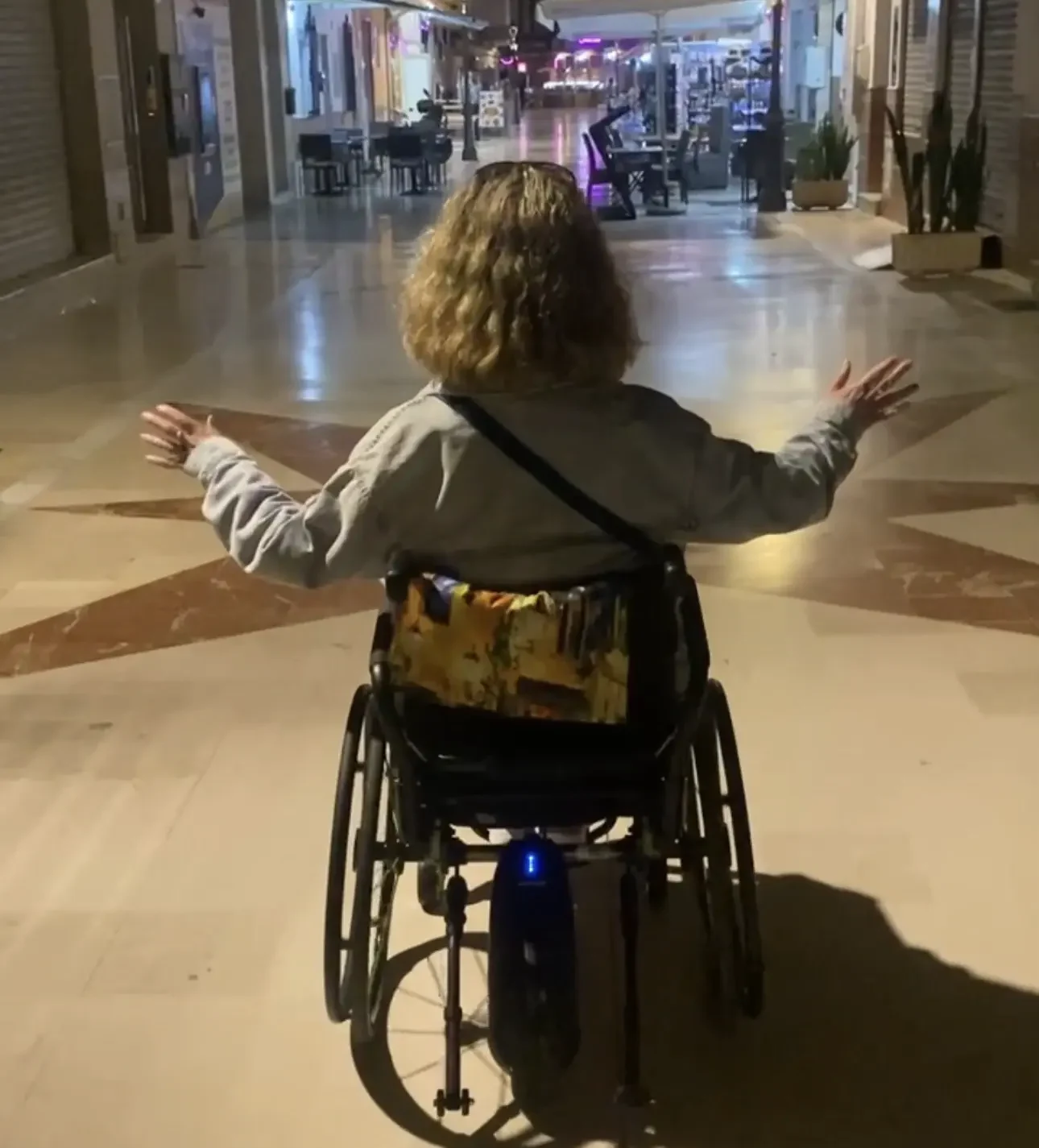
On more than one occasion, I have given up and taken my chances buying clothes without trying them on first. Sometimes it works out and sometimes an outfit looks better in my imagination than it does in reality.
Because of these challenges, online shopping has become a useful alternative. It allows me to browse independently from home without worrying about steps, crowded aisles, or inaccessible fitting rooms. Of course, online shopping has its own risks. We’ve all experienced ordering what looks like a stylish jacket online only for it to arrive looking completely different. And then we have the return process which can also be frustrating, but overall, it often provides a more accessible and convenient option.
Despite the difficulties of high street shopping, I have also had many positive experiences. Helpful staff who ask how they can assist, rather than making assumptions, can make a huge difference. Good customer service and thoughtful design help create a more welcoming environment for everyone.
Overall, clothes shopping in Ireland is improving, but there is still work to be done.
Tips for better success
- Check Accessibility Before You Go
Many shopping centres and larger stores provide accessibility information online. It can save you from arriving at a shop only to discover that the “accessible entrance” involves three steps and a miracle.
- Shop During Quieter Times
Weekday mornings are often less busy. Fewer crowds mean more room to move and less chance of getting stuck behind someone comparing twelve nearly identical pairs of socks.
- Don’t Be Afraid to Ask for Help
Most shop staff are happy to reach items from high shelves or help you find what you need. Think of it as having your own personal shopping assistant, even if only for five minutes.
- Make Online Shopping Your Friend
Online shopping can be a gamechanger. You can browse hundreds of products from the comfort of your home, avoid inaccessible changing rooms, and skip long queues. The only downside is explaining to family members why another delivery van is pulling up outside!
- Know Your Rights
Under Irish equality legislation, shops and service providers should make reasonable efforts to accommodate disabled customers. If something isn’t accessible, speaking up can help improve the experience for everyone.
“Shopping as a wheelchair user can sometimes feel like a competitive sport, but with a bit of planning, a sense of humour and the occasional bargain, it doesn’t have to be an obstacle course.”