Print Issue: April 2026

This is a printer-friendly version of the Spokeout magazine.

⚠️ Important for Best Results:

  • Browser: Use Chrome, Edge, or Safari.
  • Settings: Ensure "Background Graphics" is CHECKED in the print options.
  • Margins: Set margins to "None" or "Default".
Spokeout Cover Image Logo
Spotlight on:
Fitness Inclusion Games
DIY Wheelchair Repairs
Other Features:
Exciting new development at our AGM, campaign for Access Officers in every local authority, plus lots more

Spokeout April 2026

Hello readers, welcome to the April edition of Spoke Out.

The world feels a little fragile at the moment, and many of us are experiencing that uncertainty. Unfortunately, ongoing events in the Middle East mean the fuel crisis is unlikely to ease anytime soon, adding to people’s concerns. Our Advocacy team continues to push for a Cost of Disability payment to help alleviate some of this financial burden.

We could all use a lift right now, and for those taking part in IWA’s second annual Fitness Inclusion Games, preparing for the big event at the Sport Ireland Campus on Thursday, May 7th, has provided a welcome distraction. As our Spotlight article shows, it’s something participants are truly enjoying, while also benefiting their health and overall well-being.

We’re also excited to introduce a new Members’ Consultative Forum, which will take place alongside our Annual General Meeting in May.

This edition is packed with a variety of engaging articles—from DIY wheelchair repairs to the dedicated volunteers making a difference at our Ardee Charity Shop, as well as IWA’s campaign to ensure every local authority has a full-time Access Officer, and much more.

In times of uncertainty, it matters more than ever that we show kindness—to ourselves and to one another—and consciously focus on what’s going well. It’s really encouraging to see so many positive things happening in IWA, and we hope you enjoy reading about them.

Marie


Magazine Logo
Spotlight on:
Fitness Inclusion Games
DIY Wheelchair Repairs
Other Features:
Exciting new development at our AGM, campaign for Access Officers in every local authority, plus lots more

In this issue:

  • Spotlight on: the second annual Fitness Inclusion Games
    Over 150 IWA members to participate in the inclusive event
  • Advocacy
    “It Would Just Help Us Live”: Why the Cost of Disability Can’t Be Ignored
  • Fundraising
    Become a Regular Monthly Giver and Change Lives Every Month
  • Sport
    Paralympics Ireland celebrate the Para Athletes who paved the way for today’s Paralympians
  • Volunteers
    Volunteers at IWA's Charity Shop in Ardee making a difference
  • DIY Wheelchair Repair Project
    Empowering wheelchair users to maintain their own wheelchairs
  • Finding Ways to Access Arts & Culture
    Arts & Disability Ireland works with venues, artists and audiences to make theatre, art, music and dance more inclusive.
  • Members’ Consultative Forum
    New Members’ Consultative Forum Launching at This Year’s AGM
  • Access- It’s No Joke
    A funny video campaign with a serious side and our members have been joining in.
Page 1

Spotlight on the second annual Fitness Inclusion Games

Over 150 IWA members to participate in the inclusive event
June Elliot can’t believe how much she enjoys IWA’s Fitness Inclusion Project and how it is already making such a positive impact on her life.

She trains alongside a group of other members in the Navan Strength Collective, and all are busy preparing for the second annual Fitness Inclusion Games, which take place on Thursday, May 7th, in the Sport Ireland National Indoor Arena in Dublin.

June told Spoke Out: “I started the Fitness Inclusion this year.  I never ever thought I’d be in a gym. I really enjoy it. I like that it is making me fitter.”

She added, “I am able to do things that I never thought I’d be able to do, like holding a laptop.”

The benefits health wise have been amazing.  “I find I am not coughing as much as I used to during the day,” June revealed.

Picture of a female wheelchair user working out in the gym, holding small weights
IWA member June Elliot in training for the Fitness Inclusion Games which take place on May 7th

Jane Fennessy is also on the countdown to the Games which she really enjoyed last year, describing it as a ’unique day’.

Approximately 150 members from around the country are expected to compete on May 7th in what is a fully inclusive, adaptive fitness competition inspired by global formats such as CrossFit and Hyrox.

Excitement is building in anticipation of the event.


Wheelchair users working out in the gym
Jane Fennessy (right) is looking forward to the 2nd annual Fitness Inclusion Games

Spectators welcome on the day

Declan Hamilton, interim National Director of IWA, who came up with the idea of the pioneering  Fitness Inclusion Project and subsequent games, said that the initiative has continued to grow in the past year.

He told Spoke Out:  “It is incredible to see how far people have come since the last Games Day in June 2025.  It has turned into a really incredible project, which started with less than 50, with probably 250 involved now.

“It’s very much driven at local level and with the staff, the coaches in the gyms and most importantly the members participating, that’s what makes it so special. It has been humbling to witness the growth of participants since the project began. Our ethos has always been about fun and inclusive fitness, so for me I just want people to come and have a great day.”

If you aren’t taking part, members can still come along and be part of the event by cheering on from the sidelines and soaking up the atmosphere.

“The atmosphere last year was electric.   It really is a great day and we would love to see as many members as possible there supporting those taking part. Families and friends of the participants are also welcome,” added Declan.

Looking forward to competing on the day is Zane Hoshan from Drogheda, who is nearly two years involved in the Fitness Inclusion Project.  “It’s very inclusive and builds your confidence,” he said.

A group of gym member outside the Navan Sports Collective
Some of the participants from the North East who will be taking part in the Fitness Inclusion Games on May 7th

"I feel great in myself doing the exercises"

Kelly Kinsella came away with a special achievement award from the first ever Fitness Inclusion Games and can’t wait to participate with her Navan team again this year.

“The Fitness Inclusion Project and the games day itself really is great fun.  I’m doing it to be fit.  I feel great in myself doing the exercises and there is lots of laughter and joking,” she told Spoke Out

A female who has a disability working out in the gym
Kelly Kinsella can't wait to participate with the Navan team this year

"It has been absolutely life-changing"

Graham Acton, Service Co-Ordinator in Navan,  has witnessed first-hand the hugely positive impact the Fitness Inclusive initiative has had on members.

“It’s been absolutely life-changing, just unbelievable,” he said.

“It’s not just the physical positive impacts it’s had on members.  An amazing story for me is one of our young members.  She was telling me that her family would be going to the gym on a weekly basis, going for walks, going for runs etc. And going to events, to a marathon, and she never felt part of the conversation.”

“Because of the Fitness Inclusion Games and the Fitness Inclusion Project she now feels part of that conversation, and she has something to strive for, which I think is absolutely amazing.”

IWA would like to sincerely thank our passionate Fitness Inclusion supporters, without whom this project and event would not be possible.

They are: The HSE, Insanity Fitness Pollyhops, CrossFit Louth, SKF Dundalk, SKF Drogheda, Navan Fitness Collective, Primal Jiu Jitsu, RedClick, Thirst, Juice Works, Koncept, Sports Skins, Nutriquick, Naze Ireland, Body First Nutrition, Granada, Vico Deodrant, 42K Running, Sillis Green Veg Ltd, Pop Up Races.

The second annual Fitness Inclusion Games will take place on May 7th in the Sport Ireland Indoor Arena, Dublin

Page 2

Advocacy

“It Would Just Help Us Live”: Why the Cost of Disability Can’t Be Ignored
As part of the call for submissions by the Department of Social Protection on the introduction of a Cost of Disability Payment, IWA reached out to our members through in person and online focus groups to hear your voices before putting together a submission.

These focus groups and consultations heard from our members from Belmullet, Clontarf, Tipperary, Ardee, Galway, Sports, Leader Services and an open online session, and we heard very clearly what life actually looks like right now. The message is consistent: the cost of disability isn’t occasional, it’s constant.

“Everything in my house needs electricity”

One of the strongest themes to emerge is energy.

For many people, electricity and heating aren’t optional; they’re essential to stay well, mobile, and safe. Whether it’s powering equipment, managing pain, or simply keeping warm, cutting back isn’t really an option.

As one participant explained the reality of rising costs:

“You need heat all year round, not just in winter. These aren’t luxury expenses. They are part of daily survival”

"By Sunday, I'm broke"

Transport is another major pressure, and one that often goes unnoticed.

Many people rely on taxis or adapted vehicles because public transport simply isn’t accessible or doesn’t meet real-life needs. That means paying significantly more just to get to work, appointments, or social activities.

As one person said, “Free travel is no good if you can’t actually get there.”

For younger people trying to build independence, these costs are particularly frustrating. One participant shared: “I could be paying €30 to go home… I remember doing the same journey for about €12.”

That gap between what things cost and what people can afford is where independence starts to slip away.

“By Sunday, I’m broke”

What really stands out across all the discussions is how these costs add up.

A group of people, some of whom are wheelchairs sitting around tables in a room
The Focus Group consultation in Ardee

It’s not just one bill or one expense, it’s everything, all the time. People spoke about living week to week, constantly calculating what they can afford.

One participant described it simply: “Come Sunday, I’m broke… I have nothing left.”

Others talked about using credit cards or borrowing from family just to get by. That creates a cycle, not just of debt, but of stress.

And it’s not just financial. These pressures affect mental health, confidence, and connection to the community. People spoke about cutting back on social activities, staying home more, and feeling increasingly isolated.


Fears associated with working

For some, even taking up a job feels risky. The fear of losing supports or ending up worse off is very real. One young person summed it up: “I’d be scared of my life to take a job… I’d rather not get the job than lose my benefits.”

That’s not a system that supports participation. It’s one that quietly discourages it.

“It would just help us live.”

Across all of these conversations, there was one clear point of agreement and that is current supports don’t match the real cost of disability.

People aren’t asking for extras or luxuries. They’re asking for recognition and a bit of breathing space. As one participant said, “It would just help us live.”

What you want us to tell the Minister for Social Protection

  1. Introduce a Cost of Disability Payment that is real and permanent. It must be a weekly, non-means-tested payment, paid alongside existing supports, not replacing them.
  2. Recognise energy, transport and food as core disability costs. These are not lifestyle choices. They are essential, ongoing needs that must be built into policy design.
  3. Make the payment safe to keep if you work. People should not be afraid to take up employment. The payment must be retained in employment to support participation. A tax credit equal to the weekly payment needs to be introduced.
  4. Include people over 65 with disabilities. Disability-related costs do not stop at retirement. The system must reflect the reality of ageing with a disability.
  5. Reduce bureaucracy (red tape) and repeated assessments. For lifelong conditions, a doctor’s letter should be enough. Systems must move from suspicion to trust.
  6. Recognise independence and participation as outcomes. This is not just about bills; it’s about being able to leave the house, take part, and live a full life.


You can read our full Cost of Disability Government Submission here.


Page 5

Fundraising

Become a Regular Monthly Giver and Change Lives Every Month
Consider committing to a regular, monthly gift to Irish Wheelchair Association and show people with disabilities that you believe in their right to live the life they choose.

A committed gift from you will provide opportunities for people with disabilities to meet new people and create friendships by supporting access to our Community Centres across the country.

As Michael from Sligo said, “I’ve been coming to IWA for 28 years. I love coming here, I just love it.”

Teresa – who has been attending her local Community Centre for the past 14 years – really enjoys taking part in the activities there. Teresa found adjusting to life in a wheelchair in her 30s daunting and IWA’s support was and continues to be very important to her.

“You find some common ground which you had never been open to before. So, it’s nice to get to know each other. I come (to the centre) on a Thursday. I have a go at most things. I like to have the choice as well. We have chats about where we want to go and trips we want to take. Historical trips are popular and we enjoy going to Lough Key Forest Park.”

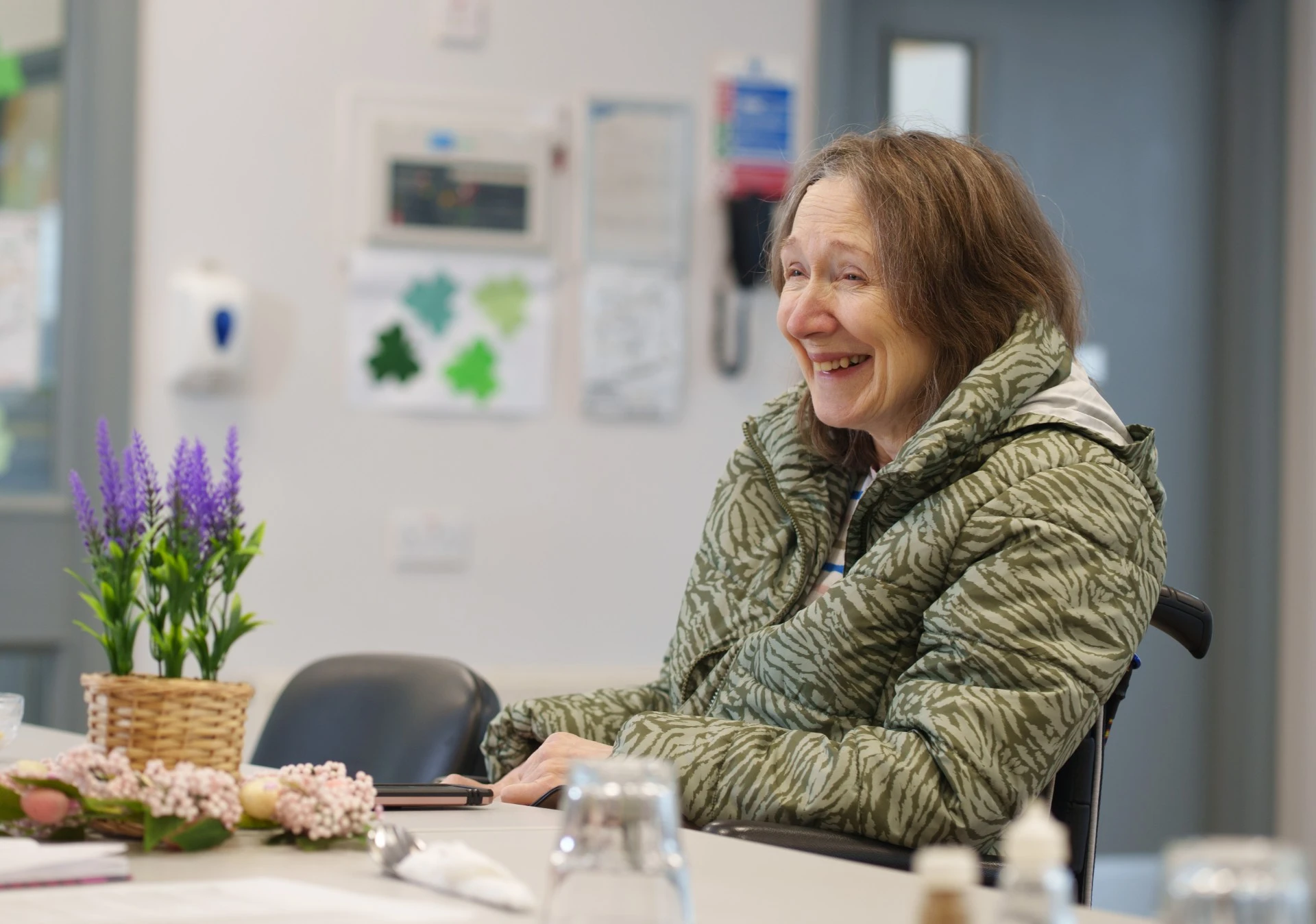
The image shows a smiling woman, sitting at a table
IWA member Teresa really enjoys taking part in activities in her local community centre

Regular donations of €15 a month can help keep IWA buses on the road and make sure our members can get to and from our Community Centres.

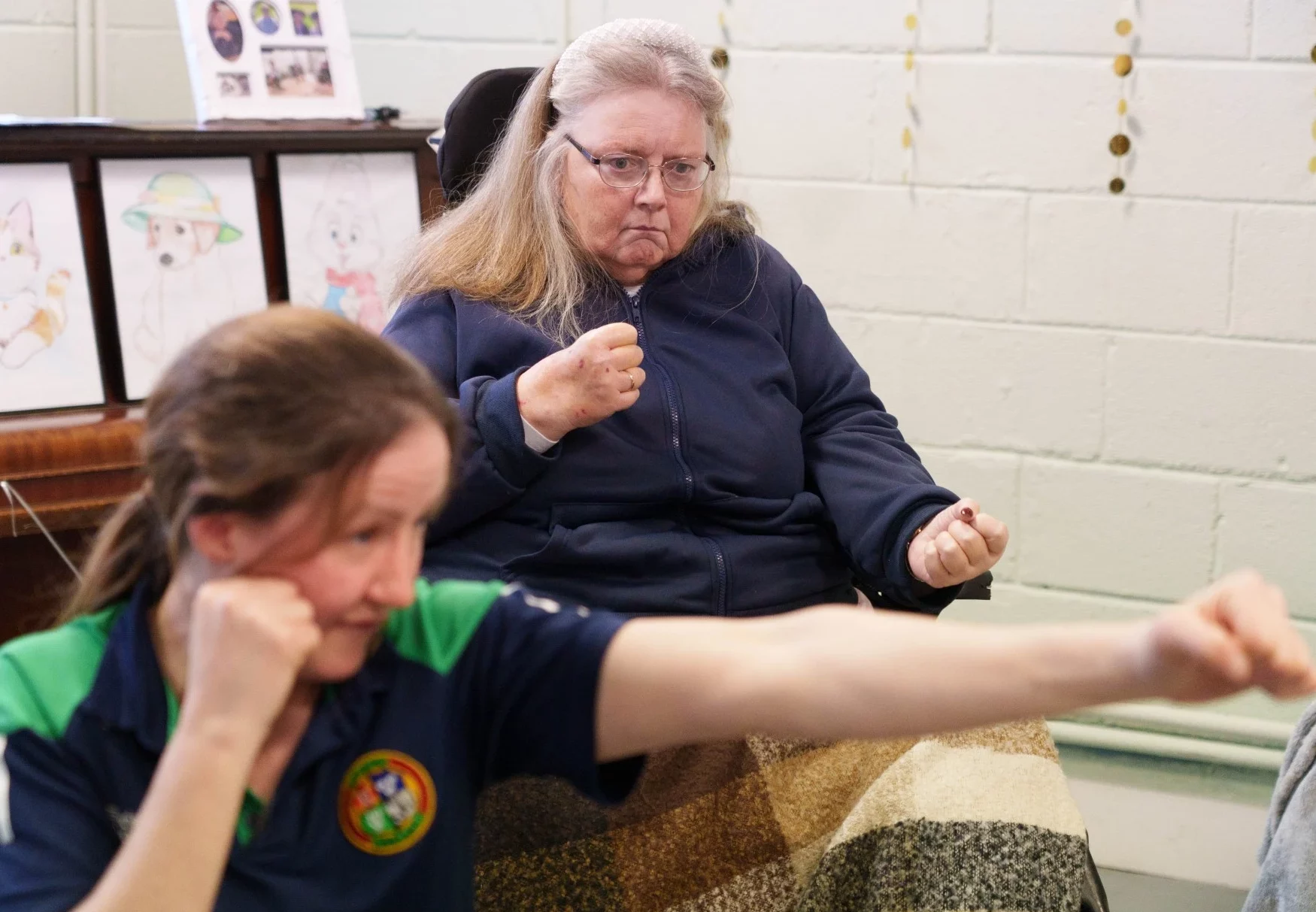
Even a smaller regular donation from you can help fund exercise classes and organise activities such as a boxing class to improve members’ strength, mobility and confidence.

The reality is that, without the generosity of our supporters, we would not be able to cover all the costs of our work with members across the country.

Monthly donations of €21 or more can be tax-efficient, meaning we may be able to claim up to a further 40% from the Government at no extra cost to you.

Please consider making a regular contribution today.

Picture of a woman in a wheelchair being taught how to box by an instructor
By donating to IWA you will be helping to provide opportunities for people with disabilities to meet new people and create friendships by supporting access to our Community Centres across the country.
Page 8

Sport

Paralympics Ireland celebrate the Para Athletes who paved the way for today’s Paralympians
In March, IWA-Sport had the pleasure of attending UnParalleled: A Celebration of Ireland’s Paralympic Past, an event honouring Para Athletes who represented Ireland at the Paralympic Games between 1960 and 1980.

The first in a series of events honouring Irish Paralympians, UnParalleled went back to the beginning, starting with the first Paralympic Games, which took place in Rome, 1960.

UnParalleled took place at the Crowne Plaza Hotel in Blanchardstown, where Paralympics Ireland invited the Irish sporting community to celebrate the Para Athletes that paved the way for those that compete today.

45 athletes were honoured on the day, including 12 IWA-Sport members for their achievements across the first six Paralympic Games. Each athlete received a certificate recognising their achievements.

Dr Oliver Murphy

Each certificate was numbered to recognise each athlete and honoured with PLY001 was Dr. Oliver Murphy. Dr. Murphy (also a founding member of IWA) was part of the team that travelled to Rome in 1960 and went on to compete again in Tokyo 1964, Tel Aviv 1968 and Heidelberg 1972.

He shared how sport revolutionised life for those living with a disability.


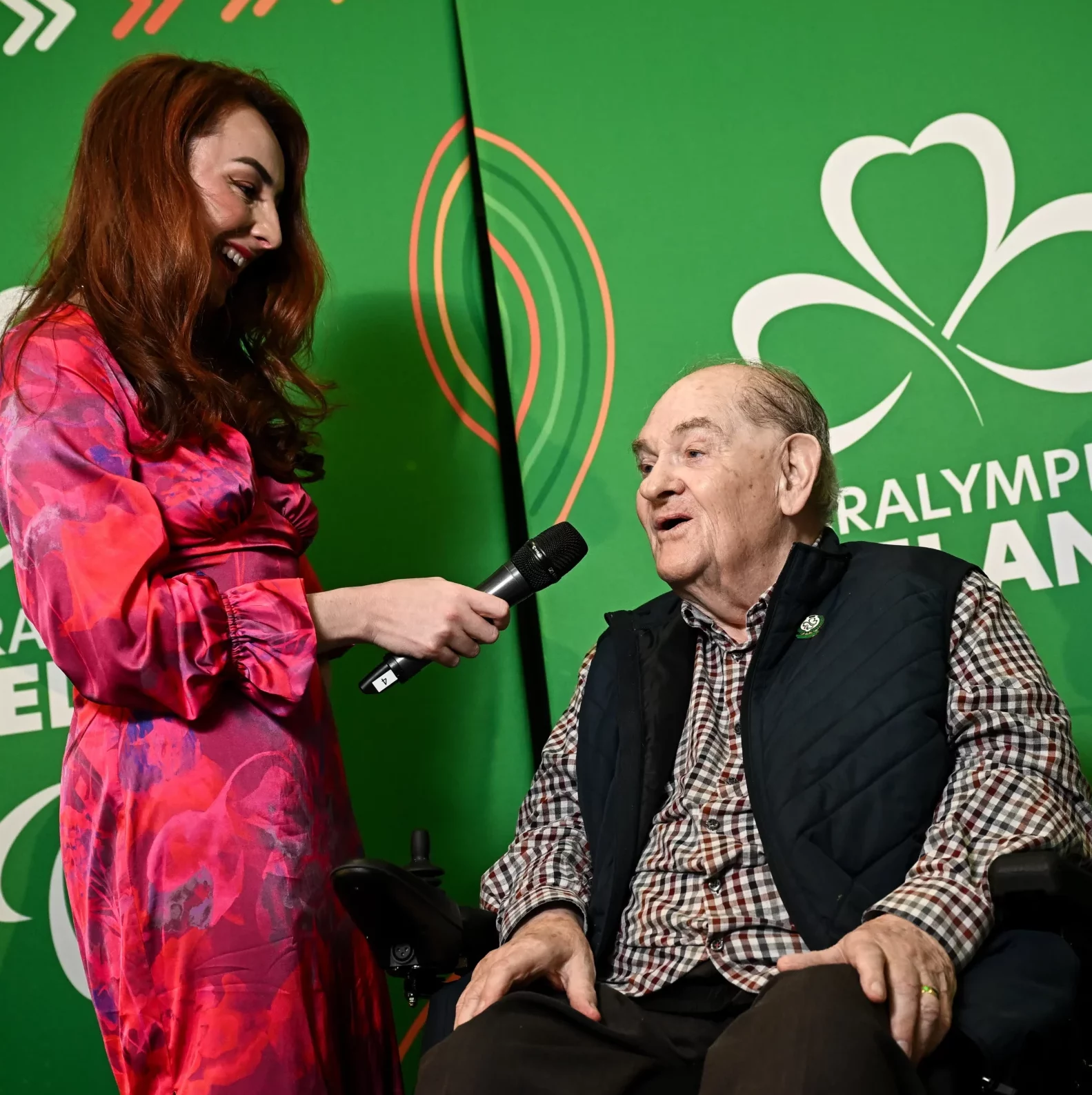
Dr Oliver Murphy, who was one of the co-founders of Irish Wheelchair Association being interivewed during a fantastic event honouring Irish Paralympians
Dr Oliver Murphy speaks with Ellen Keane during a fantastic event celebrating past Paralympians

“We were young and active and wanted to get out,” Murphy said. “Sport was a challenge and a way forward. It was a game changer.”

It was after the 1960 Games that Dr. Oliver Murphy joined forces with his teammates to help found the Irish Wheelchair Association.

On the day, IWA member and Paralympian swimmer, Ellen Keane, MC’d and shared what her journey in Para Sport has been like.

Also in attendance were Ann Marie O’Grady, CEO of IWA and Nicky Hamill, Director of IWA-Sport.

Speaking at the event, Ann Marie talked about the success IWA has achieved over the past six decades, creating sporting opportunities for thousands of people with disabilities. The pathways developed from grassroots participation to elite Paralympic competition, and the impact on moving the dial on attitudes towards inclusion and equality in Ireland.

Without the Paralympians who started it all, those opportunities may have taken longer to come about.

Page 10

Volunteers

Volunteers at IWA's Charity Shop in Ardee making a difference
Irish Wheelchair Association’s Charity Shop in Ardee will be opened 16 years in November and Tara McGee has been working in the shop as a volunteer for 12 of those years!

“It gives me a great deal of satisfaction,” Tara told Spoke Out.

“We get all sorts of people in from all walks of life.  That’s why I love it.  I really enjoy meeting the people.”

Tara had a business in Ardee and when she retired, she looked around for a volunteering opportunity.  “It had to be something with a charity.   I put my name down for here and when I was accepted, I was thrilled. I wanted to volunteer at something that would be beneficial to others, and it is.”


A lady holding a First Communion Dress and a First Communion suit
Volunteer Tara McGee sorting through some of the fabulous First Communion outfits in IWA's Charity Shop in Ardee

Tara works two half days a week and the most fulfilling part for her is seeing how generous people are with their donations.  “People want to recycle, and it makes them happy that their recycling is going to a good cause.” she said

“When you get something like a real expensive bag in, you think oh that could get a lot of money.  People are donating instead of maybe throwing it in the bin which is great.”

“It’s lovely to see the delight on customers’ faces too when they get something they need for an affordable price, there is a lot of satisfaction in that. We have a lot of First Communion Dresses in at the moment which is lovely to see.”

"I'd be lost without them." - Karen Glass, Shop Supervisor

There are nine volunteers who help out in the shop.  Shop Supervisor Karen Glass told Spoke out. “I’d be lost without them.  We have a good footfall.  We have built up a good name locally. The volunteers do everything from sorting through the donations, putting them out on display to pricing. They are fantastic.”


Picture of two ladies surrounded by clothes on rails.
Tara McGee and Mary Reilly, two of the nine volunteers who work in IWA's Ardee Charity Shop

The dedicated team of volunteers also includes Mary Reilly who travels in by bus from nearby Tallanstown to work in the shop.  “I am ten years here,” she said.

“I have a lot of friends in wheelchairs and before starting as a volunteer I used to come in and out of the shop myself to have a look so I decided to put my name down to volunteer as I really wanted to work for a charity that specifically supported wheelchair users.”


A group of four women in a charity clothes shop
Volunteer Tara McGee, Shop Supervisor Karen Glass, volunteer Mary Reilly and volunteer Breda McKenny pictured in IWA's Charity Shop in Ardee

“I do two half days or one full day.  I definitely feel like I am giving something back.”

Mary values the friendships she has made during her time in the shop especially with the other volunteers.  “We socialise together and watch out for each other.  When you are not here, for example if you are sick, you really miss it.  I really enjoy serving the customers and mixing with people.  We get a lot of customers who come in regularly, so you get to know them.”

Both Tara and Mary agree that if the shop wasn’t there a lot of families would suffer financially.

“It is very busy,” adds Tara.  “It’s like a real job to me.”

IWA has four charity shops in total. We would like to thank our small team of passionate staff and volunteers running these stores.

Your support is appreciated.

IWA Ardee Charity Shop – John Street, Ardee, Co. Louth

IWA Enniscorthy Charity Shop – Mill Park, Enniscorthy, Co. Wexford, Y21 E8W9

IWA Tralee Charity Shop – 4-5 Maine Street, Tralee, Co. Kerry

IWA Listowel Charity Shop – William Street, Listowel, Co. Kerry

Picture of Irish Wheelchair Association's Charity Shop
Irish Wheelchair Association's Charity Shop in Ardee which stocks an array of clothes and products.
Page 4

DIY Wheelchair Repair Project

Empowering wheelchair users to maintain their own wheelchairs
Every day, people who rely on wheelchairs are faced with more than mobility barriers - they face interruptions to independence, safety risks, and social isolation when their wheelchair breaks/fails.

A loose wheel, broken armrest, or flat tyre could mean missed appointments, lost work, and reduced access to the community.

That’s why An Mheitheal Rothar started the DIY Wheelchair Repair Project: to restore independence through teaching wheelchair users, their family, friends and the wider community, simple repairs and proactive maintenance.

The goal of this project is simple but powerful: to empower manual wheelchair users and their family/carers with the knowledge and confidence to maintain their own manual wheelchairs, reducing reliance on external repair services and strengthening independence.

So far, they’ve run seven in-person workshops and reached over 80 people, created an online wheelchair repair resource for those who want to access the workshop at home, and developed a toolkit of general tools to support everyday wheelchair maintenance and simple repairs.

These workshops have strengthened participants’ confidence and independence, giving individuals the skills to perform safety checks and carry out repairs on their own wheelchairs – we hope this is only the start.


A group of wheelchair users watching a wheelchair being mended
A workshop in progress.

During the project they spoke with Anne, a wheelchair user from County Dublin. She described the realities of daily life – what she does when her wheelchair breaks and how accessibility problems in the community cause damage, including unreliable public transport, uneven surfaces on paths and roads, and cars parked where they shouldn’t obstruct routes.

You can watch Anne’s account in this video.


A sign saying DIY Wheelchair Repair

Helping to reduce stress on Wheelchair Users

Looking ahead, An Mheitheal Rothar have clear hopes for the project’s future: expanded repair services so people don’t have to be without their chairs for days or weeks; more mobile repair teams that can come to users’ homes to fix chairs on the spot; and systems to repair and repurpose second‑hand wheelchairs instead of sending them to landfill.

These small changes would reduce stress on wheelchair users and increase safety and dignity.

If you would like to learn some simple wheelchair repairs, visit our DIY Wheelchair Repair Online Resource

The organisation would like to thank everyone who took part in their workshops for their time, feedback and enthusiasm.

Big thanks also to Anne for sharing her story, to University of Galway, Irish Wheelchair Association Ballybrit and Irish Wheelchair Association Roscommon for hosting the workshops and ReThink Ireland for funding this project.
Page 3

Finding Ways to Access Arts & Culture

Arts & Disability Ireland works with venues, artists and audiences to make theatre, art, music and dance more inclusive.
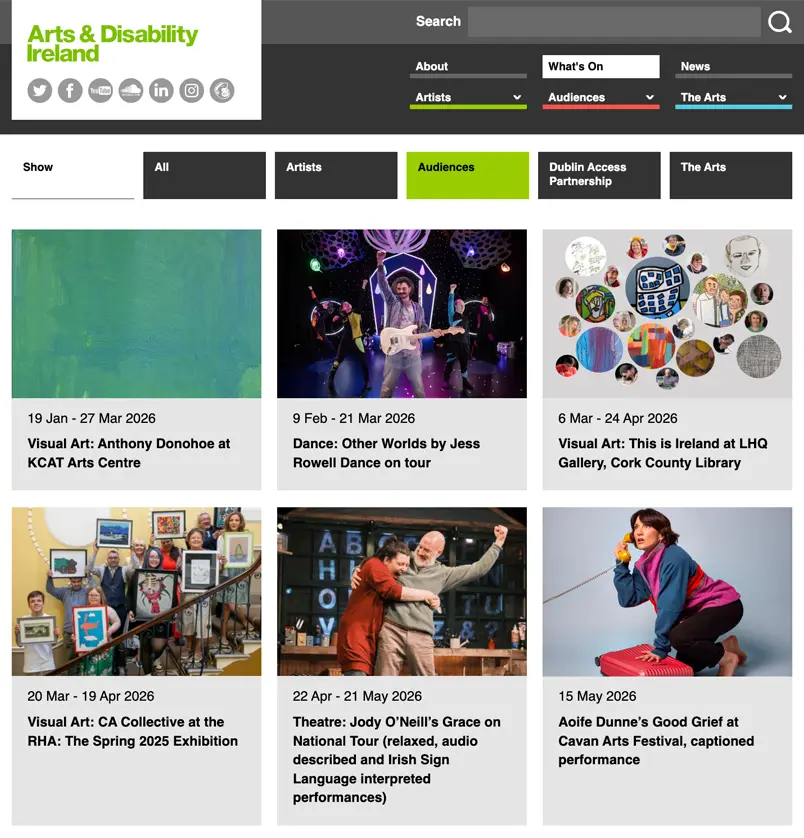
Did you know that Arts & Disability Ireland www.adiarts.ie has a busy events calendar of art (theatre, music and visual art etc) for audiences with neurodiversity and disabilities?

In April and May, for example, a play called ‘Grace’ by Jody O’Neill, will begin a national tour with performances in Cork, Dublin, Longford, Kilkenny, Kildare, Sligo, Mayo etc. Grace is designed for neurodivergent audiences, with careful attention to pacing, sound levels, and visual storytelling. It uses different communication styles so that the audience can engage in their own way, telling the story of a girl and her relationship with her deceased father, exploring grief, communication differences and emotional regulation.

The tour dates and venues for this show and many more are all available on www.adiarts.ie offering audiences the chance to find a show or an exhibition near them that is more inclusive and accessible. 

For over 10 years Arts & Disability Ireland has been working across Ireland with audiences, venues and artists to make it easier for everyone to access plays, art exhibitions, concerts and so much more.

Details from arts and disability website
Some of the events that are happening around Ireland

Supporting artists with disabilities in Ireland across many art forms

Mo Harte is an access artist who is making theatre, dance, the visual arts and the natural world accessible for people with disabilities. Mo works closely with Arts and Disability Ireland and productions to make them more inclusive for audiences to deepen their experiences.

To explain her work, Mo describes an instance where she organised a stage tour for a group before a performance of Brian Friel’s Translations, a play set in Donegal, so that they could touch, feel and experience the set before a performance.

“One of the group was visually impaired, and they were on the stage facing out into the audience, and they said, ‘Oh, just think, we should be looking out over Donegal’, we hadn’t thought of that before. People with disabilities add layers to the cultural experience,” she says.

“Access isn’t a straight line. Sometimes we can’t include everyone in the whole vision, but we can do other things that give people an experience that they can discuss afterwards in the pub over a pint with their friends. It allows everyone to add their piece to the cultural conversation, which makes it a lot more interesting”

For over 10 years, the Arts and Disability Connect funding scheme has also supported over 200 artists with disabilities in Ireland across many art forms, including film, literature, music, theatre, traditional arts, visual arts and street art. The scheme is designed to support artists with disabilities, who can often find it more challenging to access the opportunities and supports.

Róisín Power Hackett is the programme support officer with Arts and Disability Ireland, who manages the funding scheme for the Arts Council. Róisín is a visual artist, writer, and curator in her own right. Róisín’s own disability provides unique insight, which enables her to support applicants who are interested in the Arts and Disability Connect funding scheme.

“The scheme is designed to support artists with disabilities to be ambitious and to develop their practice” explains Róisín. “Generally, it is for artists that have a practice, an artist’s CV and biography and have had some group exhibitions.”

Arts and Disability Ireland works to support artists with disabilities and offer them access to mentoring and profile opportunities. It is also a great calendar for artists who are still in college or considering further education in art to understand the opportunities and supports that are available when they complete their education.

For audiences and artists alike it is well worth visiting the Arts and Disability ireland website.

Page 9

Members’ Consultative Forum

New Members’ Consultative Forum Launching at This Year’s AGM
As a member-led organisation, everything we do is shaped by you. Your voice, your experiences, and your priorities guide our work, and we are committed to creating meaningful ways for you to be heard.

This year, we’re introducing a new Members’ Consultative Forum, taking place alongside our Annual General Meeting (AGM) this May.

In an increasingly digital world, the AGM remains an important opportunity for members who can attend to come together in person or online. Following your feedback, and in line with our available resources, the Board has refreshed the AGM format to better reflect what matters most to you.

What’s new this year?

The AGM will be streamlined to one hour, focusing on the formal and statutory business of the organisation. It will then be followed by lunch and our new Members’ Consultative Forum — a dedicated space for registered members to connect with each other, the Board, and the Senior Management Team.

Led by our Advocacy team, the Forum will focus on the issues that matter to you, with particular attention on the recently adopted National Human Rights Strategy for Disabled People. Most importantly, it’s your opportunity to share your views and help shape our future priorities.

When and where?

Location: Mullingar Park Hotel

Date: Thursday, 21st May

Time: 11:00am – 3:00pm

Agenda

Time Activity
9:30am – 11:00am Welcome, Registration & Refreshments
11:00am – 12:00pm AGM
12:00pm – 12:50pm Lunch
12:50pm – 3:00pm Members’ Consultative Forum

Whether you join us in person or online, we strongly encourage you to take part in this important and exciting new step for member engagement.

Register now
(Registration opens April 20th)

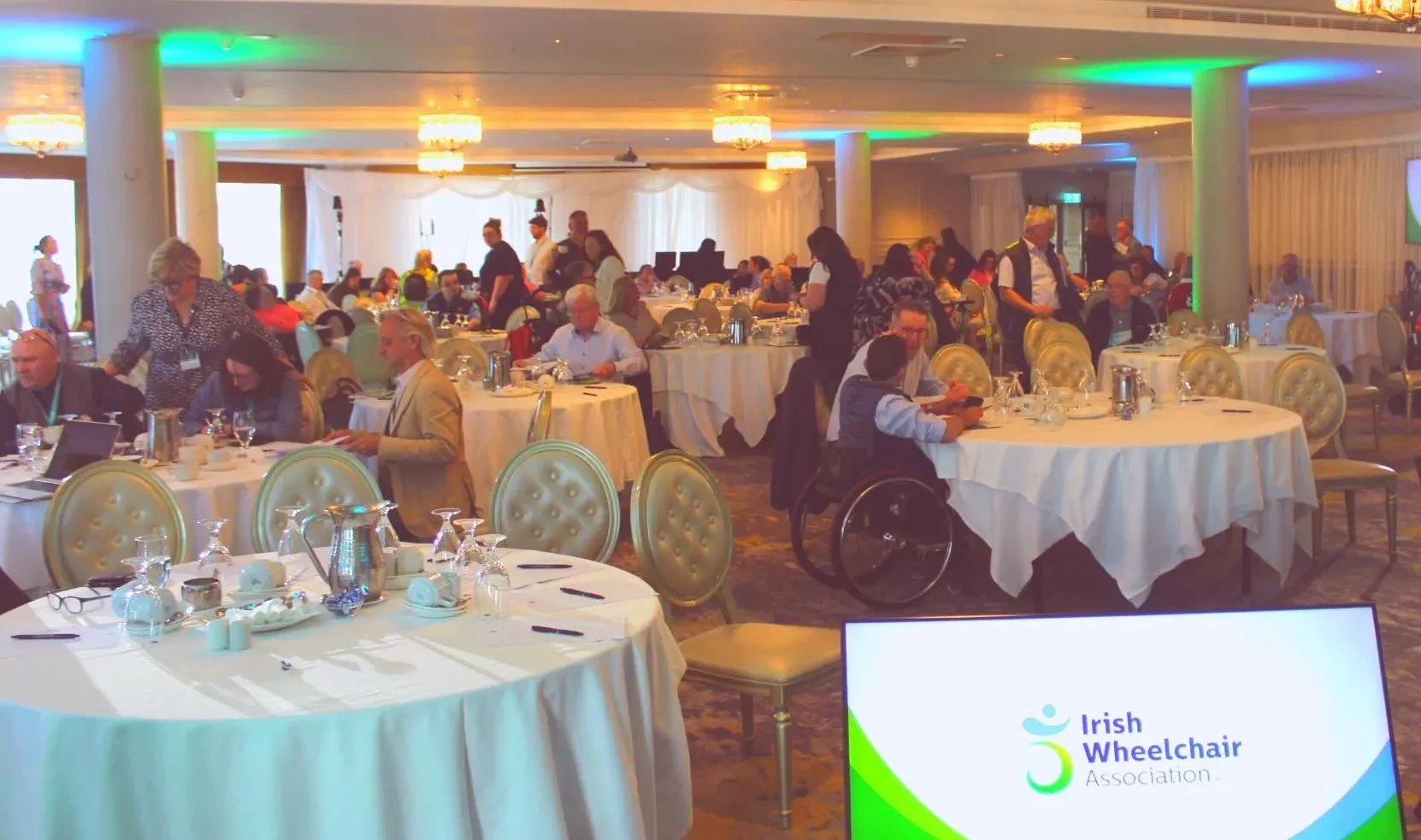
Picture of a large group of people in an indoor setting at an Irish Wheelchair Assocation event. Most are sitting at round tables
IWA is looking forward to welcoming members to this year's AGM which will feature a new members' consultative forum.
Page 6

Access- It’s No Joke

A funny video campaign with a serious side and our members have been joining in.
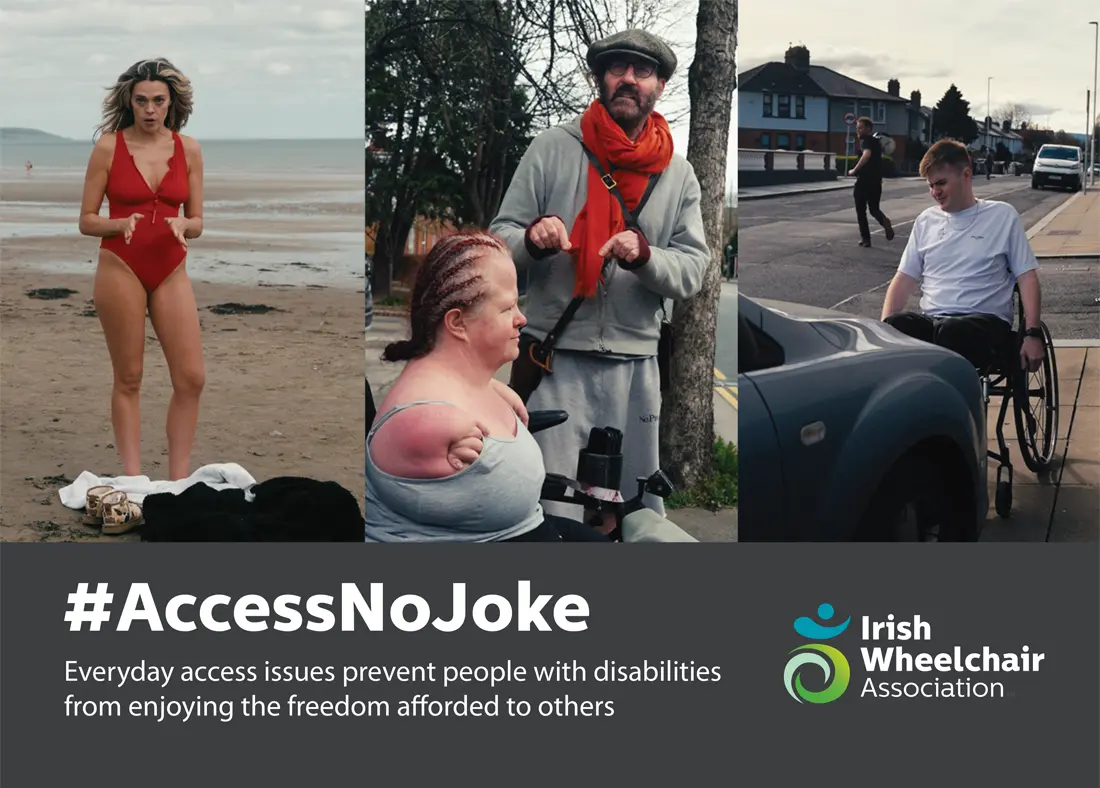
This month our annual access campaign Access-It’s No Joke is highlighting our popular online videos with famous comedians- Anna Clifford, David McSavage and Owen Colgan alongside IWA members John Fulham, Connie Richardson and Conor McAuley showing how inaccessible public paths, public transport, parks and beaches are for people with disabilities in our communities.
A graphic depicting IWA's Access It's No Joke Campaign featuring pictures of participating comedians and IWA members

This is the second year for the campaign, and even more of our members from across Ireland have gotten involved, sharing their videos with us for social media.

For example, John Grace, a long-time IWA member in Kilkenny, shared a video where he cannot get into the cinema without help because of the heavy doors. In Donegal, a group involved in access issues shared a video where they could not use public pathways because they were blocked by cars. Antoine Gamble’s video from Cork showed him forced to navigate his powerchair on the road because there are no dish-kerbs to get onto the path. In Waterford, Viki Jerchova shared that she is unable to get into her local pub because the building entrance is inaccessible, and Cristina Fechete couldn’t get to her bus stop because the busy road doesn’t have a pedestrian crossing.

People also sent videos of themselves trying to use ATMs, credit unions and other local amenities in their area to highlight the frustrations and challenges they face on a daily basis.

Members have also been sharing their stories in local radio programmes to highlight the campaign because this year Access-It’s No Joke is also focusing on local authorities.

“Access-It’s No Joke has been so popular with people reaching out to us online and sharing videos of their daily frustrations and anger about trying to access everyday local amenities. So, this year, we are contacting county councils to find a solution to some of these access barriers,” says Rosaleen Lally, National Access Programme Manager with IWA.

IWA is calling for every local authority to have a full-time Access Officer

Every local authority in Ireland should have a dedicated Access & Inclusion Officer to improve disability access to our local services and amenities.

IWA research shows that 81% of local authorities do not have a dedicated Access Officer for their community. “Local authorities have been mandated by the 2025 Disability Act to take action, and we know that many local authorities have ‘Access Officers’ but often these are simply additional job titles that are given to existing busy staff”, explains Rosaleen. “We know that our local authorities have dedicated hardworking staff, but they cannot break down access barriers without time, budget and expertise.”

Only three counties (six local authorities) in Ireland have a dedicated Access Officer- Dublin, Westmeath and Wexford. As part of our campaign this year, IWA has contacted local councillors in the other 25 county councils to pass a motion requesting funding for a full-time position in every local authority, with a dedicated budget.

If you would like to find out more, please visit our Access: it’s no joke campaign page.

Page 7

Thanks for your company

If you like what you're reading, please spread the word!

Share Spokeout April 2026


Share this article on Facebook Share this article on Instagram Share this article on LinkedIn Share this article on X

Remember:
Your voice, your choice! We're all ears for your feedback, thoughts, and suggestions.
Share what topics intrigue you the most and what you'd love to see in future magazine features.

Share your feedback here

Spokeout Cover Image Logo
SpokeOut is Irish Wheelchair Association's lifestyle magazine published every month for our members.
© Irish Wheelchair Association 2025.