




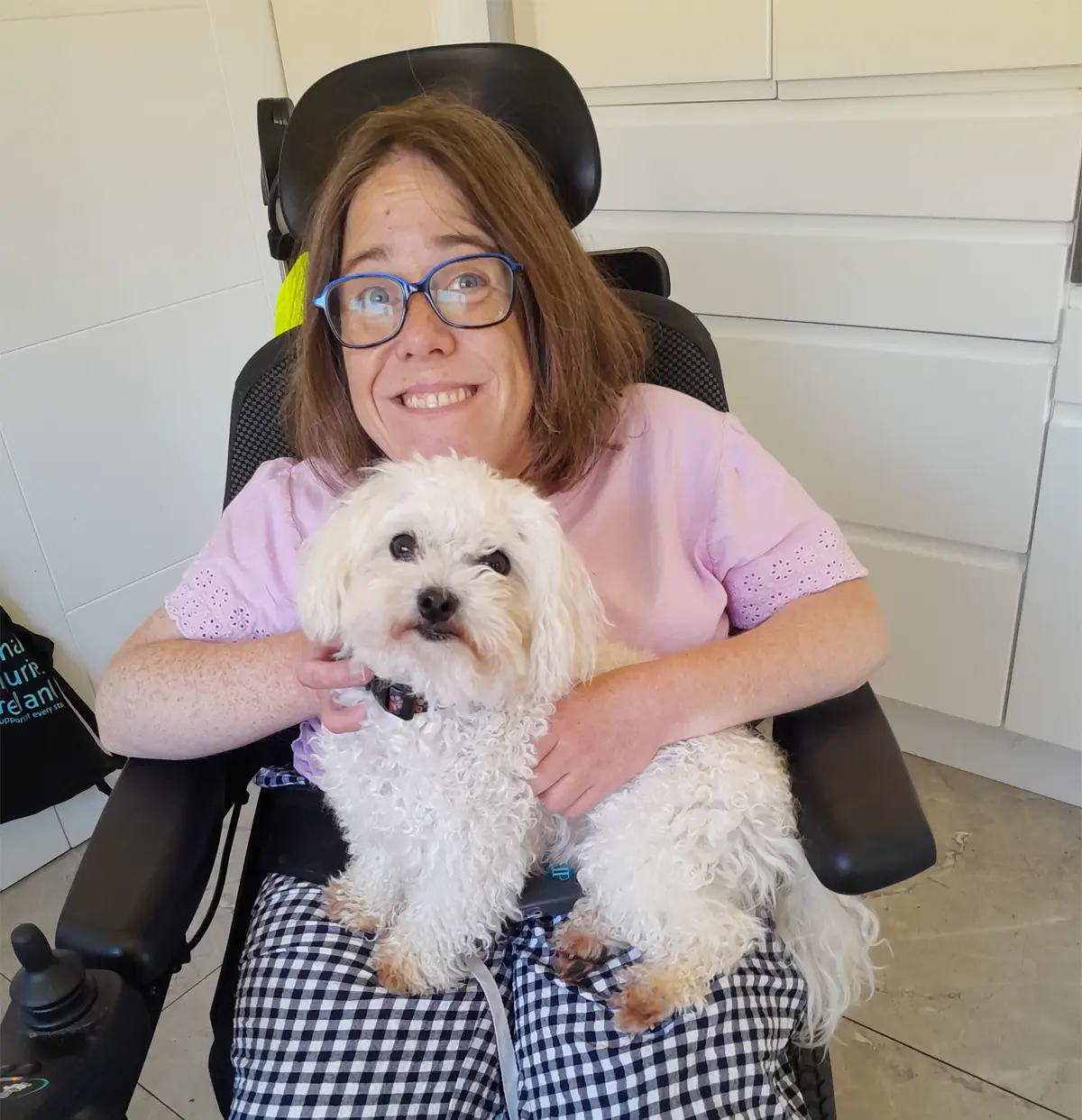
Ellen says that her beloved dog Treasa is much more than a pet and believes that she should be permitted to accompany her when she is using public transport, or in public places, the same way assistance dogs and guide dogs are allowed to.
She added: “I don’t drive myself. I rely on Treasa for comfort for anxiety issues and it would mean everything to me to be able to have her with me all the time.”
“She provides emotional support to me. She knows when there is something up with me and if there was anything seriously wrong she would give signals to other people,” continued Ellen who has Spina Bifida, Hydrocephalus and Epilepsy.
More value should be placed on dogs who provide emotional support
Because Ellen feels more secure having Treasa by her side she has to depend on the goodness of others for lifts for appointments, rather than using public transport.
She told Spoke Out: “If I could bring my dog this would add to my independence in so many ways. There is something very special about her. I don’t think enough value is placed on therapy dogs who provide company and emotional support.”
“Treasa is very well behaved and I would be very confident bringing her into public places and on public transport. She just sits on my knee in the wheelchair. She knows when I am down, when I am not well. I feel much more confident when she is with me. There is something special about her. She is my best friend.”
“She is not simply a companion dog but an emotional support dog. She is an essential part of my everyday life and helps me navigate the struggles of daily living.
“ I am calling on the government to introduce legislation to recognise essential dogs who provide emotional support.”
Words: Marie Kierans