


Spotlight on Minister Emer Higgins
Share this Article


Priorities and Early Days in the Disability Ministry
Spoke Out: What has the first few months in office been like?
Minister: I was truly honoured to have been appointed as Minister of State with special responsibility for Disability by the Tánaiste in November. This is a role that carries huge responsibility and importance, because disability affects most people in Ireland, either directly or indirectly. Coming into this role, I was very conscious that disability is not an abstract policy area; it is lived every day by disabled people and their families.
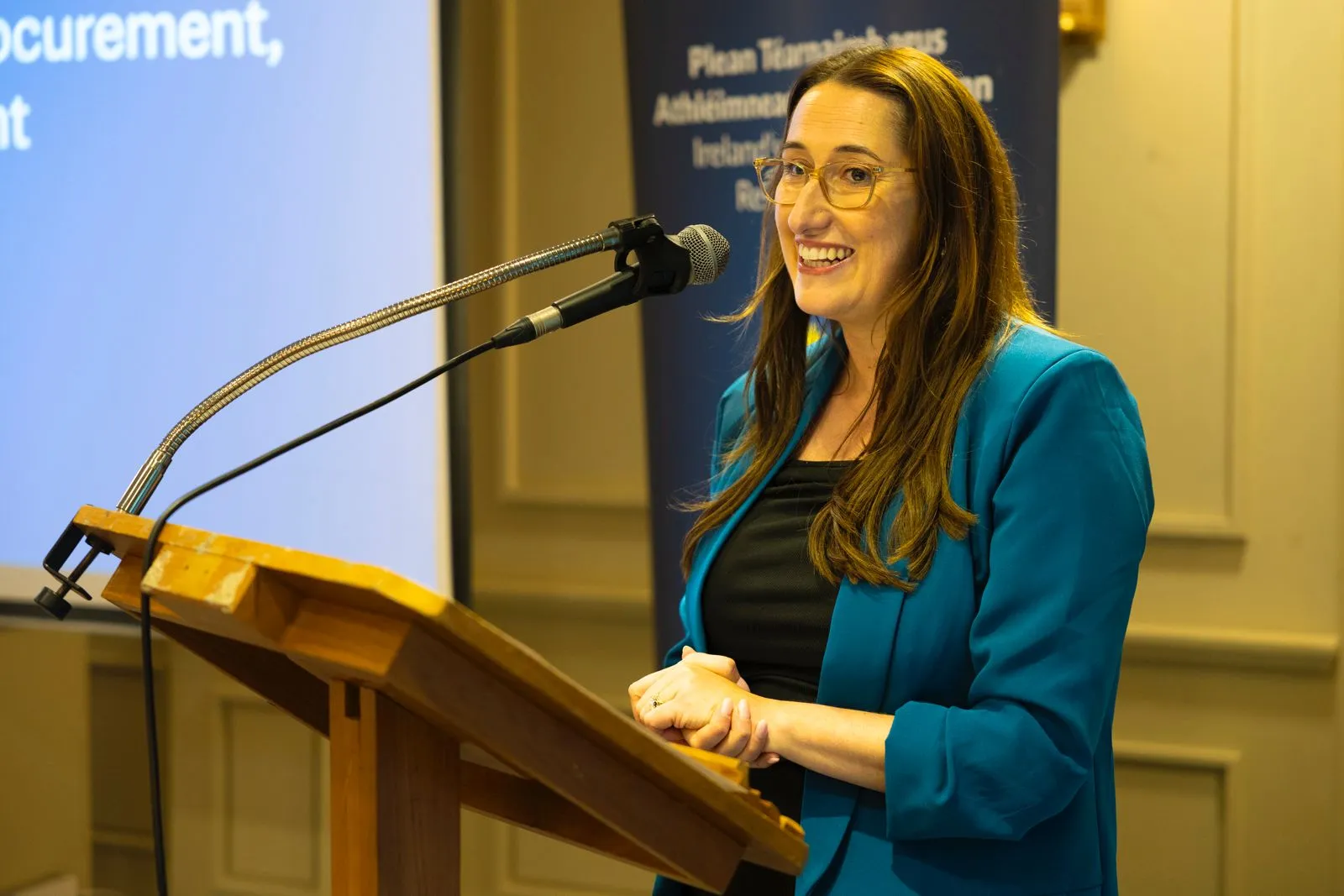
So, the early months have been about grounding myself in that reality, meeting with disabled people, family carers, Disabled Person’s Organisations and frontline staff, and listening carefully to their experiences. At the same time, I’ve been working closely with officials in my Department to really understand where our current policies are working well, and just as importantly where they are not. Those conversations have been invaluable.
These first few months have been about laying foundations. We want to ensure that disability is not seen as something that falls to one area of Government or one Department and to move to recognising it as a cross-government responsibility, and that can be seen with the development of the new Disability Unit chaired by the Taoiseach.
That’s a really important step in recognising that disability policy cuts across every part of government and that progress depends on collective responsibility rather than isolated action. The National Human Rights Strategy for Disabled People 2025-2030 reflects that approach by bringing together the areas of Government policy that require focused attention over the lifetime of the Strategy.
Spoke Out: Do you come from a background/involvement in disability?
Minister: Yes, I spent four years on the Oireachtas Disability Matters Committee from 2020-2024, an experience that was vital in deepening my understanding of disability and the everyday realities, pressures, and challenges faced by people with disabilities and their familiesand a role that afforded me the opportunity to work with disabled people, Disabled Persons Organisations and other key stakeholders.
Before being elected to the Dáil, I worked with the then Minister for Children and Youth Affairs at the time, Frances Fitzgerald, and later, as a Councillor myself, I worked closely with people with disabilities, their families, and disability organisations, listening and learning directly from their experiences and lived realities and advocating for them in my council chamber.
I also worked in the corporate sector in PayPal, in a role similar to human resources. From a private-sector employment perspective, this gave me some important exposure to disability, particularly around workplace accommodation, inclusion and barriers people can face in accessing or sustaining employment. Alongside this, I gained valuable project and change management experience, which I now bring into my current role and which will help ensure that the record 20% increase in the disability budget this year is translated into real impact in the lives of people with disabilities and their families.
Those cumulative experiences have shaped how I approach this role. They have reinforced my belief that you must first listen to understand, not just to individual stories, but the patterns behind them and where systems are falling short. Alongside this, I bring a very practical way of working. My background has given me a strong belief in plans, clear actions and follow-through. I am focused on turning what we learn into concrete steps, clear responsibility and measurable progress. For me, listening is essential, but it is only meaningful if it leads to action. And that is the approach I carry into this role every day.
Spoke Out: In Budget 2026, a number of one-off payments and energy credits were removed. This meant that people with disabilities, including many IWA members, were left up to €1400 worse off. What would you say to those people with disabilities who are struggling financially and are having to choose between eating and heating?
Minister: First and foremost, I want to acknowledge that for many people this struggle is real, and it is deeply serious. I know there are many people with disabilities and families across Ireland who are under intense financial pressure, and I do not underestimate the impact that the removal of one-off payments and the energy credit has had.
Only very recently, I met with the Irish Wheelchair Association, Disability Federation of Ireland, and Access for All, where we had a meaningful and frank discussion about this exact issue.
During that meeting, I heard a number of very real stories about the difficult decisions people are having to navigate. One story in particular stayed with me. I heard about a person who had chosen not to leave their home because they were prioritising paying their heating bill over charging their electric-powered wheelchair. The knock-on effects of making these decisions on mental health, well-being, and quality of life are deeply upsetting.
Where people or families find themselves under this kind of pressure, I would encourage them, where possible, to engage with their local social welfare office to explore what supports may be available to them. In some cases, this can include an Additional Needs Payment, while also recognising that eligibility will vary from person to person.
I also heard, very clearly, that the cold may affect people with disabilities in ways that are not always understood. For some, it could be about circulation issues. For others, reduced mobility means they can’t move around easily to keep warm. Some people spend long periods sitting or lying down, which can make it harder for the body to generate heat. Others are managing conditions or medications that can make them more sensitive to cold. So when we talk about heating for people with disabilities, we’re not just talking about comfort, we’re talking about basic physical wellbeing.
The Minister for Climate, Environment and Energy, Darragh O’Brien, has established a National Energy Affordability Taskforce to identify, assess and implement measures that will enhance energy affordability for households, with an Action Plan for Energy Affordability due to be published later this year.
Addressing the Financial Pressure and Winter Payment Calls
Spoke Out: IWA has been part of a Disability Coalition calling for an Emergency Winter Payment of €400 for people with disabilities. Do you support our call in order to prevent people from suffering now?
Minister: I understand why the Disability Coalition has made this call, and I recognise the very real pressure people with disabilities and their families are under right now. There is a genuine gap for people who were previously receiving one-off payments and are no longer receiving that support, and I do not underestimate the impact that has had.
The concerns being raised are legitimate and deserve serious consideration. At the same time, the Government is clear that we need to move away from reliance on one-off payments and towards long-term supports that are sustainable and can provide certainty for people on a permanent basis. In Budget 2026, this included a €10 per week increase across Disability Allowance, Invalidity Pension, Blind Pension and Illness Benefit.
That’s also why work is underway, led by the Minister for Social Protection, Dara Calleary, on the development of a permanent cost of disability payment. When I met with the Disability Coalition, I committed to ensuring that their concerns were brought into government discussions. I’ve raised these issues directly with Minister Calleary and will continue to do so as this work progresses. My focus is on making sure that the realities people are experiencing are understood and taken into account, particularly during this transition period as we move toward a new permanent model of payment support. In addition, the Department of Social Protection will shortly launch a public consultation process on how the cost of disability can best be delivered.
Transitioning to a Permanent Cost of Disability Payment
Spoke Out: People with disabilities are being asked to wait for reviews, wait for pilots, wait for future budgets, while the extra costs of disability are hitting them every week. As Minister for Disability, what is the one concrete change you will deliver in the next 12 months that people with disabilities will actually feel in their daily lives?
Minister: It would be remiss of me to talk about change in this space without referring to the National Human Rights Strategy for Disabled People’s First Programme Plan of Action 2025-2026, because that is the agreed roadmap for how disability policy is now being delivered across government, and part of my role is to communicate that clearly. This is the first plan arising from the National Human Rights Strategy for Disabled People, published last September, and its purpose is to turn rights into meaningful action right across government over the next 12 months and beyond.
That plan explicitly recognises the additional and unavoidable costs of disability, and work on a permanent cost-of-disability payment is a central part of it. As already mentioned, Minister Calleary has committed to introducing a cost-of-disability payment this year, and I am committed to working with him to see it progress.
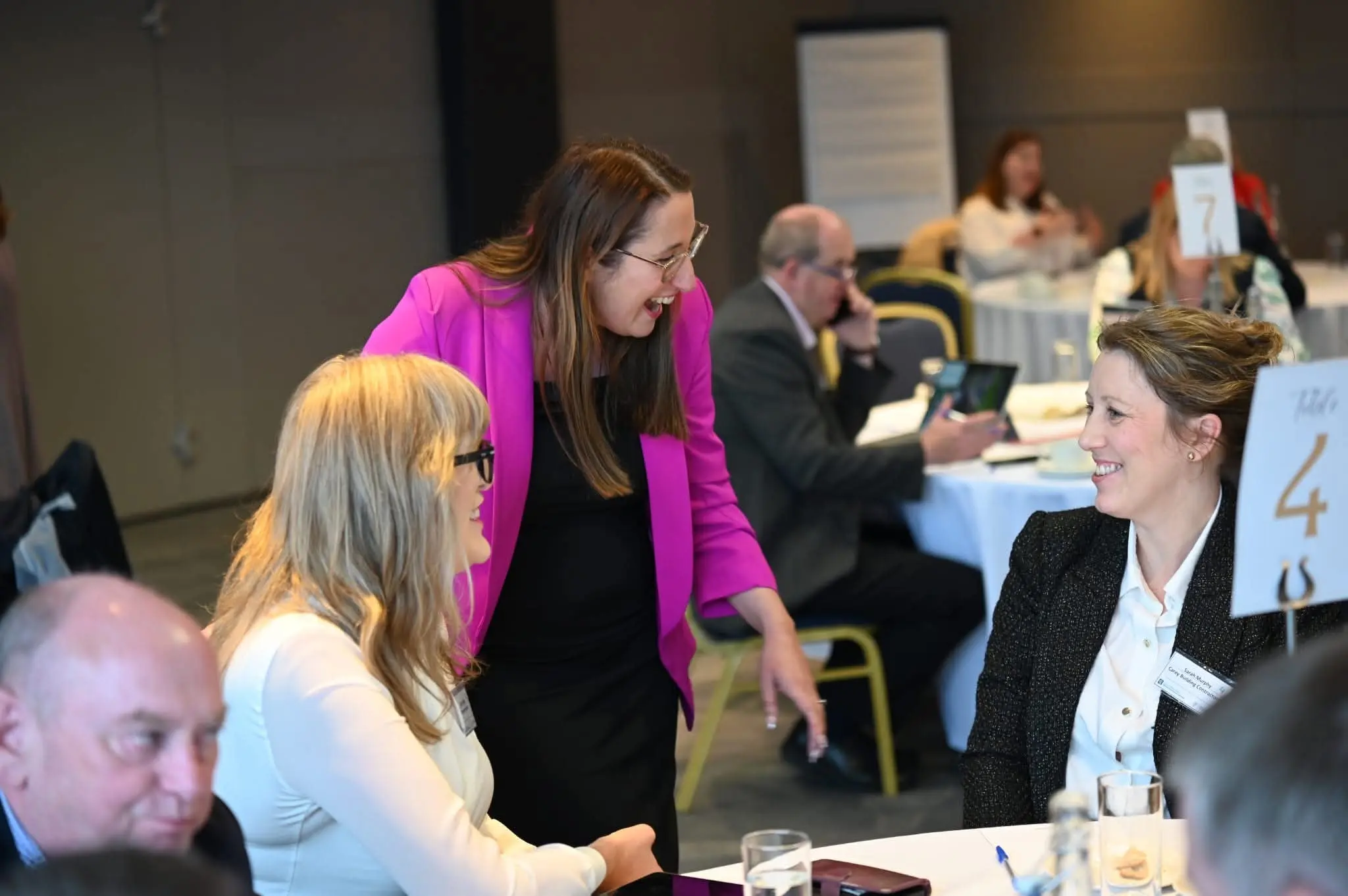
Spoke Out: Wheelchair users in Ireland face barriers at every stage of a simple journey – from their front door to their destination. What actions will you take in your role to remove these barriers and make accessible travel a reality, not an aspiration?
Minister: Wheelchair users continue to face real and practical barriers, and that is something I have seen first-hand over the last number of years as a public representative. Since taking on this role, I have met with many wheelchair users and representative organisations, and those conversations have reinforced just how many barriers still exist when it comes to accessible travel.
There have been important improvements in recent years, more accessible vehicles, investment in public transport, and a growing awareness that accessibility must be designed in from the start. However, we also have to be very honest about the reality wheelchair users are still facing. What should be a simple journey can quickly become costly, exhausting, or simply impossible, from uneven footpaths to limited or inconsistent public transport options to what happens at the destination.
I often think of a conversation I had with a wheelchair user who spoke about being unable to take a last-minute train because they were required to give 24 hours’ notice to arrange a ramp, and that support wasn’t available at short notice. Experiences like that can limit spontaneity, independence and choice. It’s not okay, and it’s not fair.
That lived reality, among many others, is exactly why accessible travel is a core focus of the First Programme Plan of Action under the National Human Rights Strategy for Disabled People. The plan takes a whole-of-journey approach and over the next 12 months, recognises that accessibility only works from footpaths and stations to vehicles, information systems and what happens at the other end.
Over the next 12 months, the Programme Plan includes tangible actions around public transport, strengthening how accessibility standards are applied and monitored, embedding accessibility earlier in transport planning, and ensuring lived experience continues to inform how services operate in practice. My role is to work closely with the Minister for Transport, Darragh O’Brien, Minister of State at the Department of Transport, Séan Canney, and with colleagues across government to build on the progress that has been made, while addressing the gaps that wheelchair users continue to experience.
Accessible transport is fundamental to independent living, participation and equality. The Programme Plan gives us a clear framework to take meaningful action, so that people can travel when they need to, not when the system allows them to.
Spoke Out: Describe a typical day in your role as Minister?
Minister: There isn’t a single typical day, but most weeks have a rhythm to them. Some weeks also involve being out of the country for international work. For example, next month I will be delivering an address on behalf of the Irish Government at the United Nations, which is in New York. By and large, Mondays are usually spent out in communities, either in my own constituency or around the country, visiting services and meeting people.
On Tuesdays, I start the day at Cabinet and am usually in the Dáil. Wednesdays are split between my Department in the morning and the Dáil later on, with votes often running right up to midnight. Thursdays are generally spent in my Department focusing on meetings and engagement with key stakeholders. Fridays often start out and about in communities, whether that’s in my own constituency or any county in Ireland, visiting a Disability Service or charity that supports disabled people.
Spoke Out: If you weren’t in politics, what would you be doing career-wise, do you think?
Minister: That’s a really tough question, and it’s one I’ve been asked a few times over the years, and I still always struggle to answer it. Not to be cliché, but my life over the past decade has been immersed in politics. I made a conscious decision to leave the corporate world to work in public service, and it’s where my focus and energy have been ever since. It’s what I care deeply about and where I feel I can make the most meaningful contribution, so I think I’d still be working in and around politics or public service in some form.
Spoke Out: When can we expect the Midterm Review of the National Housing Strategy for Disabled People 2022-2027 Implementation Plan (well past its target date)?
Minister: I am very conscious the midterm review of the National Housing Strategy for Disabled People 2022-2027 Implementation Plan is beyond its original target date, and of the importance of having the Plan completed and published and my Department will continue to engage with the Department of Housing, Local Government and Heritage to support its progression and to ensure it is brought forward as soon as possible. This is also an issue that will be raised at the Cabinet Committee on Disability, which is chaired by the Taoiseach.
Accountability and the National Human Rights Strategy
Spoke Out: People with disabilities have seen many strategies and frameworks over the years. What makes the Human Rights Strategy for Disabled people different, and how will it deliver measurable change in independence, access and equality?
Minister: What’s different about the Human Rights Strategy for Disabled people is its focus on delivery and accountability from the start. A dedicated Delivery and Monitoring Committee has been established to help to track progress and ensure effective implementation of the Strategy and it is chaired by the Taoiseach. The Committee brings together representatives from Disabled Person’s Organisations, civil society, disability service providers, umbrella organisations, and the National Disability Authority. This work is further supported by a Data and Evidence Working Group, led by the National Disability Authority.
Disabled people were involved from the very beginning in shaping the Strategy, and it is the first national Strategy for disabled people to be published since Ireland ratified the United Nations Convention on the Rights of Persons with Disabilities in 2018.
While individual departments retain responsibility for delivery within their own remits, the Strategy is designed to ensure shared ownership, coordination and accountability across government and is supported by a rolling programme plan of action, published every two years.
Strong governance and oversight are also a key part to ensuring delivery. Overall progress is overseen at Cabinet level through the Cabinet Committee on Disability, supported by the new Disability Unit in the Department of the Taoiseach which helps drive coordination and follow-up across government. There is also an important role for the Oireachtas in keeping the strategy under public scrutiny. The Joint Oireachtas Committee on Disability Matters provides a forum for open discussion, challenge and accountability, ensuring that progress can be examined in a transparent and public way.
Taken together, these structures are about keeping attention focused on delivery, ensuring progress is transparent, and allowing issues to be identified and addressed as the strategy is implemented.
Spoke Out: What would success look like to you at the end of your term as Minister with Special Responsibility for Disability?
Minister: Success for me would be knowing that disabled people and their families can see and feel a real difference in their everyday lives. It means ensuring that that this year’s record disability budget, which increased by 20%, one of the largest increases across government, is translated into real delivery that makes a meaningful difference to people’s day-to-day lives.