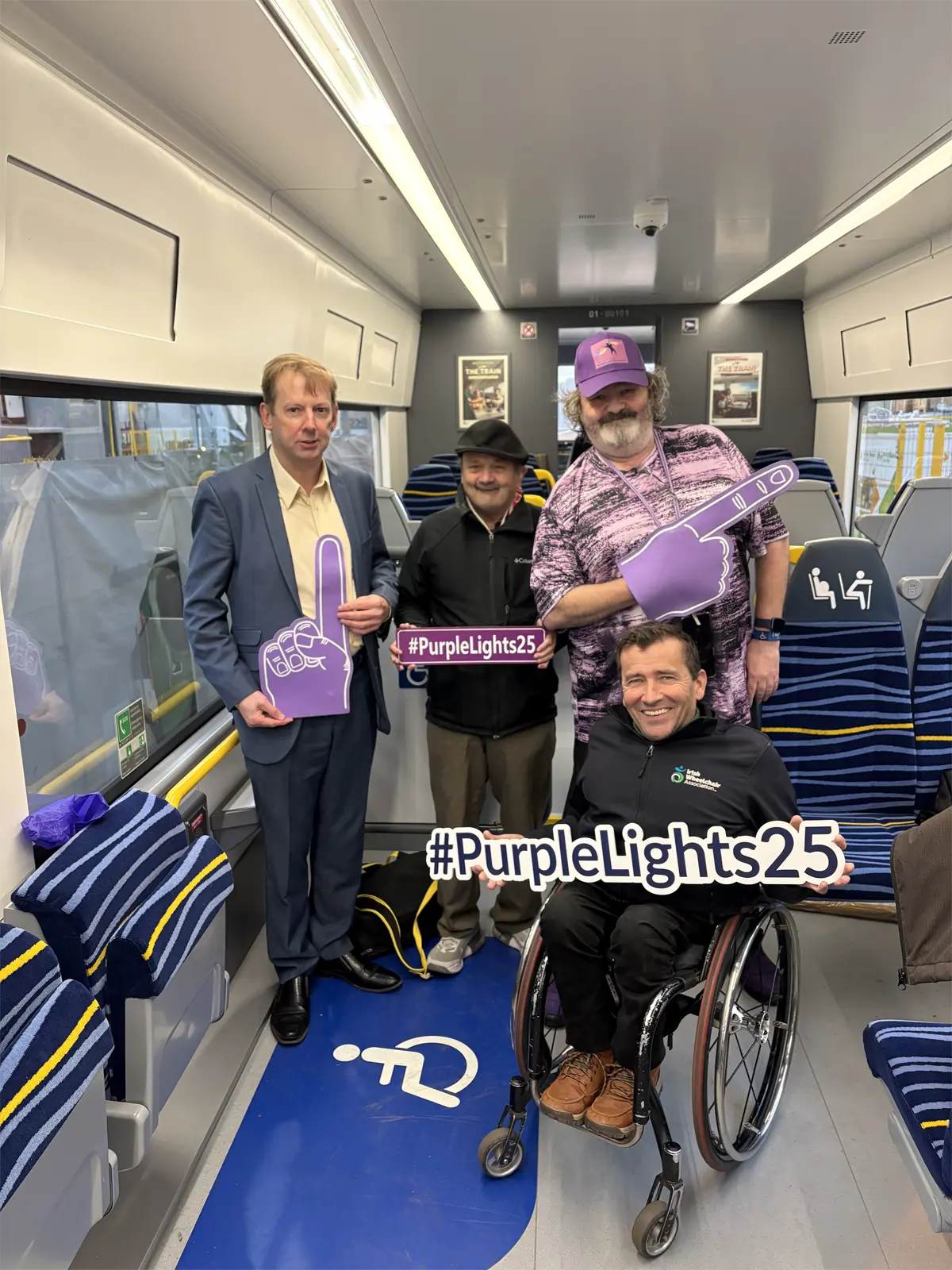
Share this Article


Some of Ireland’s older trains had plenty of charm, but accessibility wasn’t exactly one of their selling points. Doors seemed determined to test your upper-body strength, while the internal carriage doors could have doubled as gym equipment. For wheelchair users and many people with mobility difficulties, rail travel wasn’t simply inconvenient — it was often inaccessible.
Over the past decade, rail travel in Ireland has become significantly more accessible, making it easier for people with reduced mobility and additional support needs to travel with confidence. Many larger stations now offer step-free access, lifts, ramps, tactile paving, accessible ticket counters, hearing loop systems and clearer orientation.
Iarnród Éireann has invested heavily in accessibility upgrades, supported by funding from the National Transport Authority. Passengers can request assistance with navigating stations, boarding and leaving trains, and transferring between services.
Modern trains now include dedicated wheelchair spaces, somewhat accessible toilets and both visual and audio passenger information systems. Staff assistance is available at many stations and on-board services, helping passengers travel more independently.
That said, some rural stations still lack complete step-free access, while older infrastructure can create challenges for wheelchair users and visually impaired passengers.
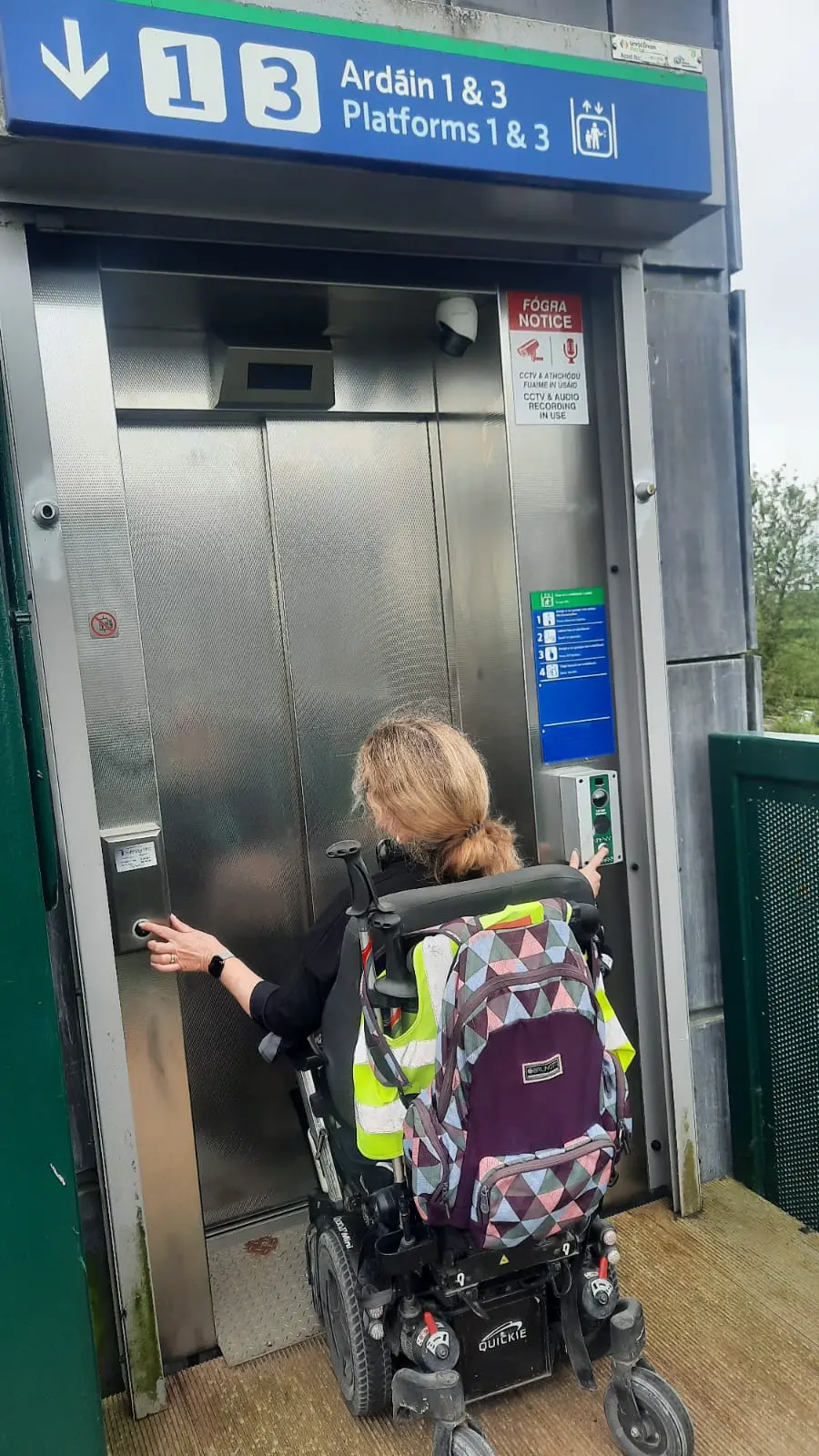
Smaller stations also have limited staffing, making advance booking important if assistance is needed.
What’s encouraging is that accessibility is no longer an afterthought. Iarnród Éireann now works with a Disability User Group, allowing people with lived experience to help shape future improvements and station upgrades.
Recent Developments
The introduction of Changing Places facilities at Connolly, Heuston and Colbert Station in Limerick provide larger accessible toilets with equipment for people with complex needs. More locations are planned in the future. View the full list of Changing Places locations.
The assistance booking process is also getting an upgrade. A new system will replace the current manual process, providing booking confirmations, staff reminders and better communication throughout the journey which should mean less uncertainty and a smoother travel experience.
Kent Station in Cork has introduced a Sensory Pod designed for passengers who may find busy stations overwhelming, offering a quiet and calming space before travel.
Age-Friendly walkability audits have recently taken place at Kent, Castlebar, Hazelhatch and Templemore stations. I had the opportunity to take part in some of these, sharing feedback from a wheelchair user’s perspective.
As a regular rail traveller, I’ve learned a few lessons along the way.
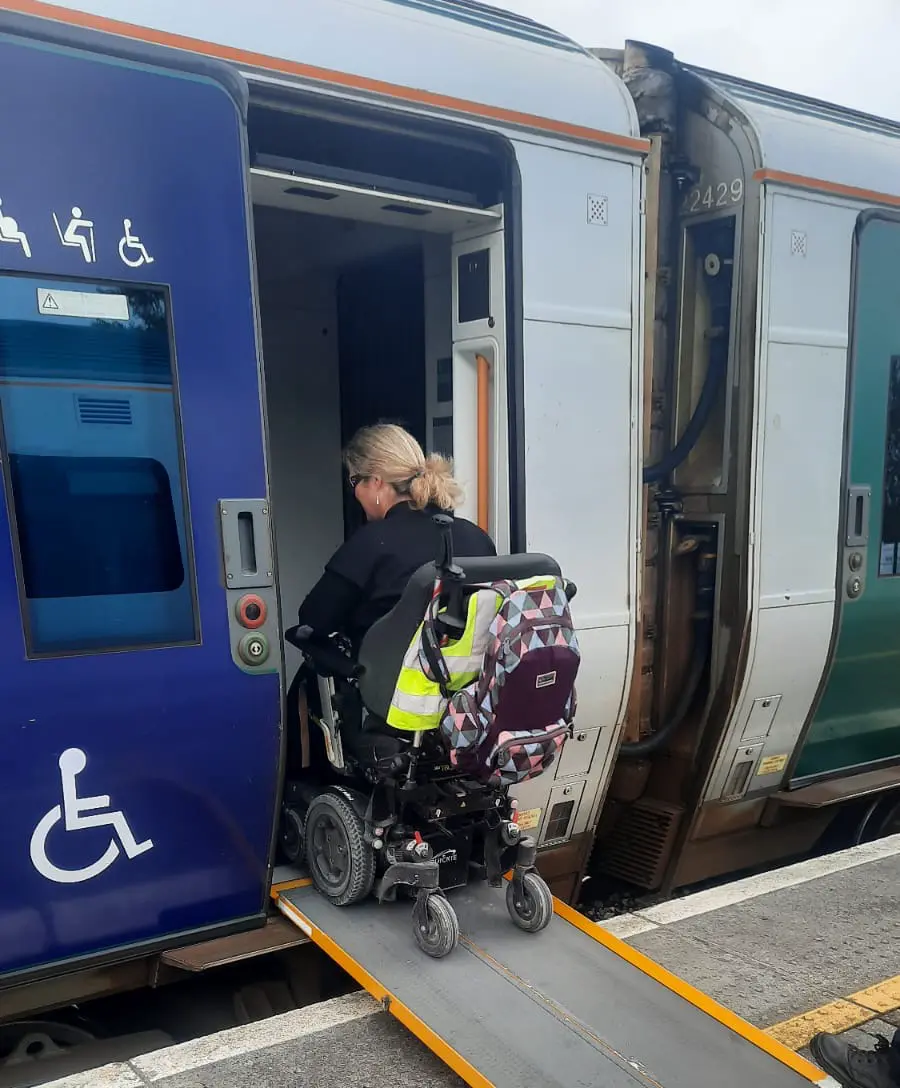
First, mind the ramp!
Staff are generally excellent when assisting passengers, but if you’re using a manual wheelchair, avoid hanging heavy bags off the back. On some trains, particularly Cork’s Mark 4 services, the ramp can feel a little steeper than expected.
Second, expect the unexpected!
Lifts break down: I’ve had journeys turn into unscheduled sightseeing tours because of it.
On occasions I’ve travelled past my intended stop because the lift wasn’t working. While frustrating, Irish Rail have always found a solution, including arranging taxi transport when necessary. It’s not perfect, but it shows a commitment to helping passengers reach their destination.
Accessibility may not be the same across an entire station
Another welcome development is the increasing number of SOS and help points appearing at stations. These allow passengers to contact staff quickly and provide reassurance when travelling independently.
If you’re planning your first accessible rail journey, a little preparation goes a long way. Book assistance and wheelchair spaces in advance, arrive early, check station accessibility information beforehand and keep an eye on lift outages or service disruptions using the Irish Rail app. Keep essential items within easy reach.
One lesson I’ve learned is never to assume that accessibility is the same across an entire station. Just because one platform is accessible doesn’t always mean the opposite platform is. My local station, Ballybrophy is an example of that.
Most importantly, speak up when something isn’t working, reporting problems helps improve services for everyone.
Accessible rail travel has room to improve, but progress is happening. From Changing Places and sensory pods to smarter assistance booking and age-friendly station design, accessibility is becoming increasingly important, and today’s railway offers more possibilities than platforms once did.