


Share this Article


Acquiring Tickets
The biggest barrier I usually encounter is trying to get a ticket through often complex booking systems. Most major events are sold through Ticketmaster, which offers a dedicated “Accessible Tickets” option. This allows us to select wheelchair spaces and view seating layouts. However, these tickets are limited in number and often sell out quickly, especially for popular events where I have found myself in a queue of twenty thousand + people most of whom are wanting to acquire general admission tickets while I queue for sometimes up to two hours for only a small amount of accessible tickets. On a couple of occasions recently I booked an accessible ticket and had to contact a robot to acquire a companion ticket which was frustrating and required perseverance, but it paid off. In some cases, accessible tickets cannot be purchased online and require contacting the venue directly, which can be inconvenient and inconsistent but as a regular concert goer, I am usually willing to put the extra work in.
Many venues provide a free or discounted ticket for a personal assistant on a one-to-one basis, but it is important to note that there are promoters and venues that don’t provide this service. Where it is available, it makes attending concerts more feasible and affordable. However, users are often required to provide proof of disability after booking, which can feel bureaucratic and add extra pressure and if you are attending as part of a group your seating options are often separate.
Venue variability
Venue accessibility varies significantly. Newer and larger venues tend to offer better facilities, such as step-free entry, wheelchair viewing areas, and accessible toilets located nearby. In contrast, older venues such as Theatres may have limited accessibility, including no lift access or restricted seating options.
Even where access exists, issues like narrow corridors or obstructed views can negatively impact the experience. I have experienced everything from sitting in a cherry picker to getting stuck in a small lift in some of our older venues. I always think I’ll remember a place I have visited but it is no harm to take a note of the access facilities for future bookings when you visit a new venue.
Some good and not so good experiences
Last year I attended a gig at the Aviva and while the accessible seating was good, when the concert was over the lift in my area had become out of order which meant I had to go against the crowd who were all wanting to leave at speed to get the dart or the bus etc and it was a nightmare. There were no stewards nearby.
In contrast when attending gigs at the 3Arena, there are always stewards in the accessible area who are very visible and create pathways for easy exit.
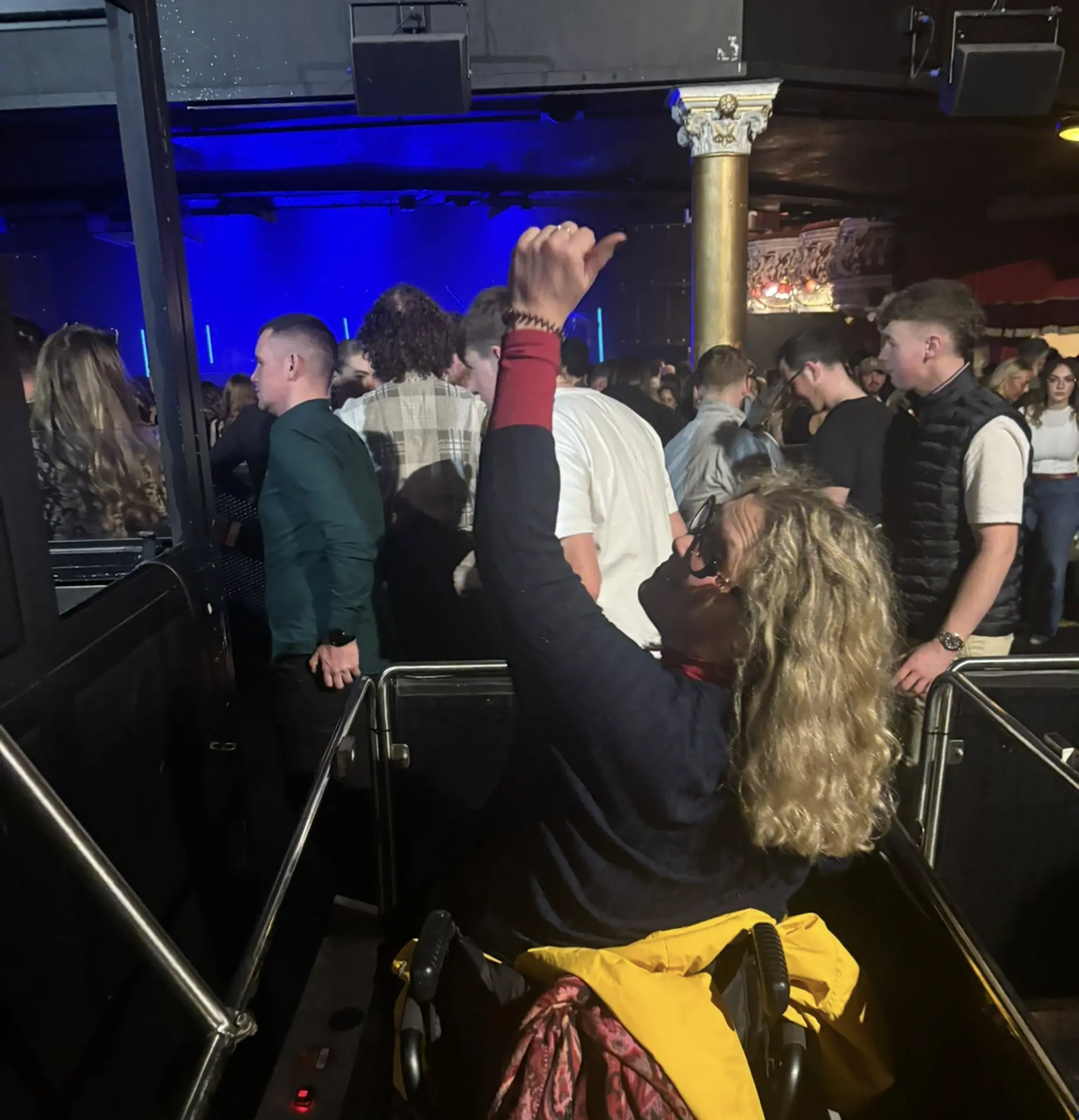
I attended a gig in Croke park later last year and on the day of the concert I received an email from Ticketmaster to advise me there would be a lockdown in my area for approximately 25 minutes at the end of the concert so I could either leave before it finished or wait until the stewards allowed us to leave. I was somewhat perturbed by this message, but it turned out that the lockdown made it much easier to exit as the urgency of the initial exit has subsided.
Accessible Facilities
Facilities are another important factor. Many venues now provide accessible toilets, step-free bars, and trained staff who can assist patrons with disabilities. Additional supports such as hearing assistance systems and designated parking are becoming more common. However, these features are not standard across all venues, meaning attendees often need to research in advance or contact venues directly to confirm what is available. When I am in a new venue, I always try to make contact with a staff member who looks like they are well established as often stewards are seasonal workers and not as experienced.
Overall, there are clear benefits, including improved booking options, companion tickets, and better-designed venues. However, there are also notable drawbacks, such as limited ticket availability, inconsistent booking systems, and varying levels of accessibility.
In conclusion.
While Ireland’s concert scene is becoming more inclusive for wheelchair users, the experience still depends heavily on preparation, early booking, and the specific venue. With the right planning, attending live music events can be both accessible and highly enjoyable.