Print Issue: April 2025

This is a printer-friendly version of the Spokeout magazine.

⚠️ Important for Best Results:

  • Browser: Use Chrome, Edge, or Safari.
  • Settings: Ensure "Background Graphics" is CHECKED in the print options.
  • Margins: Set margins to "None" or "Default".
Spokeout Cover Image Logo
Spotlight on:
Rob O'Byrne
Be part of our Pre-Budget Campaign
Other Features:
Why join our multi-sports clubs, braving the elements for our members, plus lots more

Spokeout April 2025

How is it April already? We are loving seeing the gardens in our Community Centres across the country come to life.

There is so much talent and creativity across so many areas among our members. From talented gardeners to talented writers. We encourage you to read our featured extract from Alex’s book “The Jedi in a Wheelchair.” Alex is part of the IWA family in Portlaoise and recently completed our Self-Advocacy course.

This month’s edition of Spoke Out really showcases the power of storytelling. IWA Personal Assistant, Peter shares how he went the extra mile during the snowstorms in January and Rob O’Bryne shares his tale of resilience and determination to become a business owner.

On the fundraising front, we’re calling on the females in our community to take part in the upcoming Women’s Mini Marathon plus our Mobility Life features a range of innovative products that can be fitted to wheelchairs helping to navigate some more challenging terrains.

Our advocacy team are working hard on our Pre-Budget submission and they are calling on you to have your voice heard by filling in the survey included. It’s vital that our Pre-Budget submission reflects your needs so please do take some time to fill that in.

Lastly, we want to say a huge thank you to everyone who supported the Access: It’s No Joke campaign launched on April Fools Day. Throughout the rest of the week we are sharing video from you, unscripted and unedited. Make sure you are following us on social media and if you haven’t had a chance yet make sure you check out our Access: It’s No Joke website page today.

Thank You,

Pam

Magazine Logo
Spotlight on:
Rob O'Byrne
Be part of our Pre-Budget Campaign
Other Features:
Why join our multi-sports clubs, braving the elements for our members, plus lots more

In this issue:

  • Spotlight on: Rob O’Byrne
    Turning his passion for fitness into a business
  • Advocacy
    Get involved in our Pre-Budget Campaign
  • Fundraising
    Help to make a difference to the lives of our members
  • Sport
    How youth involvement in IWA-Sports Clubs helped shape the lives of two wheelchair basketball greats
  • Volunteers
    East Cork IWA Branch - Over 50 years of Support & Friendship
  • Mobility Life
    A look at motorised wheelchair attachments
  • Going the extra mile to support our members
    "My first thought was would I be able to get to Pat" - Assisted Living Service PA Peter Ryan
  • The Jedi in a Wheelchair
    How one IWA member is using storytelling and self-advocacy to find his voice—and inspire others.
Page 1

Spotlight on Rob O’Byrne

Turning his passion for fitness into a business
At just 17 years of age, Rob O’ Byrne’s life changed in an instant. He broke his neck, damaged his spinal cord and was left a C5 incomplete quadriplegic after a split-second decision to dive into a swimming pool while on a family holiday.

It left him facing a future he never could have imagined. But rather than letting his injury define him, he used it as fuel to create something remarkable – a fitness gym geared towards people with disabilities, proving that determination, resilience, and ambition can break down any barrier. The entrepreneur’s name for his enterprise, ‘What’s Your Excuse Fitness ” says a lot about his personality! “As I’m a wheelchair user myself I thought if I’m able to do it, you should be able to do it too,” he laughed. “There is no excuse.”

Ireland’s first adaptive and inclusive personal trainer, the 37-year-old set up his fitness studio in Dublin 24 almost ten years ago and gets great satisfaction from helping others to achieve their own personal goals. Rob told Spoke Out “The fitness studio includes wheelchair-friendly exercise systems such as the cable machine, free weights, barbell Olympic weights, a weight bench, electric plinth, skiger, adaptable rowing maching and TRX suspension training”

“I create personal training programmes for disabled people and the general public so that they can get the proper one-on-one attention that is required.  Whether it’s for post hospital rehabilitation, weight loss, strength, muscle gain programmes, mobility and flexibility, sports conditioning or building confidence, they can be done in a relaxing and private space.”

He emphasised that it doesn’t matter if you’re in Dublin or Donegal, as he also provides online programmes and supports. “There are no more excuses not to get the right programme and make a better life for yourself”.

Making a good life for himself was always a priority for Rob and although his accident was a ‘very difficult thing to go through’ and he was “inconsolable” when he realised he would never walk again, it never stopped him from wanting to succeed and get on with his life. “I was due to go into sixth year at the time and I thought I am going to have to get back to school. It was during the Celtic Tiger and I had been mad to leave school as quick as possible to get out and make money.  My mother said after my accident was the first time she heard me talking about school and wanting to be there!”

After over nine months in the National Rehabilitation Hospital (NRH) Rob did indeed go back to school and sat the Leaving Certificate in five subjects, obtaining honours in them all. He decided to further his education and went to Inchicore College of Further Education to study a PLC FETEC Level 5 Business Management Course.  Following a year there he went to the Institute of Technology Tallaght where he spent four years studying for an Honours Degree in Business Management.

Man in a wheelchair smiling confidently with arms crossed, in front of a blue wall featuring a yellow muscular arm logo and the words “What’s Your Excuse Fitness Centre.”
Rob O’Byrne in front of his “What’s Your Excuse Fitness Centre” logo — a gym he founded to challenge perceptions and promote accessible fitness for all.

However he wasn’t sure what he wanted to do after he graduated. But then fate intervened. Rob went to a talk at the NRH. He said: “The talk was on tendon transfer.  I was really interested in this idea, and I became the first person in Ireland to receive a tendon transfer whereby I underwent an operation that removed one of the three muscles in my biceps which was then moved into the area where my working triceps once was.”

After more months of rehabilitation following the operation, he returned to the gym only to realise that many personal trainers struggled to understand rehabilitation work for people with disabilities. And so, his next journey began and he qualified as a gym instructor, personal trainer and TRX instructor and set up his fitness business.  “My own experience opened my eyes to the different ways people in wheelchairs, with brain injuries, stroke injuries and the blind can exercise.  It inspired me to try find a way to get the word out there.“I have developed an inclusive programme for schools now which shows that a person who is different to them can still do the same type of thing as them.


Rob O’Byrne trains with a Concept2 rowing machine at his fully inclusive gym in Dublin. As Ireland’s first adaptive personal trainer, Rob designs one-on-one programmes tailored to people with disabilities and chronic conditions.

“Tonight I am going to a training session with an U/13 GAA team.  I am still trying to grow my business and am in talks with other groups about helping them.  I am always looking for new clients, so that I am not stuck in the one lane.  I started off working with people with spinal cord injuries now I work with people who have had strokes, have multiple sclerosis or other conditions.  I listen to clients and hear what their needs are.“I always had an outlook in life that there is nothing you can do about your past, there is only your future you can shape.  Today is gone, tomorrow is ahead of you.”

“My advice to people is that if you are looking to get into a certain industry that you don’t accept the word no.  If you think you can do it, then find the way to do it.  If barriers are there, ask for help.“I did a 12-week online disability entrepreneur course in TU Dublin disabilities which was very helpful. I am constantly educating myself.”

Rob is very appreciative of IWA’s Personal Assistance Service which gives him the independence to live the life he wants to lead.

“You can never have enough goals.  My mindset is to keep going.  No matter what happens life goes on, I suppose life is just a little bit harder when you have a disability but as my late granny use to say ‘God only puts weight on your shoulders that you can carry’.  Although if he puts any more weight on my shoulders I’ll be having a tough talk with him!!”

You can get in touch with Rob by email on whatsyourexcusefitness1@gmail.com or by phone on 086 359 1317

If you are a person with a disability looking for support to become an independent jobseeker, contact IWA about our Ability Programme.

Page 2

Advocacy

Get involved in our Pre-Budget Campaign
Here we are again getting ready for our Pre- Budget 26 campaign, and we hope you will get involved.

2024 was a year of campaigning, and elections, where we saw many promises made by all parties relating to disability. Now that the new Programme for Government is published and disability is an integral part of it, it is time their promises are turned into action and that disability is funded appropriately.

You, our members, have told us that the Cost of Disability, Personal Assistants, Transport, Housing, Employment, are your key issues, preventing  you living independently and doing what you enjoy.

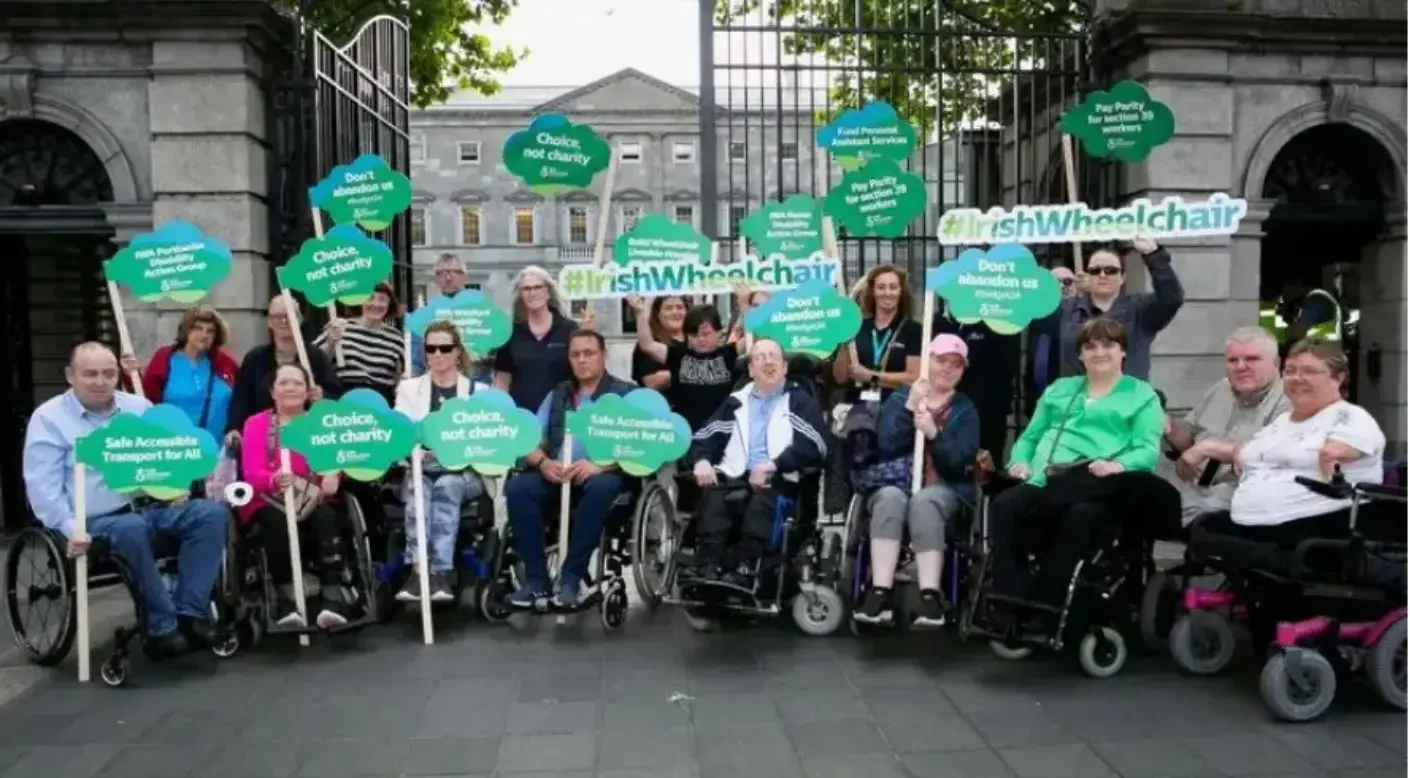
Group of people, many in wheelchairs, gathered in front of government gates holding signs with advocacy messages such as “Choice, not charity,” “Safe Accessible Transport for All,” and “Don’t abandon us.” A large banner with the hashtag #IrishWheelchair is prominently displayed, highlighting a public demonstration for disability rights and services in Ireland.
IWA members and staff brought their pre-budget campaign to the gates of Leinster House two years ago. We plan to do this again as part of our campaign this year

Some of you have told us that you have to make decisions on whether you heat your house or eat. The Government cannot sit back any longer. They need to hear what we have to say. 

 We do not want any more promises. We want action. 

 As part of our campaign we have a short survey for you to fill out, so we can have your voices represented in the pre-budget submission

If you are interested in making a short video on your phone about any of the issues mentioned that impact you, for our social media campaign please send them to Marie.KieransRegan@iwa.ie 

 We plan to gather outside Leinster House at the end of May to rally support for our demands so please keep an eye out on social media for further details, we would love to see you there. We look forward to bringing you more details on this campaign over the coming weeks.

Joan Carthy, Advocacy Manager 


Page 3

Fundraising

Help to make a difference to the lives of our members
VHI Women’s Mini Marathon is taking place on Sunday 1st June 2025 and IWA want you on our team.

Register on www.iwa.ie/minimarathon to be part of the world’s largest all-female event while raising vital funds for IWA.

By being a part of Team IWA, you will be helping to make a difference to the lives of our members such as Pat who has been using Irish Wheelchair Association’s accessible bus service to get to his local IWA Community Centre in Athlone for over eight years.  

Every Wednesday and Thursday, one of our accessible buses collects and brings Pat to meet friends and take part in activities in his local centre.   

Pat says: “It’s a chance to meet other people and get you out of the house. I did the computer activities in the centre mostly. Then in recent times we began card playing – 25, which I hadn’t done for years and years but it came back to me. I enjoy that.” 

Brenda took part in VHI Women’s Mini Marathon last year with two of her closest friends together raising over €1,000. She  describes it a  being  ‘a wonderful, memorable day of women walking and running to remember loved ones and offer their support to many charities.’ 

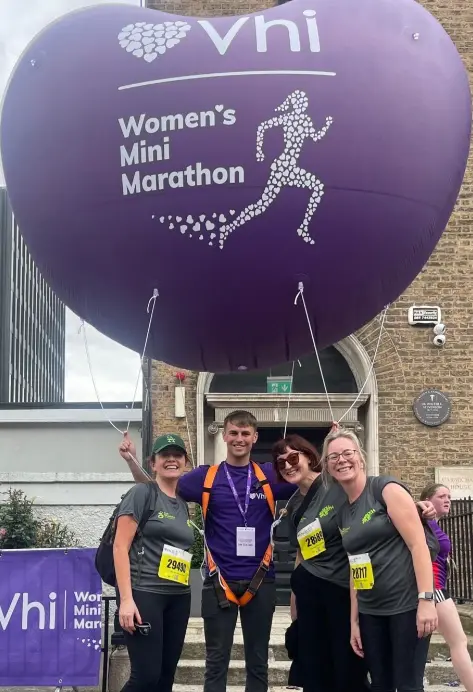
Three women and one man smiling in front of a large purple balloon that reads “Vhi Women’s Mini Marathon,” with two of the women wearing race bibs and matching athletic shirts.
Brenda, Ciara and friends proudly represented Team IWA at the 2024 VHI Women’s Mini Marathon — raising over €1,000 while enjoying a joyful, sun-soaked day of solidarity and support for Irish Wheelchair Association.

“The sun smiled on us all that day – it was truly humbling and uplifting”, she added.

Ciara, who also took part in 2024, enthused: “A fab day in the sunshine with thousands of other women running and walking for wonderful causes. What a joy and privilege to complete the Women’s Mini Marathon and raise vital funds for Irish Wheelchair Association!” 

Whether you choose to walk, jog or run the 10Km route, you will make a real difference to the work of Irish Wheelchair Association in your community and members like Pat across Ireland. 

To be part of Team IWA in this year’s Women’s Mini Marathon please register on our website or contact Ciarán McDonagh, Community Fundraising & Events Coordinator on fund@iwa.ie

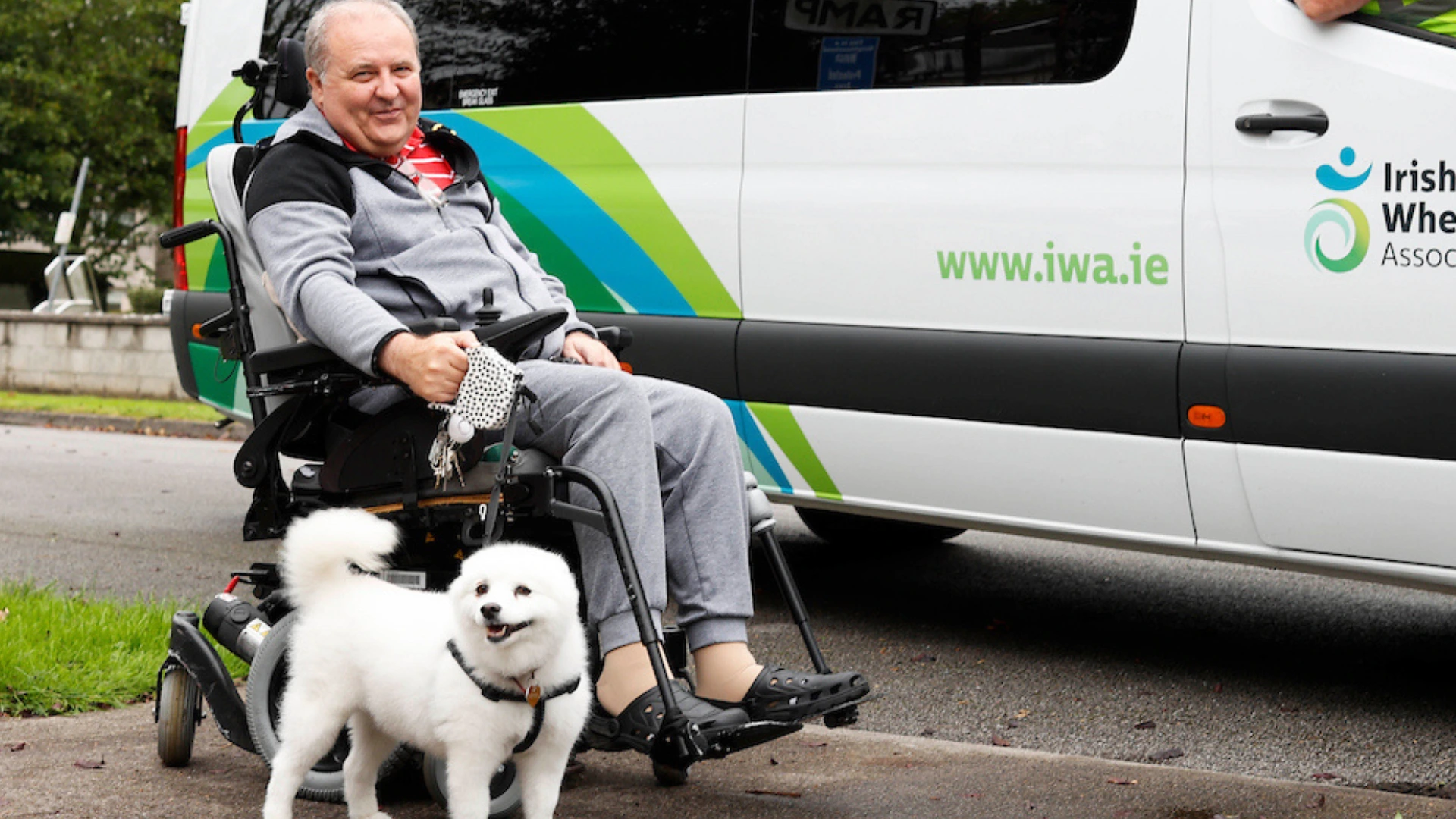
Man in a motorized wheelchair smiling while outdoors, accompanied by a fluffy white dog on a leash. A white accessible transport van is parked in the background, indicating community or mobility support services.
Pat, an IWA member from Athlone, has been using Irish Wheelchair Association’s accessible transport service for over eight years to attend his local Community Centre — where friendships, fun, and a good game of cards await.
Page 7

Sport

How youth involvement in IWA-Sports Clubs helped shape the lives of two wheelchair basketball greats
This month we caught up with two great leaders in Irish Wheelchair Basketball, Jack Quinn of Rebel Wheelers Multi-Sport Club in Cork and Sophie Denieffe of South East Swifts in Kilkenny who joined their clubs from a young age and have gone on to have experiences lasting a lifetime. 
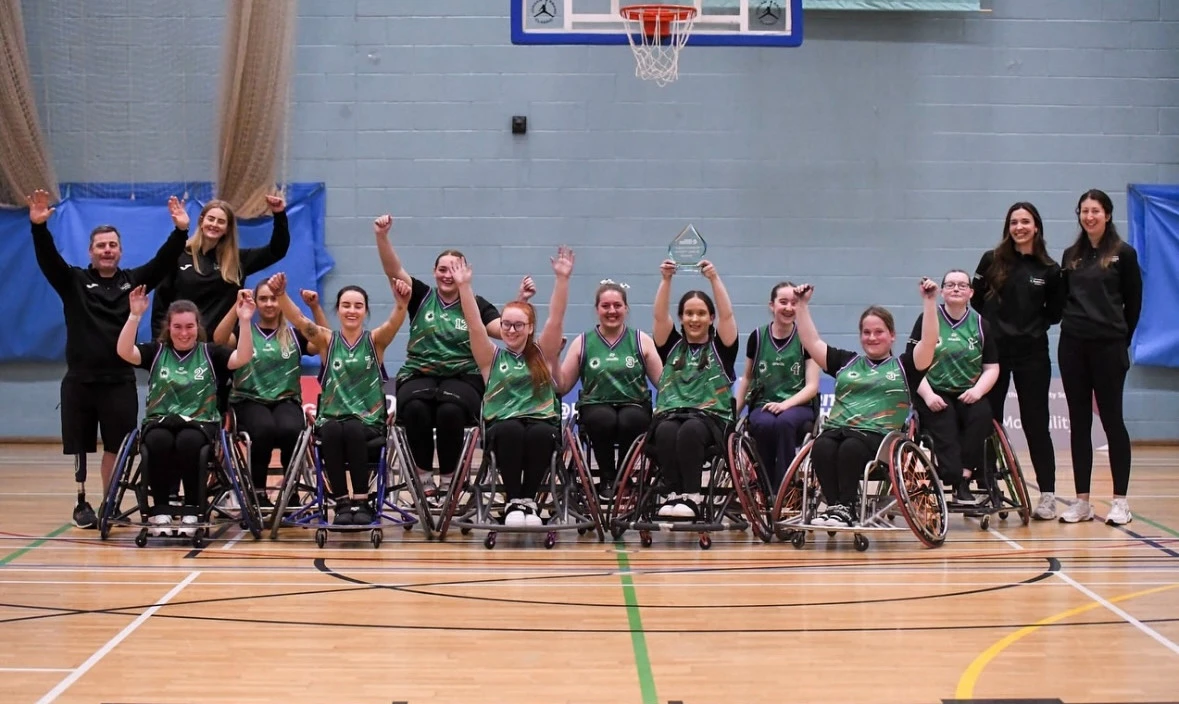
The Emerald Rollers women’s wheelchair basketball team posing proudly under the basketball hoop, all smiles after a tournament win.
The Emerald Rollers women’s team celebrating another strong performance—many players began their sporting journeys in IWA youth development programmes.

They share their experiences and how their clubs have helped them both on and off the court.  

Sophie Denieffe (SD): “I started playing wheelchair basketball when I was about 12 years old while I was in the recovery process of a surgery I had just had on my hip. While attending physio after the surgery I saw a poster in the waiting room advertising a Wheelchair Basketball club in my local area, South East Swifts.”

Jack Quinn (JQ): “I first started with Rebel Wheelers in their Saturday morning club when I was 9 years old and then I was first introduced to Wheelchair Basketball through Paul Ryan (IWA-Sport staff member and coach) just before I turned 10.”

Sophie explains the importance of feeling comfortable in a club.  

SD: “Finding a suitable club is about so much more than just physical activity. You want to be in an environment where you feel comfortable and look forward to being there. A good club will have a friendly atmosphere that makes you want to show up regularly. Finding a suitable club is also a great way to find a sport you are genuinely interested in and will actually look forward to playing each week. It is also a great way to meet people who might have the same disability as you who you otherwise might not have had the chance to meet and get to know.”

Jack added that being around people of a similar age helps create friendships and makes learning a new sport an easier experience.  

JQ: “I think having people around the same age as you that you can create friendships with and learn from as well can be hugely beneficial to helping you settle into a new club which can be a daunting experience. Also, having people you are comfortable around to help push you out of your comfort zone can be very important to increasing your confidence in navigating daily life and increasing your independence.”

Sophie shared that being involved with South East Swifts has provided great opportunities, but more importantly helped her grow in confidence.  

SD: “Being in a para sport club has helped me immensely not only from a physical point of view but also from a confidence point of view. Being able to play a few times a week has been a great way to keep fit and active. It has also helped me gain confidence and has also given me great opportunities to travel with my team to compete. I have also formed great friendships from being part of a club. It has also been great for my mental health too.”

Travelling around Europe to play Wheelchair Basketball is something Jack is grateful for and attributes those opportunities along with making friends for life to being involved in Para Sport.  

JQ: “Being involved in Para Sport has helped me in life in many ways. It has given me the opportunity to represent my country at European Championships, play against some of the best players in the world, and to travel around Europe. It has helped me a lot with my confidence, maturation and independence. It has also given me some incredible friendships.”

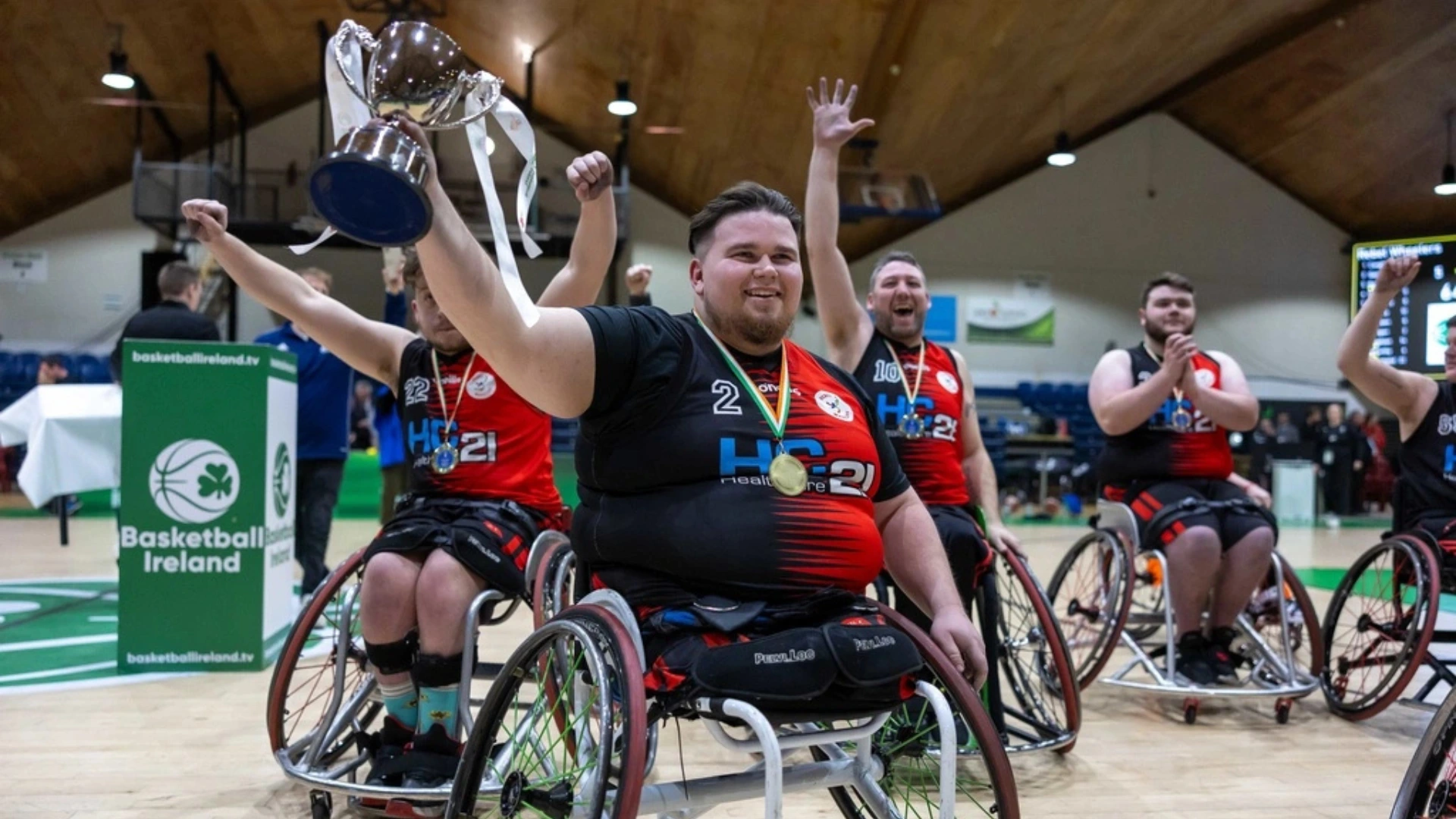
Rebel Wheelers wheelchair basketball players celebrating on court as their captain, Jack Quinn, raises the National Cup trophy in victory.
Rebel Wheelers captain Jack Quinn lifts the National Cup as the Cork club celebrates a historic five-in-a-row victory.

At the beginning of March, Emerald Rollers gained promotion to Division 2 of the Great Britain Wheelchair Basketball Women’s League, with only one loss in the season. Sophie was named the captain at the beginning of the season and shared what an honour it is to lead her teammates.  

SD: “Being named captain of Emerald Rollers has given me great confidence to demonstrate my skills and knowledge of the game. I’ve learned how to communicate effectively with teammates who have different abilities and needs, which has really sharpened my ability to listen and adapt. Knowing my entire team trusts and supports me makes it much easier to make good decisions both and off the court that will benefit the entire team.”

Overall, being part of the Emerald Rollers has not only helped me grow as a leader but has also shown me the power of community and support in sports.

Jack is captain of Rebel Wheelers 1’s phenomenal side, a team that has only lost one game in six years at the time of this edition of SpokeOut being published. He says that being named captain has helped him understand the importance of different backgrounds and how he manages his role.  

JQ: “Para Sport has greatly improved my leadership skills, by being part of a team with people from different communities, counties, sporting backgrounds, and different disabilities, you need to know how to communicate and relate to each player, and to be able to offer support or help if they ever need it. Something that Rebel Wheelers promote is members taking on more responsibilities within their sections of the club. Just like every other Para Sport club, our club is solely run by parents and volunteers so we need as many hands onboard as possible.

“Since being made club captain, my confidence and leadership skills have drastically improved, which has led to me taking more roles within the club. From roles as small as bringing a bag of basketballs to training, right up to being a member on our club committee, they both still have a huge importance to the running of our team.”

Both Sophie and Jack have been involved in Para Sport since a young age and while they’ve gone head-to-head many times on the court, both emphatically agree that parents should get their child involved!  

SD: “I would definitely suggest signing your child up to a multi-sport club as it’s a great way to try various different sports and find the one that suits them best. Like I’ve mentioned before it is also a great way to keep fit and active and make new friends and meet new people. I think it’s so important especially for children to meet other kids who are similar to them as it will make them feel like they fit in and feel less alone if they don’t already have friends with a disability.”

JQ: “I would strongly advise parents to get their children involved in a Para Sports club, it can provide them with incredible opportunities to succeed in sport, create lifelong friendships, and improve their confidence and independence. Even if you think that they might not be interested in it, bring them for a session, what’s the worst that can happen!”

Want to find the club for you or your child? Find your IWA-Sport Club today and begin your journey into Para Sport!  


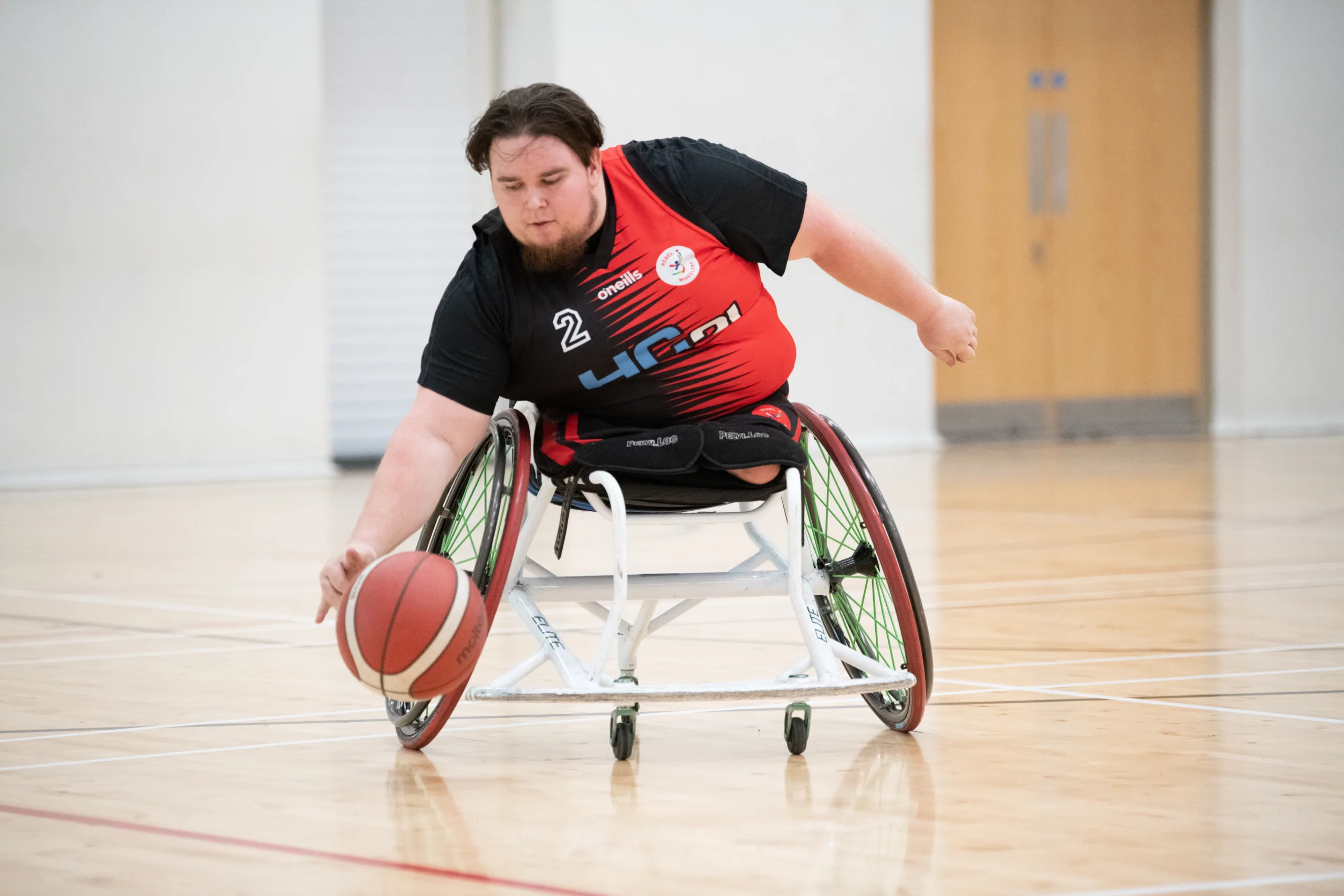
Jack Quinn, wearing a red and black Rebel Wheelers jersey, dribbles low to the court during a fast-paced wheelchair basketball game.
Jack Quinn shows his drive and determination during a match—his leadership and talent nurtured through years with IWA Sports Clubs.
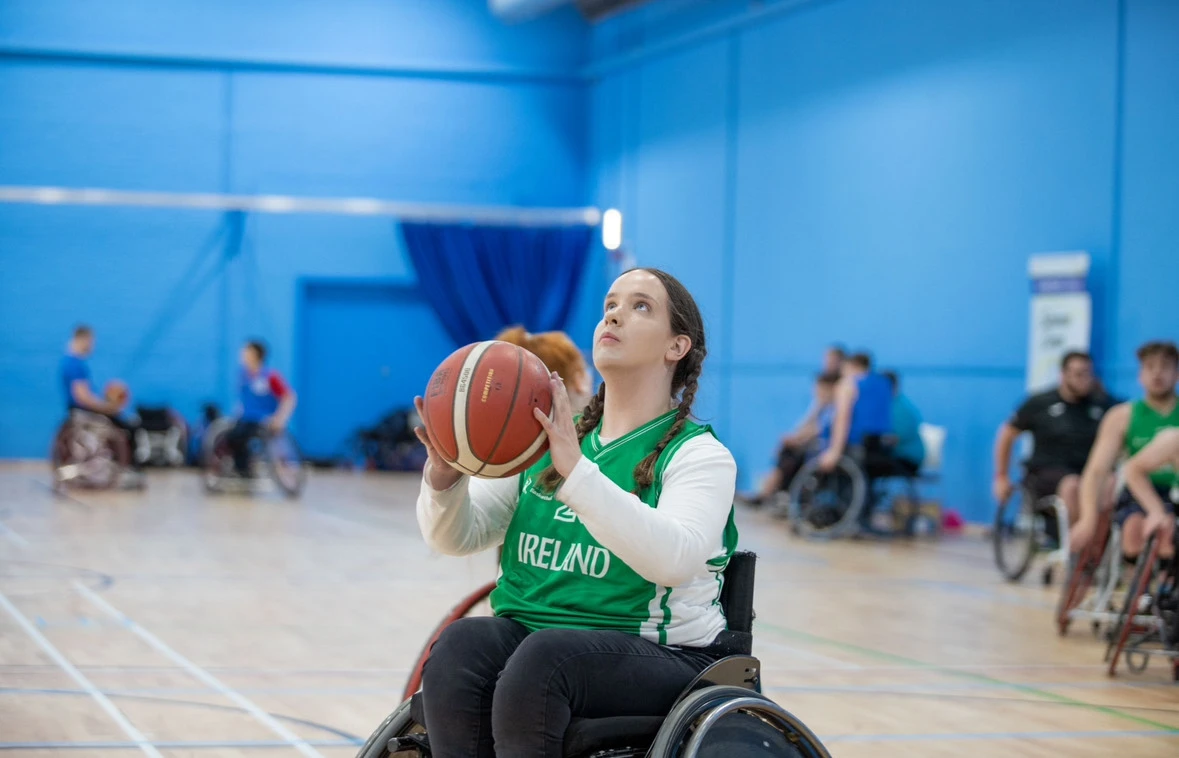
Sophie Denieffe in a green Ireland jersey prepares to shoot a basketball during a wheelchair basketball match, focused and composed.
Sophie Denieffe, a rising star of Irish wheelchair basketball, in action for Team Ireland—her journey began at an IWA Youth Sports Club.
Page 8

Volunteers

East Cork IWA Branch - Over 50 years of Support & Friendship
For over 50 years, the East Cork branch of the Irish Wheelchair Association (IWA) has been a beacon of support, connection, and activity for people with disabilities in our community.

Founded by a dedicated group of individuals, including our long-standing PRO Mrs. Kathleen Woulfe, the branch continues to thrive, offering a welcoming space for members to come together, learn new skills, and enjoy each other’s company.

Indeed Kathleen’s passion and tireless efforts in supporting people with disabilities was recognised when she received a Lifetime Achievement Award in Dublin. Kathleen remains an active and invaluable part of the branch, helping to ensure that it continues to grow and serve our members. 

Every Tuesday morning, members gather at My Place, a community hall at the top of Midleton Town where they enjoy a mix of activities designed to engage both body and mind including: 

  • Exercise Class: A trained instructor leads chair or standing exercises for 45 minutes, helping members stay active and healthy. 
  • Tea and Chat: A social break follows, where everyone enjoys a cup of tea or coffee and a good chat. 
  • Art and Crafts: The group is especially known for their art classes.  Led by a talented teacher, members can paint, knit, crochet, or simply relax and enjoy the creative atmosphere. 

The branch has over 30 members and on average, 12 members attend each week, and are asked for a small contribution of €10 per morning to help cover the cost of the instructors. The rest of our funding comes from local grants and fundraising efforts. 

Chairperson Helen O’Neill said: “We are more than just a club; we are a family. Our members come from all over the East Cork area, and the friendships formed here are as important as the activities themselves. Our eight dedicated volunteers play a crucial role in making sure everything runs smoothly, and we simply couldn’t do it without them. 

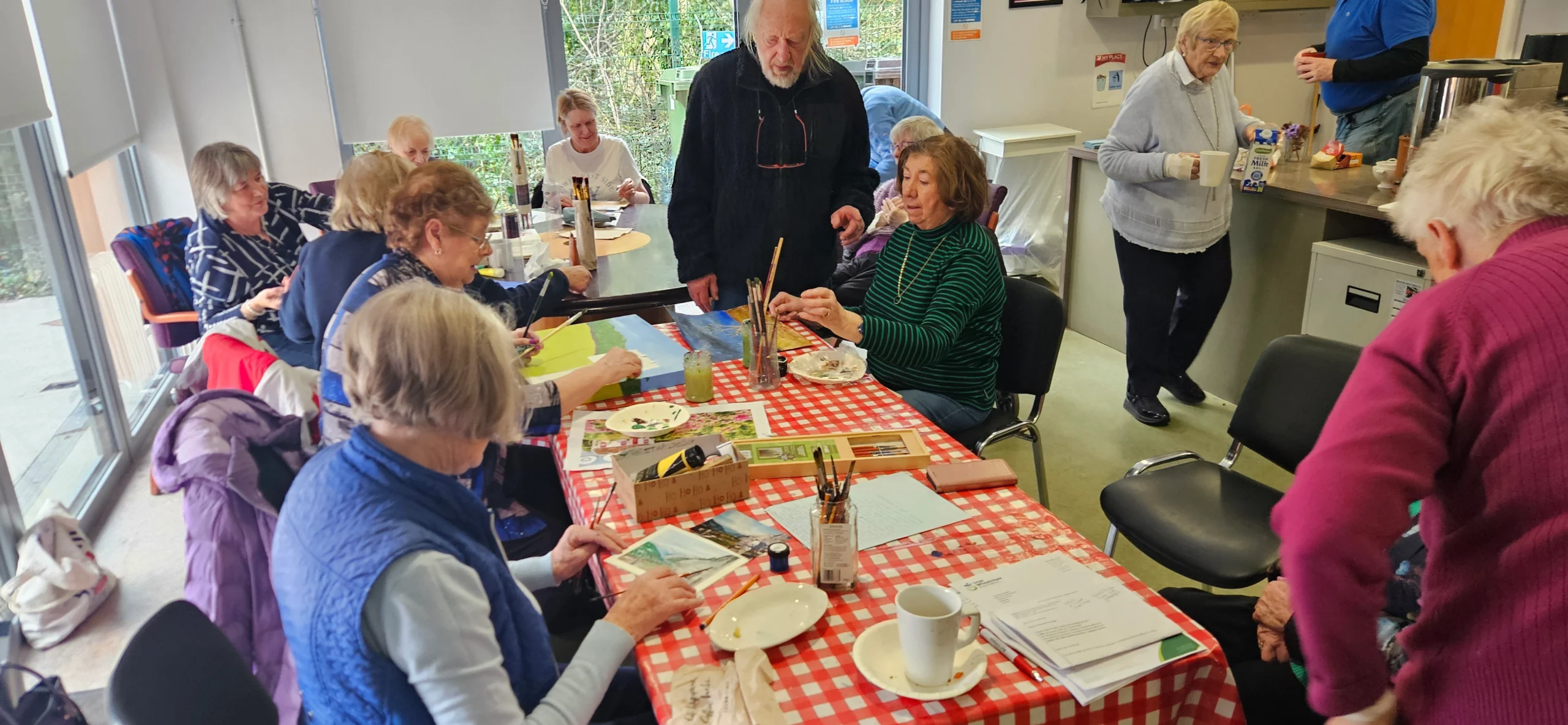
Group of older adults gathered in a bright community room, engaged in painting and crafts at a table covered with a red checkered cloth. Some are chatting, others focused on their artwork, while volunteers assist and serve refreshments in the background.
Members of the East Cork IWA enjoying a lively Tuesday morning art session at My Place community hall in Midleton
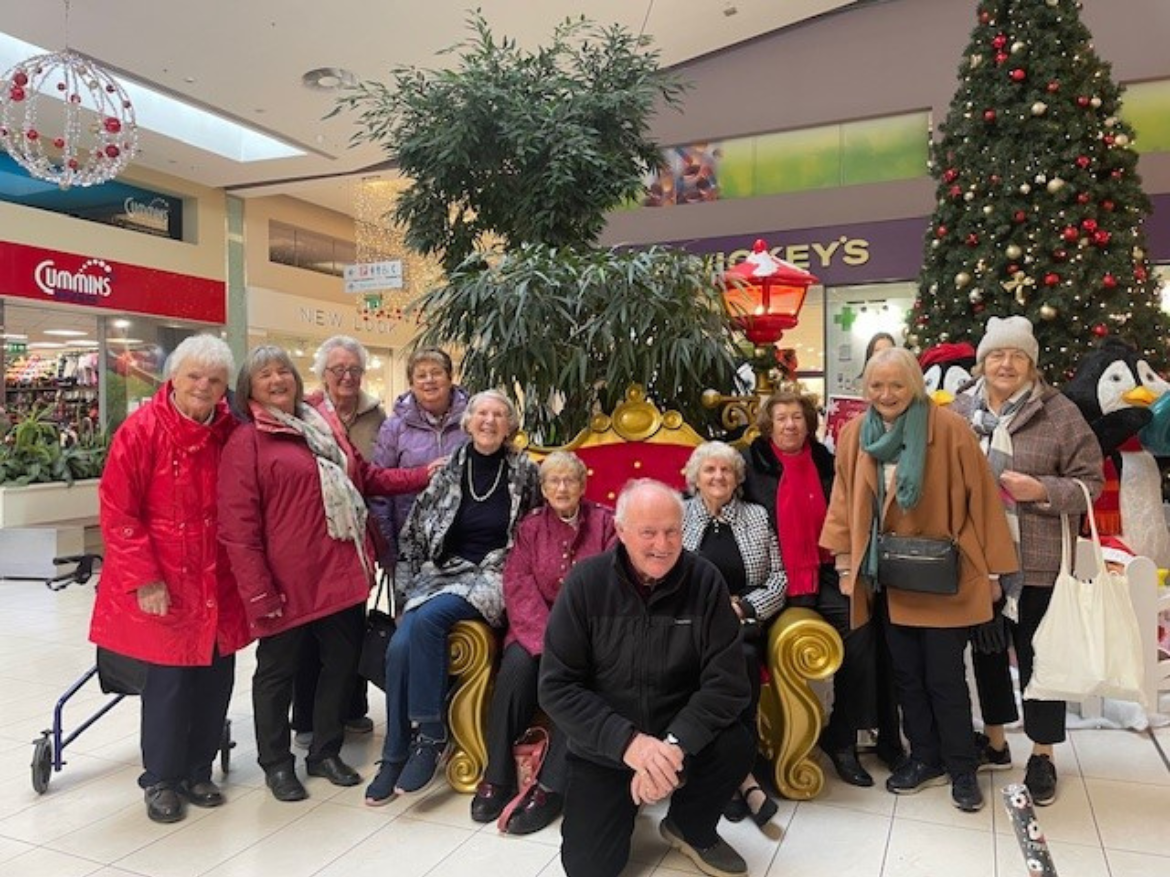
A cheerful group of older adults posing together in a shopping centre decorated for Christmas, standing around a festive throne seat and Christmas tree, enjoying a seasonal outing.
East Cork IWA members enjoying a festive day out at the shopping centre during the Christmas season — one of many social activities that bring the group together throughout the year.

She added that like many organisations, they faced challenges during the COVID-19 pandemic, but thanks to the support of IWA head office, they were able to continue connecting through Zoom classes.  

“These online sessions helped members stay engaged and active, proving that even during difficult times, our community remains strong,” she said. 

In addition to their weekly meet-ups, the branch also organises two special outings each year—one in May and another at Christmas. These events are a highlight for many members, providing a chance to celebrate and enjoy new experiences together. 

If you or someone you know would like to join the group, they would love to welcome you. Whether you want to participate in activities, volunteer, or support us through fundraising, there’s always a place for you at the East Cork Irish Wheelchair Association. 

For more information you can contact Helen O’Neill at 086 394 2969 


Page 9

Mobility Life

A look at motorised wheelchair attachments
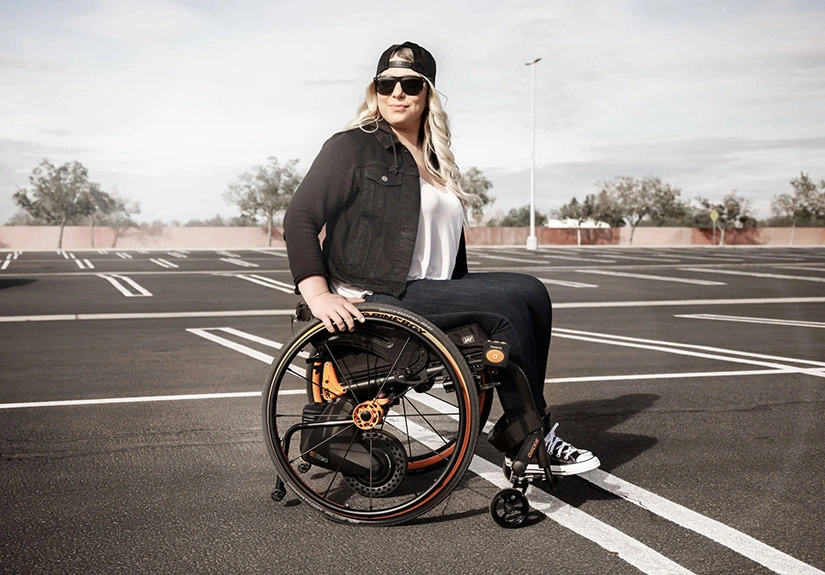
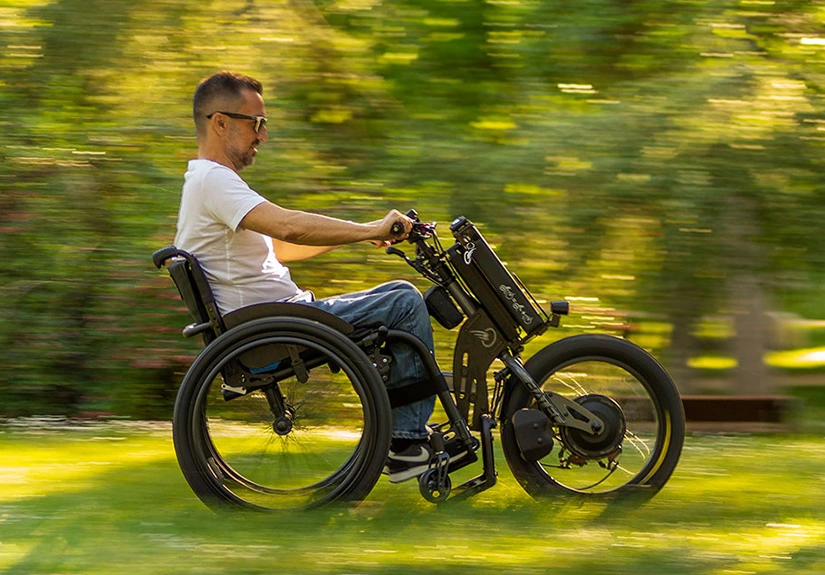
Power attachments are motorised devices that mount on the front of your wheelchair. They offer extra propulsion through a range of attachment methods—be it clamp‐on systems or under‐seat fittings—designed to blend seamlessly with your chair.

These devices can give you the extra drive needed on inclines or longer journeys, though it’s important to consider transport and battery specifications.
Breakdown of motorised attachments

  • Power Attachments (Front)
  • Hybrid Attachments (Front)
  • Rear Power Attachments

1. Power Attachments (Front)

What they are:

Power attachments are motorised devices that mount on the front of your wheelchair. They offer extra propulsion through a range of attachment methods—be it clamp‐on systems or under‐seat fittings—designed to attach securely to your chair.

These devices can give you the extra drive needed on inclines or longer journeys, though it’s important to consider transport and battery specifications.
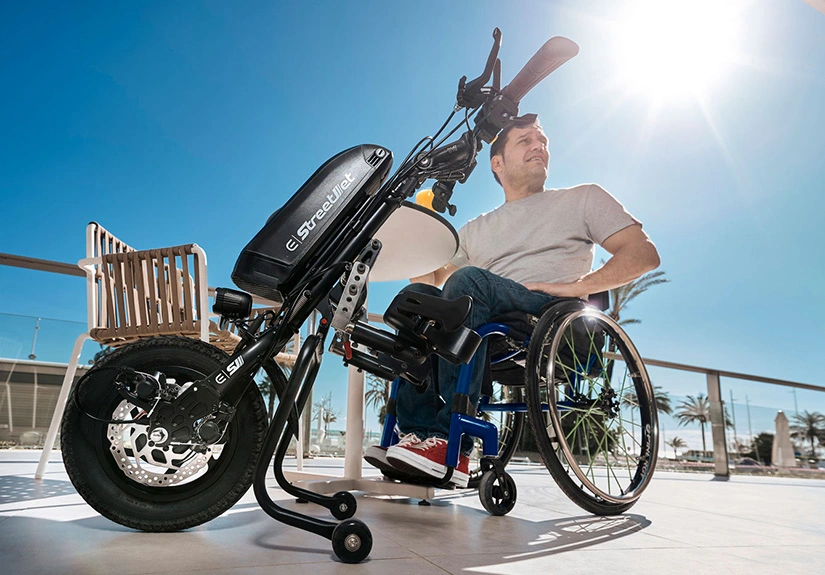
RGK Street Jet motorised front attachment for wheelchairs

RGK Street Jet
Batec Scrambler 2 motorised front attachment for wheelchairs

Batec Scrambler 2
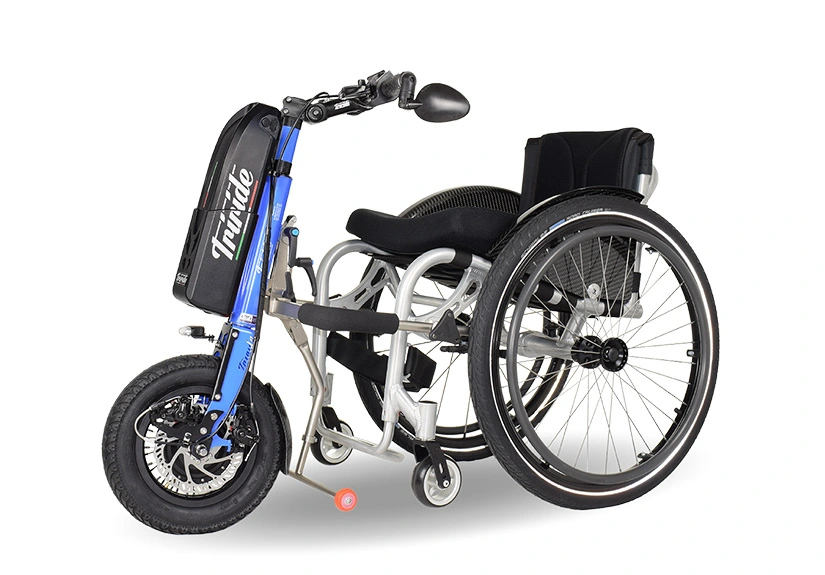
Triride Special Light motorised front attachment for wheelchairs

Triride Special Light

How they benefit you:

  • Provide an extra burst of power for challenging terrain and extended journeys.
  • Can be easily detached when you wish to revert to manual propulsion.
  • Enhance overall independence and reduce fatigue on long trips.

Models you might see:

  • RGK Streetjet: Renowned for its dynamic design and power efficiency.
  • Batec Scrambler 2: Engineered to handle tougher terrains with reliable mounting options.
  • Triride Light: Offers a lightweight solution that doesn’t add significant bulk, making it easier to transport.

Possible issues:

  • Ensure that weight is considered carefully. Some models are bulkier and heavier than others so lifting and transport can be an issue.
  • Battery sizes must be checked if you are planning to fly. Batteries must be under 300Wh for aviation clearance.
  • Increased power assistance may require additional maintenance and periodic professional checks.


2. Hybrid Attachments (Front)

What they are:

Hybrid attachments combine the benefits of manual hand‐cycling with motorised assistance. This approach means you can use the device as a hand cycle for exercise while engaging the power drive when extra propulsion is needed.
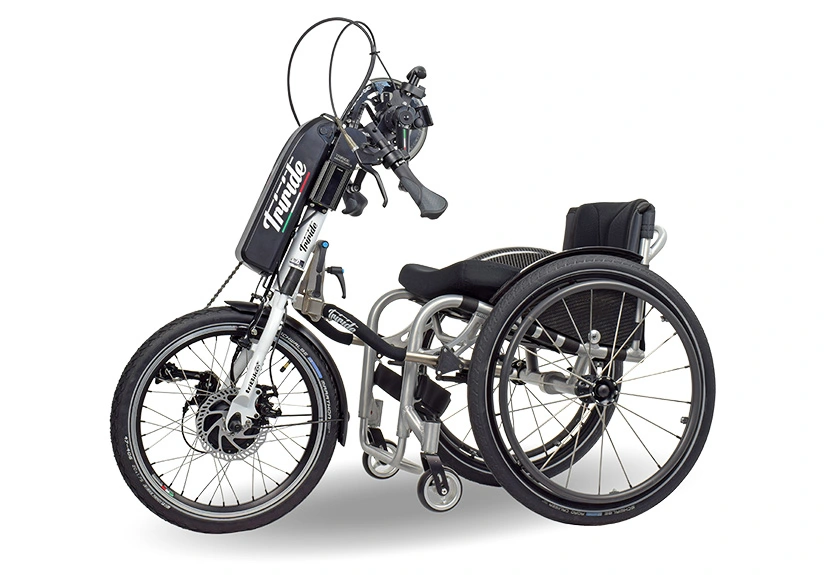
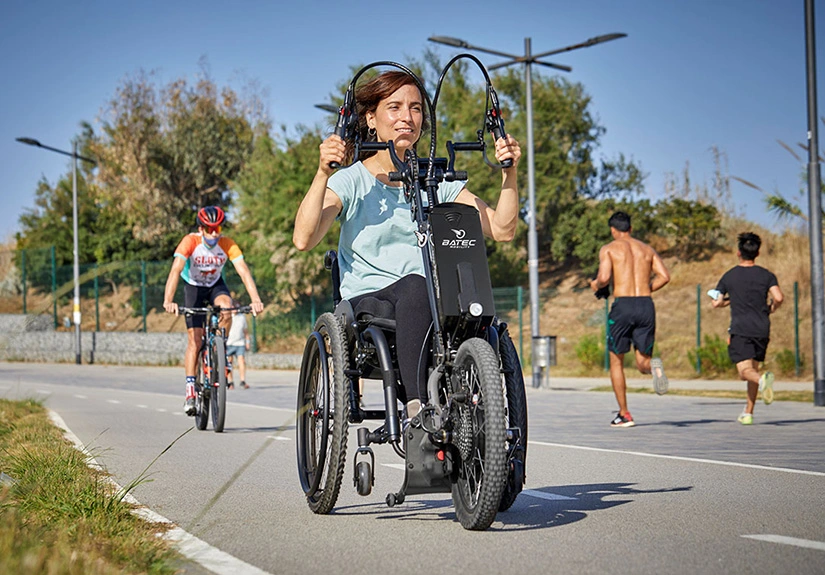
Tribike E Plus Hybrid motorised attachment for wheelchairs

Tribike E Plus Hybrid
Batec Hibrid 2 motorised attachment for wheelchairs

Batec Hibrid 2

How they benefit you:

  • Offers the flexibility to choose between a workout and motorised assistance.
  • Provides a balanced blend of exercise and convenience, catering to varied mobility needs.
  • Ideal for those who want to maintain upper-body strength without compromising on power when tackling challenging routes.

Models you might see:

  • Tribike E Hybrid: Enables a seamless switch between manual and powered modes, suitable for diverse terrains.
  • Batec Hybrid 2: Ensures a smooth transition from hand-cycling to motor assistance, ideal for both urban and off-road adventures.

Possible issues:

  • Hybrid models are generally heavier than purely manual attachments.
  • Battery capacity and overall weight need careful evaluation.
  • Professional fitting might be required to optimise performance and ensure safety.


3. Rear Power Attachments

What they are:

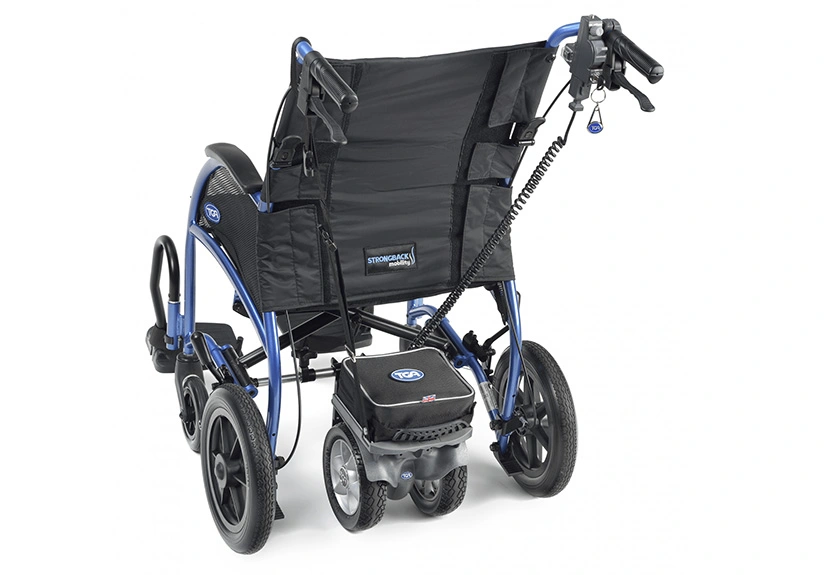
Rear power attachments offer propulsion from the back of your wheelchair. They can either attach directly to the rear or incorporate motorised wheels that provide pushing assistance. Notably, one model—the TGA Mobility Twin-Wheel—equips caregivers with a power assist option rather than relying solely on the wheelchair user.
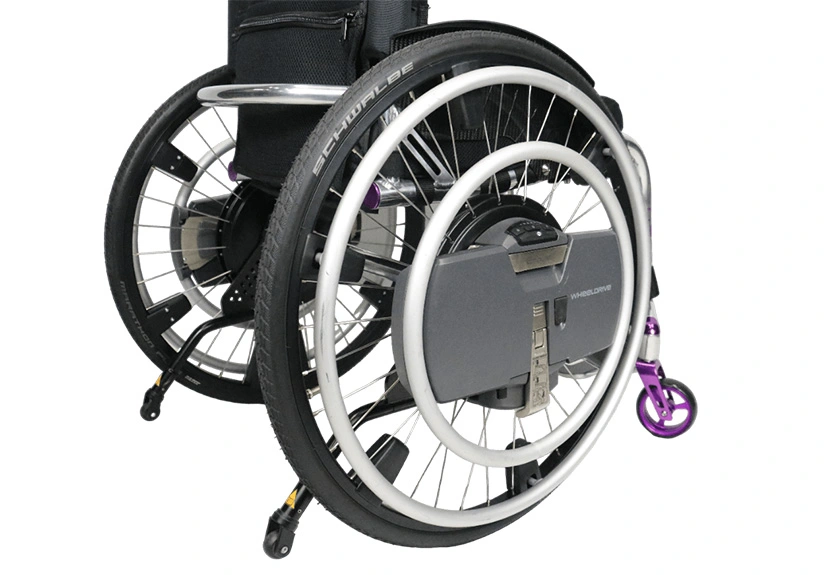
RGK Wheel Drive rear power attachment for wheelchairs

RGK Wheel Drive
TGA Mobility Twin Wheel rear power attachment for wheelchairs

TGA Mobility Twin Wheel
Empulse R90 rear power attachment for wheelchairs

Empulse R90
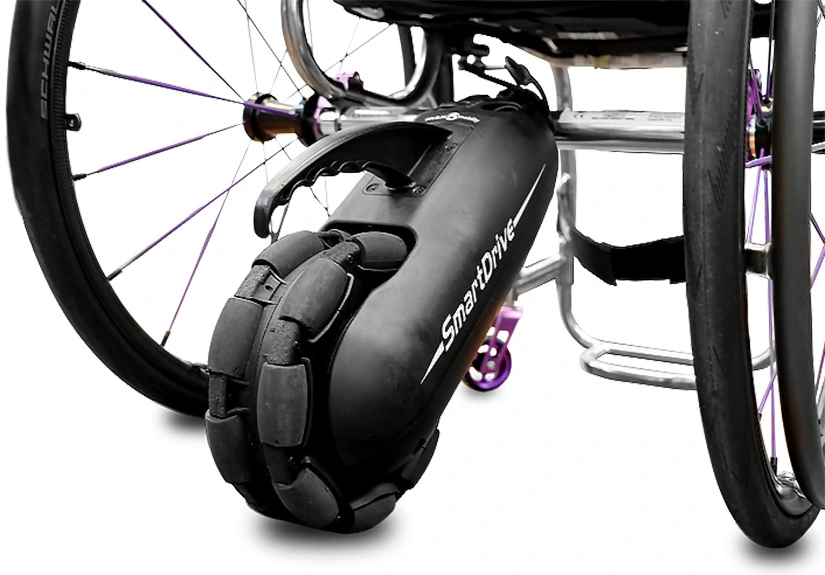
RGK Smart Drive rear power attachment for wheelchairs

RGK Smart Drive
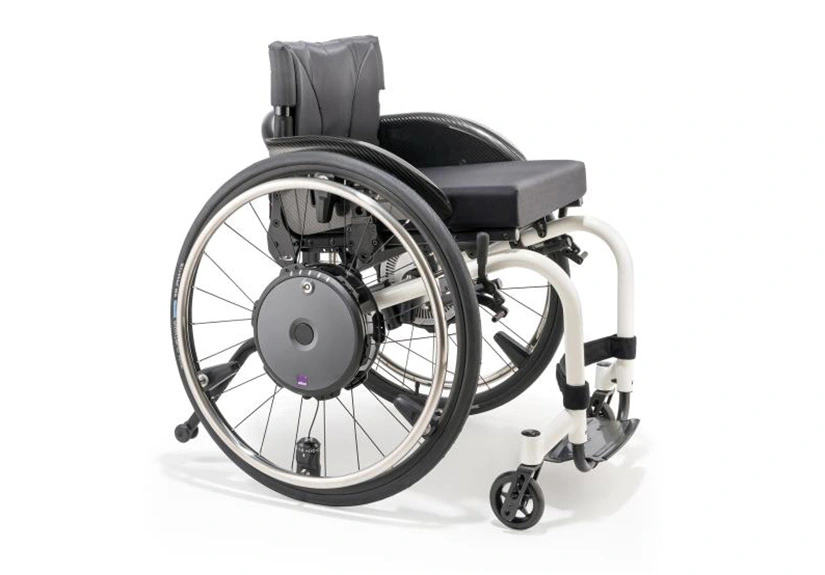
Alber E Motion M25 rear power attachment for wheelchairs

Alber E Motion M25

How they benefit you:

  • Enhance stability and offer added pushing assistance on inclines and uneven surfaces.
  • Reduce physical strain by providing extra power where it’s needed most.
  • Particularly useful in settings where manoeuvrability is challenged by terrain or extended distances.

Models you might see:

  • Empulse R90 Power Assist: Robust support on steeper inclines and longer journeys.
  • RGK Smart Drive: Integrates with your chair for responsive rear power assistance.
  • Alber e-motion M25: Engineered for rear propulsion and enhanced user comfort.
  • RGK Wheel Drive: Straightforward integration and consistent power output.
  • TGA Mobility Twin-Wheel: Provides a power assist option for caregivers, offering an alternative support method.

Possible issues:

  • Weight and battery specifications require careful consideration.
  • The added power unit may affect the overall balance of your chair, necessitating professional fitting.
  • Motorised systems may require more frequent maintenance compared to non-motorised attachments.


Conclusion

When it comes to motorised attachments, your choice should reflect your everyday mobility needs and the type of journeys you usually undertake. Whether you require a powerful front attachment, a versatile hybrid option, or a rear assist system to ease the strain on challenging routes, there is an option available to suit your lifestyle.

As always, consulting with an occupational therapist or mobility specialist is recommended to ensure compatibility with your specific wheelchair and to receive personalised advice. With the right motorised add-on, you can take your mobility to the next level while enjoying a more dynamic and independent lifestyle.

Image Credits:
Batec
Invacare
Recare
RGK
Triride
Page 4

Going the extra mile to support our members

"My first thought was would I be able to get to Pat" - Assisted Living Service PA Peter Ryan
EDITOR’S NOTE: Sadly Pat O’Brien passed away very unexpectedly shortly after our interview. Thanks to our valued staff in Tipperary and his family for permission to publish his story.  The family would also like to acknowledge the dedicated IWA employees, to whom they will be eternally grateful.  We extend our sympathy to Pat’s family, his friends and to all his IWA supports.  May he rest in peace. 
When Tipperary was hit by heavy snowfall during the month of January many people were stranded in their homes, in what was the heaviest snowstorm seen in the county since the 'Beast from the East' in 2018.

Some of our centres in affected parts of the country were forced to close as the hazardous conditions caused numerous power outages and the advice to motorists was to stay put and avoid all unnecessary journeys.

Those of you who rely on IWA’s Assisted Living Service (ALS) were worried that your Personal Assistants (PA’s) would not be able to make it to your homes, especially those living in rural areas.

Pat O’Brien was one such person. Living about a half an hour’s drive from Tipperary Town, he feared that he wouldn’t be able to get out of bed because he would have nobody to help him.  Personal Assistants also make his meals, look after his personal care and help to get him back into bed in the evening. “I didn’t know what was going to happen”, said Pat.  “There was talk of the Civil Defence coming. The snow was very severe.”

Pat’s PA Peter Ryan meanwhile was shovelling up snow outside his own house in the hope that he could at least try to get to him. “I was basically snowed in.  It took me and another family member four hours to clear the snow from outside my own home,” said Peter.

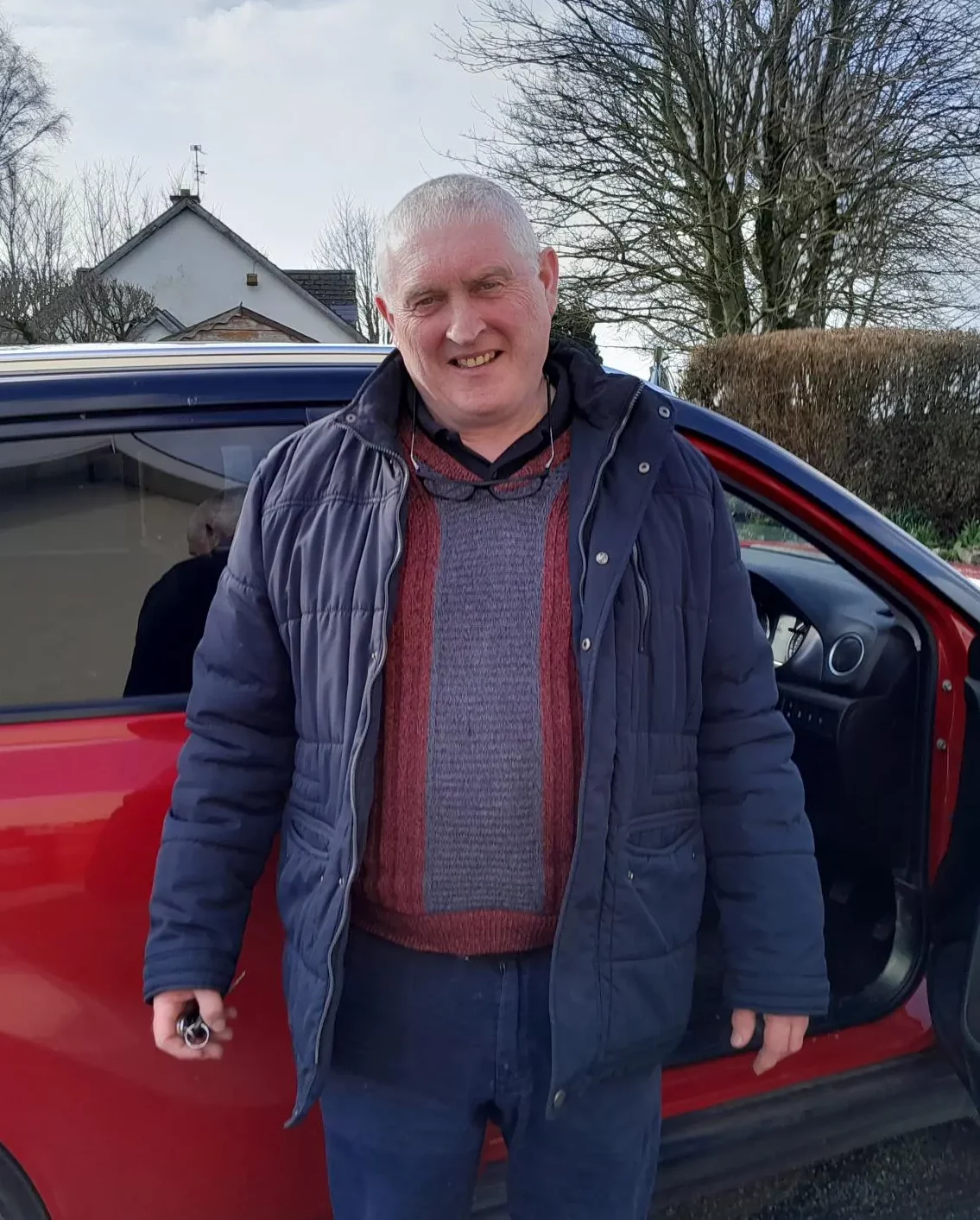
A middle-aged man with short gray hair and light skin stands next to a red car with the driver's side door open. He is smiling and wearing a navy blue quilted jacket over a red sweater. He holds a set of car keys in his right hand. The background features a rural setting with trees, bushes, and a house with a sloped roof under a partly cloudy sky.
IWA Personal Assistant Peter Ryan

Peter who works with Pat three times a day, for one hour in the mornings, at lunchtime and in the evening time also made up his mind there and then that if he did manage to reach Pat’s house he would stay there until the worst was over – and he did for six days! “My first thought was would I be able to get to Pat.  And when I did, I said to my boss I’m here now and I’m going to stay here.  It made sense.  It meant that Pat who lives on his own was supported and also that I’d be safe because I wouldn’t have to be driving in and out.”

“When I told Pat, he was absolutely delighted that I was going to be around.  All of a sudden, he was relaxed.  I was in a position to be able to do it and so I did, and I was delighted to do so.”

From Pat’s point of view, it took all the worry away.  “I was delighted, otherwise, I’d have had to stay in bed.  I was surprised when Peter told me he was willing to stay, it was a good surprise.  I am not able to manage on my own so it was just great knowing he was going to be around until the bad weather passed, and we had a bit of craic too.” But for IWA’s ALS service Pat admits he would be in a nursing home.  “I was in a nursing home for one and a half years.  I didn’t want to be there.  I hope I always have a PA or else I’ll be back there,” he said.

Peter has been an ALS PA for the past two years and absolutely loves what he does.  “It’s the best job I’ve ever had job satisfaction wise because you are really doing something useful.”

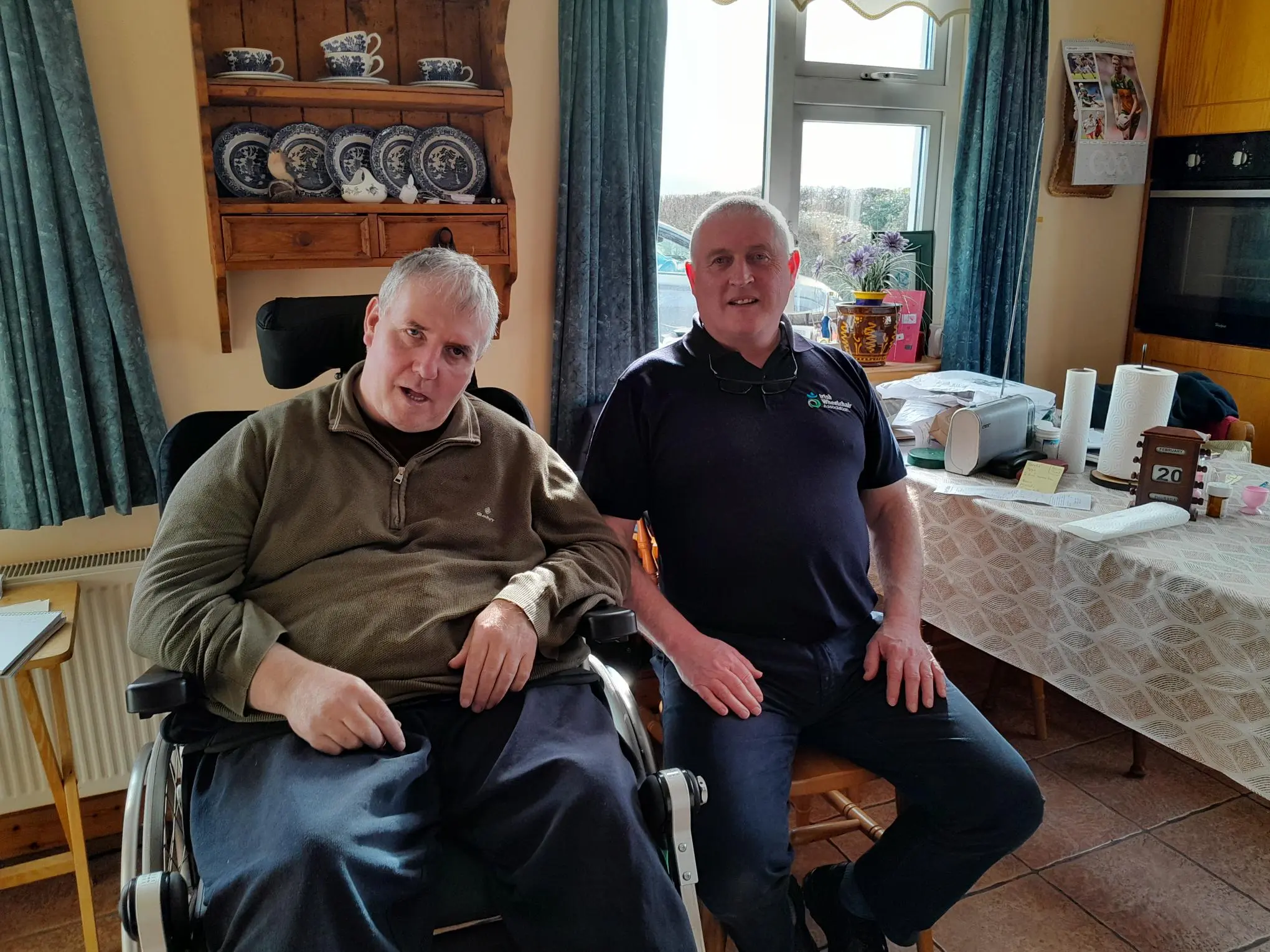
Two middle-aged men with light skin sit in a warmly lit kitchen. The man on the left is in a wheelchair, wearing a green fleece jacket and dark pants, with a relaxed posture and a slightly open mouth. The man on the right sits on a wooden chair, wearing a navy polo shirt with a small logo, dark pants, and has glasses hanging from his collar. He is smiling. Behind them, a wooden shelf holds blue and white china, and a table covered with a patterned tablecloth is cluttered with various household items. A window in the background lets in natural light.
IWA Personal Assistant Peter Ryan with IWA member, the late Pat O'Brien
Page 5

The Jedi in a Wheelchair

How one IWA member is using storytelling and self-advocacy to find his voice—and inspire others.
Oleksandr Dovzhenko, aka Alex, is a keen writer and attends our Community Centre in Portlaoise

Oleksandr Dovzhenko, known to friends as Alex, is a passionate young writer with a vivid imagination and a flair for storytelling. He’s one of the younger adults who regularly attends Irish Wheelchair Association’s Community Centre in Portlaoise, where his creativity has flourished alongside a growing confidence in self-expression. With dreams of one day being a published author—and perhaps even seeing his stories on the big screen—Alex is steadily honing his craft.

We at Spoke Out are thrilled to share a glimpse of his talent with our readers before Hollywood inevitably comes knocking. In the following two pages, titled “The Jedi in a Wheelchair,” Alex combines science fiction adventure with themes of resilience and inner strength, drawing inspiration from his own experiences and his recent participation in IWA’s Self-Advocacy Course, led by Public Engagement Manager John Fulham. His story is a brilliant blend of imagination, humour, and heart—and it’s just the beginning of what promises to be an exciting creative journey.

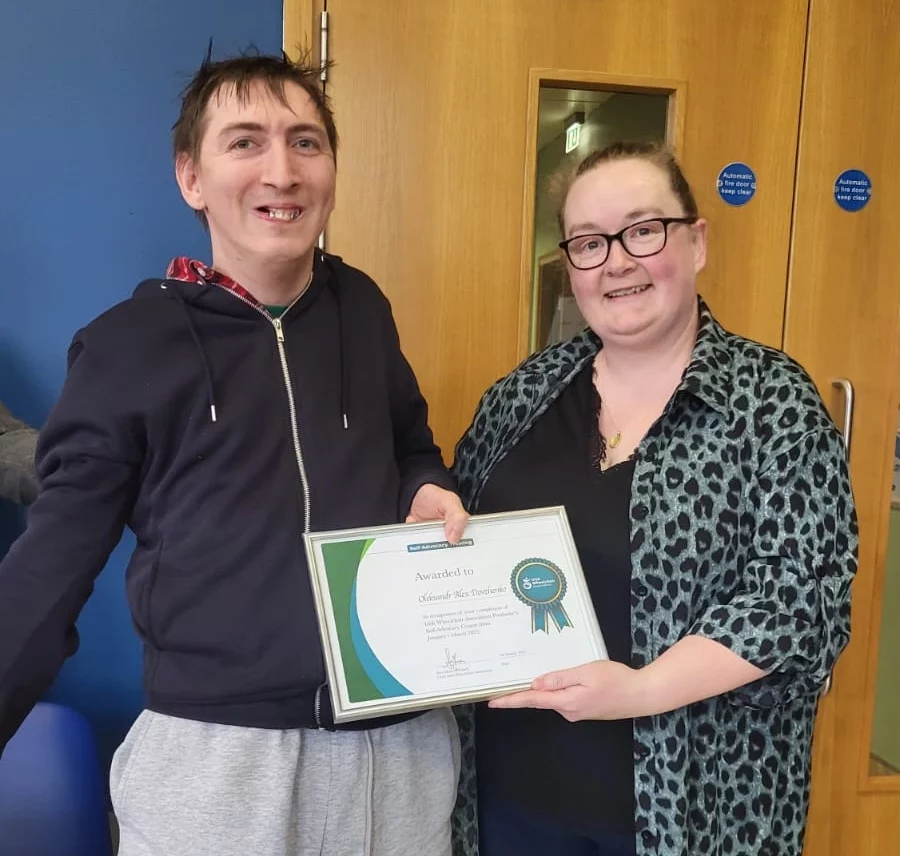
Young man smiling while holding a certificate with a woman beside him, both standing in a community centre setting. The certificate is for completing a Self-Advocacy Course with the Irish Wheelchair Association.
Alex with Linda Tierney, IWA Area Manager, at his recent graduation from IWA’s Self-Advocacy Course.

"The Jedi in a Wheelchair" by Alex

At the edge of the galaxy, where stars flickered like the final lights of fading hope, lay a planet forgotten by time. Its name was absent from the maps, and its inhabitants led quiet, measured lives, far removed from the wars and political intrigues of the Galactic Union. It was here, in this cosmic backwater, that fate brought a ship crashing down onto the field of a farmer named Kyle. 

Kyle was no ordinary man. Once, he had dreamed of the stars, of adventures, of great deeds. But an accident on a distant planet had left him confined to a wheelchair. His legs no longer obeyed him, yet his spirit remained unbroken. He had learned to live anew, finding solace in tending his farm, where he cultivated rare plants that glowed in the dark like tiny stars. 

That day began like any other. Kyle was riding his wheelchair through the fields, inspecting the crops, when suddenly the sky lit up with a bright flash. In the distance, something massive and metallic plummeted to the ground. It was a ship—not an ordinary one, but one with a scarred hull and smoke billowing from its cracks. Kyle headed toward the crash site, sensing this was no mere accident. 

As he approached, he saw a figure emerging from the wreckage. It was a man in tattered Jedi robes. His face was pale, his eyes filled with pain. He barely stood upright, but upon seeing Kyle, he managed a faint smile. 

“I don’t have much time left,” the Jedi whispered, his voice barely audible. “But I have a mission… one on which the fate of the entire Galactic Union depends.” 

Kyle froze. He had never imagined his quiet life could be disrupted by something so monumental. The Jedi weakly raised a hand, gesturing toward the ship. 

“There… a book…” He coughed, blood staining his lips. “Secret techniques… lightsaber training… You must take it. You must finish what I could not.” 

Kyle wanted to protest, to say he was no hero—that he couldn’t even walk. But the Jedi’s eyes had already closed, his breathing growing labored. 

“The Force… it does not depend on the body,” the Jedi murmured. “It resides in the soul… in the heart… You can do this… You must…” 

He paused, gathering strength, then continued: 

“There is a ritual… a transfer of the Force. Jedi train for decades just to sense it, let alone wield it. But I have no time left. This ritual is dangerous—it could destroy us both… yet there is no other way. If I die without passing the Force to you, the mission will fail, and the galaxy will descend into darkness.” 

Kyle’s heart raced. He was not ready for this. But in the Jedi’s eyes, he saw not only pain but hope—hope that Kyle could become what the galaxy needed. 

“I agree,” Kyle said softly, though everything inside him screamed in fear. 

The Jedi nodded and weakly raised his hand. His fingers trembled, but the Force radiating from him was palpable. Kyle felt the air thicken, the space around them charged with energy. The Jedi began chanting ancient words that sounded like the song of the wind and the whisper of stars. 

Kyle closed his eyes. Something invisible yet immense surged into him—a stream of light filling every cell of his body. But with it came pain: sharp, burning, as if thousands of needles pierced his skin. He wanted to scream, but his voice lodged in his throat. 

“Hold on…” the Jedi gasped. “This is only the beginning…” 

The ritual felt endless. Kyle’s consciousness expanded, as though he had become part of something greater. He saw stars, planets, galaxies …
all connected by threads of the Force. Yet with this came the crushing weight of responsibility.

When it ended, the Jedi lowered his hand, his face ashen. “Now … you must find the book,” he whispered. “It’s in the ship …Everything you need to know is there. Study it. .. and remember: the Force is not just power-it is wisdom … ”

With those final words, the Jedi breathed his last. Kyle sat in stunned silence, the burden of duty heavy on his shoulders. He moved to the ship
and retrieved the book. Its pages were inscribed with ancient symbols, its cover warm to the touch, as if alive with energy. From that moment, Kyle’s life changed forever. He studied the book, mastering secret techniques once reserved for the chosen few. He learned to harness the Force, which had always been with him, unseen.

His wheelchair became not a limitation but part of his journey. He modified it, adding elements to aid his training. Yet the path of a Jedi was not easy. Kyle soon discovered agents of the Dark Order were hunting the book, willing to kill to claim it. He left his farm, journeying across the galaxy to fulfill the dying Jedi’s mission.

Along the way, Kyle found allies and enemies, confronted his fears, and realized heroism knows no bounds. He learned that even the darkest
night ends at dawn. And so, the Jedi in a wheelchair-lightsaber in hand, faith in his heart-became a symbol of hope for the entire galaxy.

Page 6

Thanks for your company

If you like what you're reading, please spread the word!

Share Spokeout April 2025


Share this article on Facebook Share this article on Instagram Share this article on LinkedIn Share this article on X

Remember:
Your voice, your choice! We're all ears for your feedback, thoughts, and suggestions.
Share what topics intrigue you the most and what you'd love to see in future magazine features.

Share your feedback here

Spokeout Cover Image Logo
SpokeOut is Irish Wheelchair Association's lifestyle magazine published every month for our members.
© Irish Wheelchair Association 2025.