Print Issue: February 2026

This is a printer-friendly version of the Spokeout magazine.

⚠️ Important for Best Results:

  • Browser: Use Chrome, Edge, or Safari.
  • Settings: Ensure "Background Graphics" is CHECKED in the print options.
  • Margins: Set margins to "None" or "Default".
Spokeout Cover Image Logo
Spotlight on:
Minister Emer Higgins
Emergency Winter Payment Protest planned
Other Features:
Member stories on working life, sharing the love for Valentine's Day plus lots more.

Spokeout February 2026

Hello Readers. Our February edition is here and we hope it takes your mind off the terrible weather!

It’s a bumper issue packed with lots of riveting articles including an interview with Minister for Disability Emer Higgins who was appointed to the role in recent months.

Valentine’s Day is upon us, a time to celebrate the people who mean the most to us — whether that’s a friend, family member, or partner. Read our members’ stories inside.

We take a look at IWA’s Climate journey, celebrate the amazing impact of our partnership with Chadwicks, two members share their experiences of working life, and students give their verdict on IWA’s Disability Schools’ awareness project, DAISY.

We bring you up to date on our campaign for a €400 Emergency Winter Payment for people with disabilities,  which has been rejected by the Government, and now steps up another gear with a protest planned for February 28th in Dublin City.

There’s all this and lots more inside.

Until next month,

Marie

PS: As always, please get in touch if you have any feedback or would like to share your story.

Magazine Logo
Spotlight on:
Minister Emer Higgins
Emergency Winter Payment Protest planned
Other Features:
Member stories on working life, sharing the love for Valentine's Day plus lots more.

In this issue:

  • Spotlight on: Minister Emer Higgins
    "My focus is on making sure that the realities people are experiencing are understood and taken into account" - Minister Higgins
  • Advocacy
    Protest planned after Government refuses Emergency Winter Payment
  • Fundraising
    Thank you for making Christmas one to remember
  • Sport
    Jack Quinn and Rebel Wheelers’ seven-year love affair with the National Cup
  • Chadwicks supports IWA to get it done!
    Charity partner helping to transform IWA facilities and centres nationwide.
  • Small Changes Can Protect the Environment and Save you Money
    Sustainability is in all our interest
Page 1

Spotlight on Minister Emer Higgins

"My focus is on making sure that the realities people are experiencing are understood and taken into account" - Minister Higgins
What can people with disabilities expect from Government in the months ahead? In this special Spoke Out interview, newly appointed Minister of State for Disability Emer Higgins outlines her plans, priorities and the work already underway.

Priorities and Early Days in the Disability Ministry

Spoke Out: What has the first few months in office been like?

Minister: I was truly honoured to have been appointed as Minister of State with special responsibility for Disability by the Tánaiste in November. This is a role that carries huge responsibility and importance, because disability affects most people in Ireland, either directly or indirectly. Coming into this role, I was very conscious that disability is not an abstract policy area; it is lived every day by disabled people and their families.

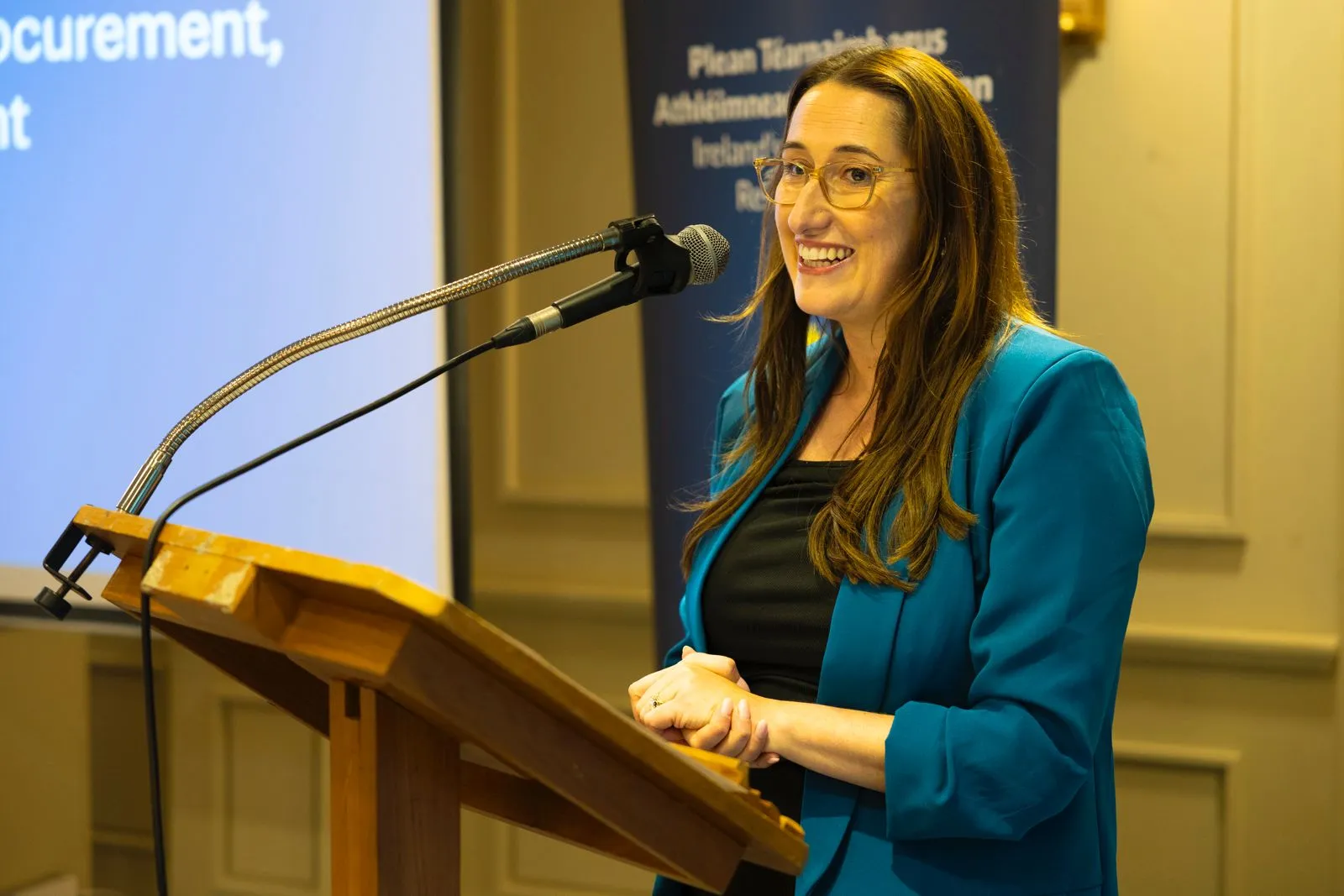
Picture of a female standing at a podium. She has below shoulder length hair, and is wearing a green jacket and black top. She is wearing glasses.
Emer Higgins, Minister of State with special responsibility for Disability.

So, the early months have been about grounding myself in that reality, meeting with disabled people, family carers, Disabled Person’s Organisations and frontline staff, and listening carefully to their experiences. At the same time, I’ve been working closely with officials in my Department to really understand where our current policies are working well, and just as importantly where they are not. Those conversations have been invaluable.

These first few months have been about laying foundations. We want to ensure that disability is not seen as something that falls to one area of Government or one Department and to move to recognising it as a cross-government responsibility, and that can be seen with the development of the new Disability Unit chaired by the Taoiseach.

That’s a really important step in recognising that disability policy cuts across every part of government and that progress depends on collective responsibility rather than isolated action. The National Human Rights Strategy for Disabled People 2025-2030 reflects that approach by bringing together the areas of Government policy that require focused attention over the lifetime of the Strategy.

Spoke Out:  Do you come from a background/involvement in disability?

Minister: Yes, I spent four years on the Oireachtas Disability Matters Committee from 2020-2024, an experience that was vital in deepening my understanding of disability and the everyday realities, pressures, and challenges faced by people with disabilities and their familiesand a role that afforded me the opportunity to work with disabled people, Disabled Persons Organisations and other key stakeholders.

Before being elected to the Dáil, I worked with the then Minister for Children and Youth Affairs at the time, Frances Fitzgerald, and later, as a Councillor myself, I worked closely with people with disabilities, their families, and disability organisations, listening and learning directly from their experiences and lived realities and advocating for them in my council chamber.

I also worked in the corporate sector in PayPal, in a role similar to human resources. From a private-sector employment perspective, this gave me some important exposure to disability, particularly around workplace accommodation, inclusion and barriers people can face in accessing or sustaining employment. Alongside this, I gained valuable project and change management experience, which I now bring into my current role and which will help ensure that the record 20% increase in the disability budget this year is translated into real impact in the lives of people with disabilities and their families.

Those cumulative experiences have shaped how I approach this role. They have reinforced my belief that you must first listen to understand, not just to individual stories, but the patterns behind them and where systems are falling short. Alongside this, I bring a very practical way of working. My background has given me a strong belief in plans, clear actions and follow-through. I am focused on turning what we learn into concrete steps, clear responsibility and measurable progress. For me, listening is essential, but it is only meaningful if it leads to action. And that is the approach I carry into this role every day.

Spoke Out:  In Budget 2026, a number of one-off payments and energy credits were removed. This meant that people with disabilities, including many IWA  members, were left up to €1400 worse off. What would you say to those people with disabilities who are struggling financially and are having to choose between eating and heating?

Minister: First and foremost, I want to acknowledge that for many people this struggle is real, and it is deeply serious. I know there are many people with disabilities and families across Ireland who are under intense financial pressure, and I do not underestimate the impact that the removal of one-off payments and the energy credit has had.

Only very recently, I met with the Irish Wheelchair Association, Disability Federation of Ireland, and Access for All, where we had a meaningful and frank discussion about this exact issue.

During that meeting, I heard a number of very real stories about the difficult decisions people are having to navigate. One story in particular stayed with me. I heard about a person who had chosen not to leave their home because they were prioritising paying their heating bill over charging their electric-powered wheelchair. The knock-on effects of making these decisions on mental health, well-being, and quality of life are deeply upsetting.

Where people or families find themselves under this kind of pressure, I would encourage them, where possible, to engage with their local social welfare office to explore what supports may be available to them. In some cases, this can include an Additional Needs Payment, while also recognising that eligibility will vary from person to person.

I also heard, very clearly, that the cold may affect people with disabilities in ways that are not always understood. For some, it could be about circulation issues. For others, reduced mobility means they can’t move around easily to keep warm. Some people spend long periods sitting or lying down, which can make it harder for the body to generate heat. Others are managing conditions or medications that can make them more sensitive to cold. So when we talk about heating for people with disabilities, we’re not just talking about comfort, we’re talking about basic physical wellbeing.

The Minister for Climate, Environment and Energy, Darragh O’Brien, has established a National Energy Affordability Taskforce to identify, assess and implement measures that will enhance energy affordability for households, with an Action Plan for Energy Affordability due to be published later this year.

Addressing the Financial Pressure and Winter Payment Calls

Spoke Out: IWA has been part of a Disability Coalition calling for an Emergency Winter Payment of €400 for people with disabilities. Do you support our call in order to prevent people from suffering now?

Minister: I understand why the Disability Coalition has made this call, and I recognise the very real pressure people with disabilities and their families are under right now. There is a genuine gap for people who were previously receiving one-off payments and are no longer receiving that support, and I do not underestimate the impact that has had.

The concerns being raised are legitimate and deserve serious consideration. At the same time, the Government is clear that we need to move away from reliance on one-off payments and towards long-term supports that are sustainable and can provide certainty for people on a permanent basis. In Budget 2026, this included a €10 per week increase across Disability Allowance, Invalidity Pension, Blind Pension and Illness Benefit.

That’s also why work is underway, led by the Minister for Social Protection, Dara Calleary, on the development of a permanent cost of disability payment. When I met with the Disability Coalition, I committed to ensuring that their concerns were brought into government discussions. I’ve raised these issues directly with Minister Calleary and will continue to do so as this work progresses. My focus is on making sure that the realities people are experiencing are understood and taken into account, particularly during this transition period as we move toward a new permanent model of payment support. In addition, the Department of Social Protection will shortly launch a public consultation process on how the cost of disability can best be delivered.

Transitioning to a Permanent Cost of Disability Payment

Spoke Out:  People with disabilities are being asked to wait for reviews, wait for pilots, wait for future budgets, while the extra costs of disability are hitting them every week. As Minister for Disability, what is the one concrete change you will deliver in the next 12 months that people with disabilities will actually feel in their daily lives?

Minister: It would be remiss of me to talk about change in this space without referring to the National Human Rights Strategy for Disabled People’s First Programme Plan of Action 2025-2026, because that is the agreed roadmap for how disability policy is now being delivered across government, and part of my role is to communicate that clearly. This is the first plan arising from the National Human Rights Strategy for Disabled People, published last September, and its purpose is to turn rights into meaningful action right across government over the next 12 months and beyond.

That plan explicitly recognises the additional and unavoidable costs of disability, and work on a permanent cost-of-disability payment is a central part of it. As already mentioned, Minister Calleary has committed to introducing a cost-of-disability payment this year, and I am committed to working with him to see it progress.


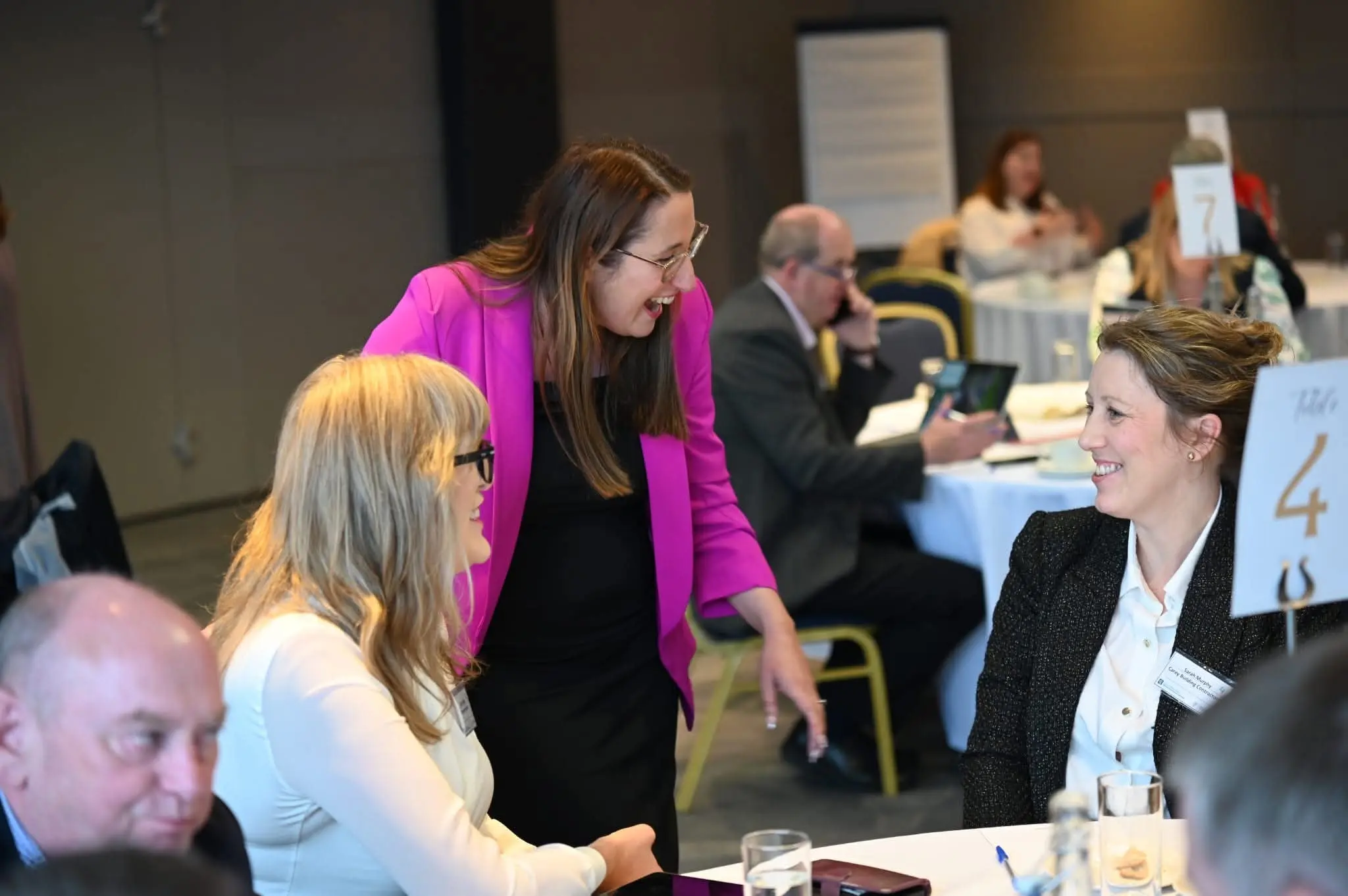
A female wearing a bright pink jacket leaning over and chatting to two people at a table. There are people at other tables in the background
Minister of State for Disability Emer Higgins says that what’s different about the Human Rights Strategy for Disabled people is its focus on delivery and accountability from the start.

Spoke Out: Wheelchair users in Ireland face barriers at every stage of a simple journey – from their front door to their destination. What actions will you take in your role to remove these barriers and make accessible travel a reality, not an aspiration?

Minister: Wheelchair users continue to face real and practical barriers, and that is something I have seen first-hand over the last number of years as a public representative. Since taking on this role, I have met with many wheelchair users and representative organisations, and those conversations have reinforced just how many barriers still exist when it comes to accessible travel.

There have been important improvements in recent years, more accessible vehicles, investment in public transport, and a growing awareness that accessibility must be designed in from the start. However, we also have to be very honest about the reality wheelchair users are still facing. What should be a simple journey can quickly become costly, exhausting, or simply impossible, from uneven footpaths to limited or inconsistent public transport options to what happens at the destination.

I often think of a conversation I had with a wheelchair user who spoke about being unable to take a last-minute train because they were required to give 24 hours’ notice to arrange a ramp, and that support wasn’t available at short notice. Experiences like that can limit spontaneity, independence and choice. It’s not okay, and it’s not fair.

That lived reality, among many others, is exactly why accessible travel is a core focus of the First Programme Plan of Action under the National Human Rights Strategy for Disabled People. The plan takes a whole-of-journey approach and over the next 12 months, recognises that accessibility only works from footpaths and stations to vehicles, information systems and what happens at the other end.

Over the next 12 months, the Programme Plan includes tangible actions around public transport, strengthening how accessibility standards are applied and monitored, embedding accessibility earlier in transport planning, and ensuring lived experience continues to inform how services operate in practice. My role is to work closely with the Minister for Transport, Darragh O’Brien, Minister of State at the Department of Transport, Séan Canney, and with colleagues across government to build on the progress that has been made, while addressing the gaps that wheelchair users continue to experience.

Accessible transport is fundamental to independent living, participation and equality. The Programme Plan gives us a clear framework to take meaningful action, so that people can travel when they need to, not when the system allows them to.

Spoke Out: Describe a typical day in your role as Minister?

Minister: There isn’t a single typical day, but most weeks have a rhythm to them. Some weeks also involve being out of the country for international work. For example, next month I will be delivering an address on behalf of the Irish Government at the United Nations, which is in New York. By and large, Mondays are usually spent out in communities, either in my own constituency or around the country, visiting services and meeting people.

On Tuesdays, I start the day at Cabinet and am usually in the Dáil. Wednesdays are split between my Department in the morning and the Dáil later on, with votes often running right up to midnight. Thursdays are generally spent in my Department focusing on meetings and engagement with key stakeholders. Fridays often start out and about in communities, whether that’s in my own constituency or any county in Ireland, visiting a Disability Service or charity that supports disabled people.

Spoke Out: If you weren’t in politics, what would you be doing career-wise, do you think?

Minister: That’s a really tough question, and it’s one I’ve been asked a few times over the years, and I still always struggle to answer it. Not to be cliché, but my life over the past decade has been immersed in politics. I made a conscious decision to leave the corporate world to work in public service, and it’s where my focus and energy have been ever since. It’s what I care deeply about and where I feel I can make the most meaningful contribution, so I think I’d still be working in and around politics or public service in some form.

Spoke Out: When can we expect the Midterm Review of the National Housing Strategy for Disabled People 2022-2027 Implementation Plan (well past its target date)?

Minister: I am very conscious the midterm review of the National Housing Strategy for Disabled People 2022-2027 Implementation Plan is beyond its original target date, and of the importance of having the Plan completed and published and my Department will continue to engage with the Department of Housing, Local Government and Heritage to support its progression and to ensure it is brought forward as soon as possible. This is also an issue that will be raised at the Cabinet Committee on Disability, which is chaired by the Taoiseach.

Accountability and the National Human Rights Strategy

Spoke Out:  People with disabilities have seen many strategies and frameworks over the years. What makes the Human Rights Strategy for Disabled people different, and how will it deliver measurable change in independence, access and equality?

Minister: What’s different about the Human Rights Strategy for Disabled people is its focus on delivery and accountability from the start. A dedicated Delivery and Monitoring Committee has been established to help to track progress and ensure effective implementation of the Strategy and it is chaired by the Taoiseach. The Committee brings together representatives from Disabled Person’s Organisations, civil society, disability service providers, umbrella organisations, and the National Disability Authority. This work is further supported by a Data and Evidence Working Group, led by the National Disability Authority.

Disabled people were involved from the very beginning in shaping the Strategy, and it is the first national Strategy for disabled people to be published since Ireland ratified the United Nations Convention on the Rights of Persons with Disabilities in 2018.

While individual departments retain responsibility for delivery within their own remits, the Strategy is designed to ensure shared ownership, coordination and accountability across government and is supported by a rolling programme plan of action, published every two years.

Strong governance and oversight are also a key part to ensuring delivery. Overall progress is overseen at Cabinet level through the Cabinet Committee on Disability, supported by the new Disability Unit in the Department of the Taoiseach which helps drive coordination and follow-up across government.  There is also an important role for the Oireachtas in keeping the strategy under public scrutiny. The Joint Oireachtas Committee on Disability Matters provides a forum for open discussion, challenge and accountability, ensuring that progress can be examined in a transparent and public way.

Taken together, these structures are about keeping attention focused on delivery, ensuring progress is transparent, and allowing issues to be identified and addressed as the strategy is implemented.

Spoke Out: What would success look like to you at the end of your term as Minister with Special Responsibility for Disability?

Minister: Success for me would be knowing that disabled people and their families can see and feel a real difference in their everyday lives. It means ensuring that that this year’s record disability budget, which increased by 20%, one of the largest increases across government, is translated into real delivery that makes a meaningful difference to people’s day-to-day lives.

Page 2

Advocacy

Protest planned after Government refuses Emergency Winter Payment
This winter has highlighted something people with disabilities and their families already understand all too well: the cost of living crisis affects people with disabilities differently, and often more severely.

That is why the call for an Emergency Winter Payment remains so important.

Recently, the Social Democrats brought forward a motion seeking an Emergency Winter Payment for people with disabilities. The motion reflected the real pressures many people are facing, rising energy bills, higher transport costs, and the additional, unavoidable expenses linked to disability.

In response, Taoiseach Micheál Martin and Minister Dara Calleary expressed concern about how the issue was being framed and pointed to existing community welfare supports. While these supports play an important role, they are not designed to address the ongoing and predictable extra costs that people with disabilities face, particularly during the winter months.

@p
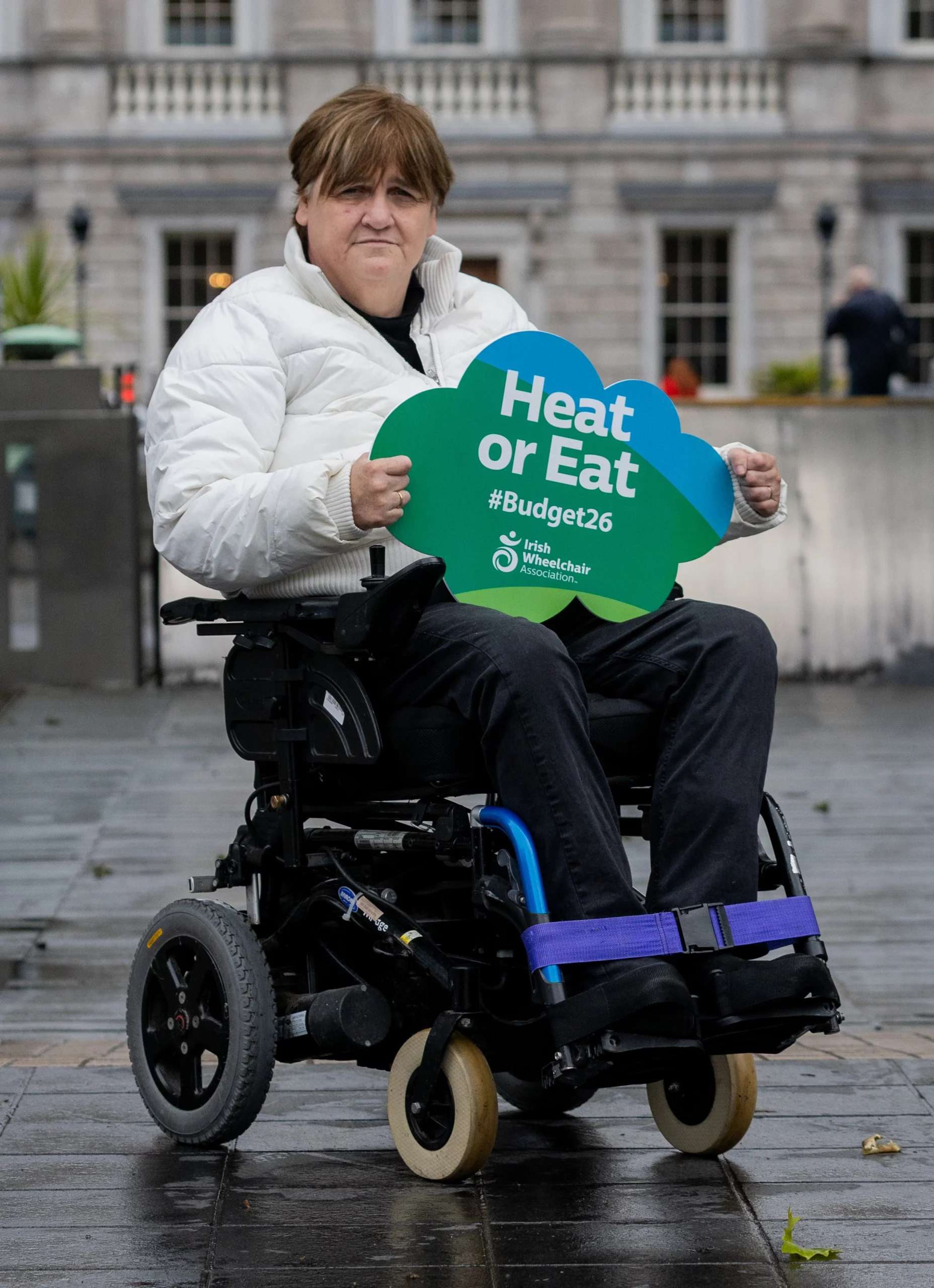
IWA's National Advocacy Manager Joan Carthy, who is a wheelchair user, pictured holding a 'Heat or Eat' sign outside Leinster House.
Joan Carthy, IWA's National Advocacy Manager, pictured outside Leinster House.

Join us at our Protest Rally

We are leading a public rally taking place on Saturday, 28 February at 1pm, starting at the Garden of Remembrance to Custom House. Please join us.

For many people with disabilities, accessing discretionary supports can be challenging. It may involve physical barriers, transport difficulties, digital exclusion, or repeated requests to prove need. These processes can be stressful, time-consuming, and, at times, costly in themselves.

“The additional costs of disability don’t disappear in winter — they increase.”

The Irish Wheelchair Association believes a direct, accessible payment is a more appropriate response. It would recognise the reality of disability-related costs and provide certainty and dignity at a time of year when pressures are greatest.

That is why we are continuing to raise awareness and call for action. A public rally will take place on Friday, 28 February at 1pm, marching from the Garden of Remembrance to Custom House. If you are in a position to attend, we encourage you to come along and show your support. You can also take a minute to write to your TD and make your voice heard.

Together, we can keep this issue visible and put pressure on the Government to introduce a much needed emergency winter payment.

Joan Carthy, National Advocacy Manager, IWA

Page 4

Fundraising

Thank you for making Christmas one to remember
In November, you were asked to support our Christmas campaign, “Stronger Together”, and you responded with generosity and kindness.

Your donations have totalled an incredible €37,000! Thank you all so much.

The 2026 Budget was a significant disappointment, but the generous support received over Christmas will ensure that our Advocacy team and members all over Ireland will continue to hold the Government to account.

Alan from Dublin has been a member of IWA for the past ten years. As a wheelchair user, he knows how important it is to speak up on the issues that matter to people with disabilities.

Alan took part in our Getting Nowhere campaign back in 2024 to highlight the difficulties people with disabilities face using public transport in Ireland.

Thanks to the work of people like Alan, the campaign was a success and the government recently committed to review Ireland’s public transport infrastructure plan demonstrating that we stronger together!

Alan is happy his efforts make a difference. He told Spoke Out: “A lot of people complain about different issues, but they don’t speak up about them. Someone needs to speak about them. I really think issues really need to come from members because we are affected by these issues.”

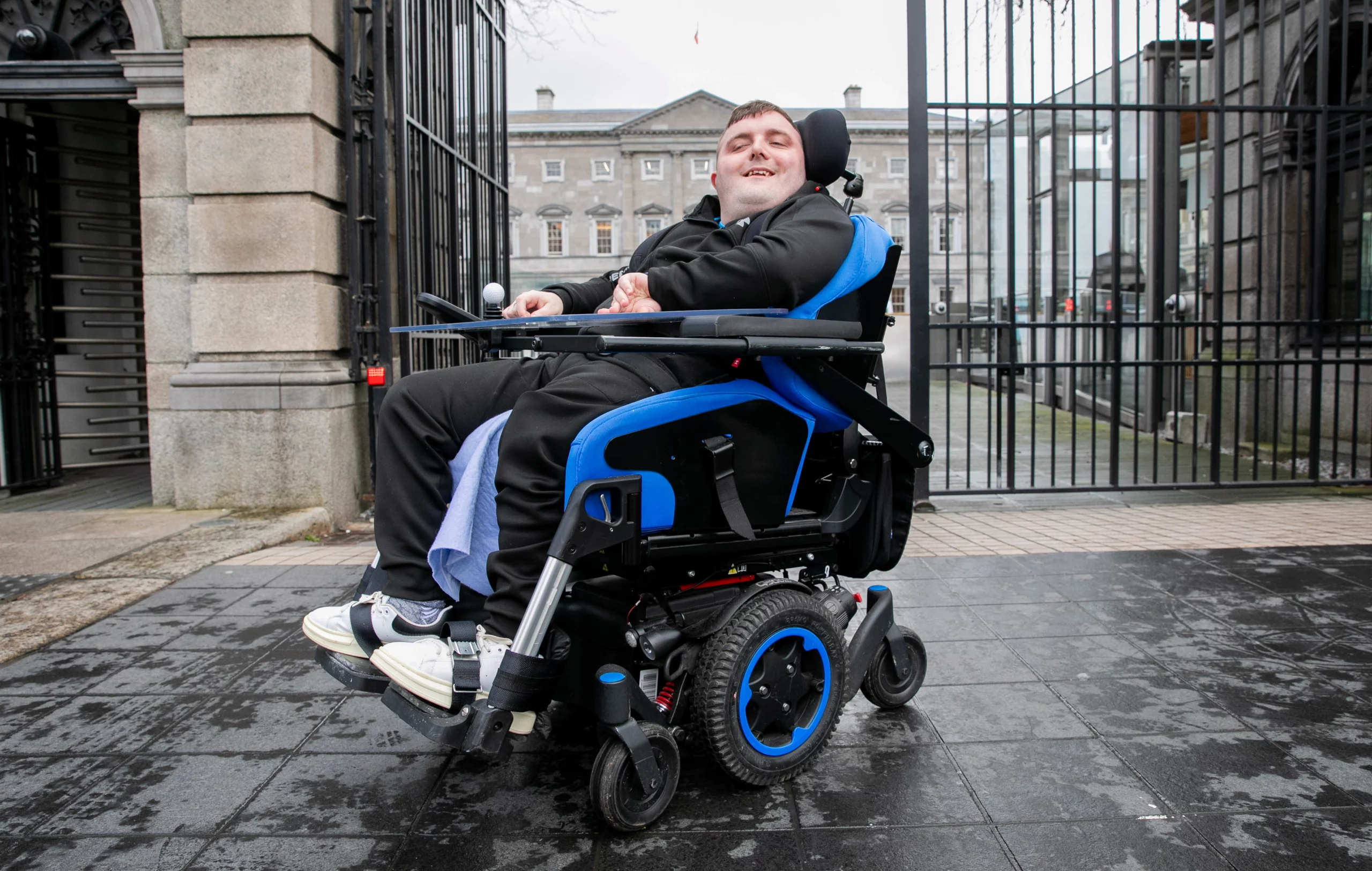
Picture of a man in a wheelchair outside Government buildings
IWA member Alan Fay who is pictured outside Leinster House knows how important it is to speak out about issues affecting people with disabilities

At a time when people with disabilities are having to choose between eating and heating, it is more important than ever that we come together. As one of our members, Jane, said, “I don’t want to be afraid of turning on my heat or afraid of using electricity when I need it because I need to charge my chair, charge my hoist. Everything in my home that allows me to live independently is electric.”

Thank you to everyone who supported this appeal! If you have yet to make a gift, there is still time to do so today. Christmas may be over, but you can still donate to the IWA Stronger Together Appeal to help build a more inclusive Ireland.

Page 8

Sport

Jack Quinn and Rebel Wheelers’ seven-year love affair with the National Cup
2026 began in style when the Basketball Ireland National Cup Final took place at the National Basketball Arena in Tallaght.

A mainstay in the IWA-Sport calendar, what’s almost equally as expected is how Rebel Wheelers Multi-Sport Club will be one of the teams in the final.

The Cork Club beat South East Swifts 62-47 to retain the National Cup for a phenomenal seventh year in a row. Rebel Wheelers have had a firm grip on the cup for the best part of a decade now and refuse to let go. Reflecting on the club’s seven-year success, captain Jack Quinn looks back on their dominance with Spoke Out and how special it has all been.

Starting when he was nine years old, Jack is now into his 15th year of playing Wheelchair Basketball.

As Rebel Wheelers is a multi-sport club, he had the opportunity to try a variety of different Para Sports, but it was only one sport for the Cork man that stood out.

“I would’ve tried loads of different sports when I was younger through Rebel Wheelers, but Wheelchair Basketball was always the one I enjoyed the most, so that’s why I stuck with it”.

After seven incredible years, the young team of Rebels shows no signs of slowing down. Training three times a week as a team and individually too, Quinn explains how the squad are beaming with pride.

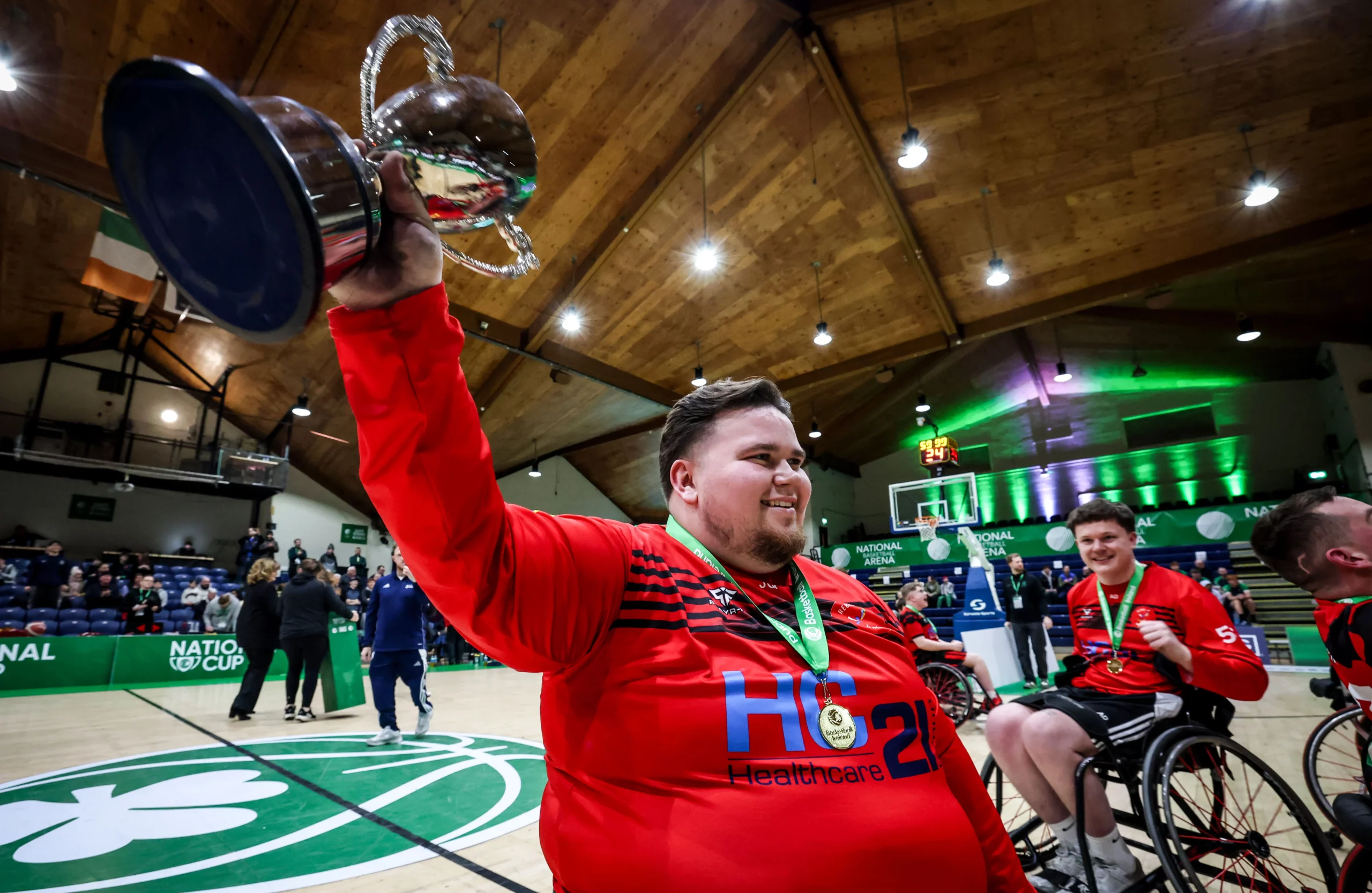
Picture of wheelchair basketball players in a gym, one of whom his holding a trophy aloft.
Jack Quinn celebrates another National Cup Final victory holding the trophy aloft.

"My job is easy as we have so many leaders within our squad."

“It’s incredible to be honest, we are so proud of our success, and we will do everything we can to continue this run. We put so much effort in training, and the club supports us so much. We are delighted to have the silverware and the recognition that the club deserves.

“Being captain of this group is a huge honour as well, but my job is easy as we have so many leaders within our squad.”

When asked to look back on the Rebels’ National Cup Final appearances and if he ever questioned if their dominance could be broken, Jack admits that there are always nerves, but their belief outweighs it all.

“Obviously, you’re aware of the talent that the opposition has going into a final, but you’re never going to be thinking that you’ll lose. There will be nerves, and you understand that there is a chance you’re going to lose, but you always have to believe you’re going to win.”

He gives credit to past opposition for not making it easy for his side during what could be considered a Rebel dynasty.

“We have faced some very strong teams over the years, in particular South East Swifts in the most recent final and Limerick Celtics in 2023.”

So many opportunities and experiences

Rebel Wheelers have been the ones to beat for a long time in the National Cup and the Irish Wheelchair Basketball League. So the team have sought out new challenges to keep them motivated, while still refusing to let another club etch their name on to the National Cup.

“The main competition that motivates us is the National Cup. It is everyone’s favourite competition, and the buzz around the semi-finals and the final in January is incredible to be a part of.

“We also entered the Euro Cup competition last season, which was a huge step forward for us and required us to bring our game up another level. This year, we are hosting the Euro Cup in April, so we are working hard to make sure we can perform to the highest level we can in front of our home crowd.”

Jack remembers an electric encounter with Limerick Celtics in the 2023 final, dubbing it as “one of the highest quality games of Wheelchair Basketball ever played in Ireland”. The contest ended 69-55 to Rebels, where the Rebel Wheelers captain also received the MVP award.

“The most special final for me was definitely the final vs Limerick Celtics in 2023. It was an incredible game to be a part of and I think it’s probably one of the highest quality games of wheelchair basketball ever played in Ireland. I was also absolutely delighted to have received the MVP award for that final, so it was one of my proudest moments yet.”

When the buzzer sounds to declare Rebel Wheelers as National Cup winners, a whirlpool of emotions overcomes Jack when he makes his way to collect the cup and hold it aloft with his teammates.

“There’s a load of different emotions, to be honest. Obviously, there’s the huge amount of happiness and pride for what you have achieved with your teammates, but as well as that, there’s a huge sigh of relief and weight lifted off your shoulders when you win, because for the whole week leading up to the match, it is genuinely all I can think about.

“Getting called up to collect the trophy with everyone clapping and celebrating is a great feeling, and there’s a huge amount of pride with it so I count myself very lucky that I get to do that for my club.”

15 years since his decorated journey into Wheelchair Basketball began, and far from being over, too. Jack tells others curious about the sport to simply “just try it out.”

“Just try it out, there’s nothing bad that can happen just from you giving it a go. If you enjoy it and stick with it, it can offer you so many incredible opportunities and experiences.”


Page 10

How IWA’s DAISY Project is educating young people on disability

IWA’s DAISY Project (Disability Awareness in Schools and Youth) is a pioneering programme through which children and young people can learn about disability from somebody with lived experience.

In January, IWA Schools Liaison and Projects Officer, Edel Carey, paid a visit to Castlepollard Community College in Westmeath, where she hosted a highly interactive session with 25 Transition Year students.

Over the course of two hours, Edel informed students about different types of disabilities – and about the barriers people with disabilities face in transport and accessibility in their everyday lives.

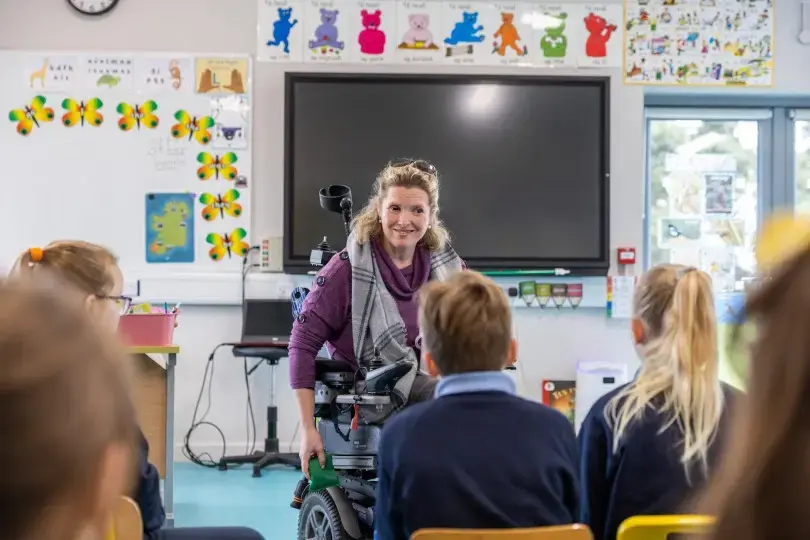
Edel also shared her own story with the group, explaining that she was born with reduced vision and developed multiple sclerosis in her twenties. She brought her service dog, Nala, and told students about all the incredible ways Nala assists her in her day-to-day life, from opening doors to picking things up off the floor.

Image shows a female in wheelchair addressing a classroom of teenage students
IWA Schools Liaison and Projects Officer Edel Carey delivering a DAISY session to students of Castlepollard Community College in Westmeath recently.

Elsewhere in the diverse session, Edel reminded students that not all disabilities are visible, and shared how technology has made it easier for people with disabilities to communicate,  learn, and to access education.

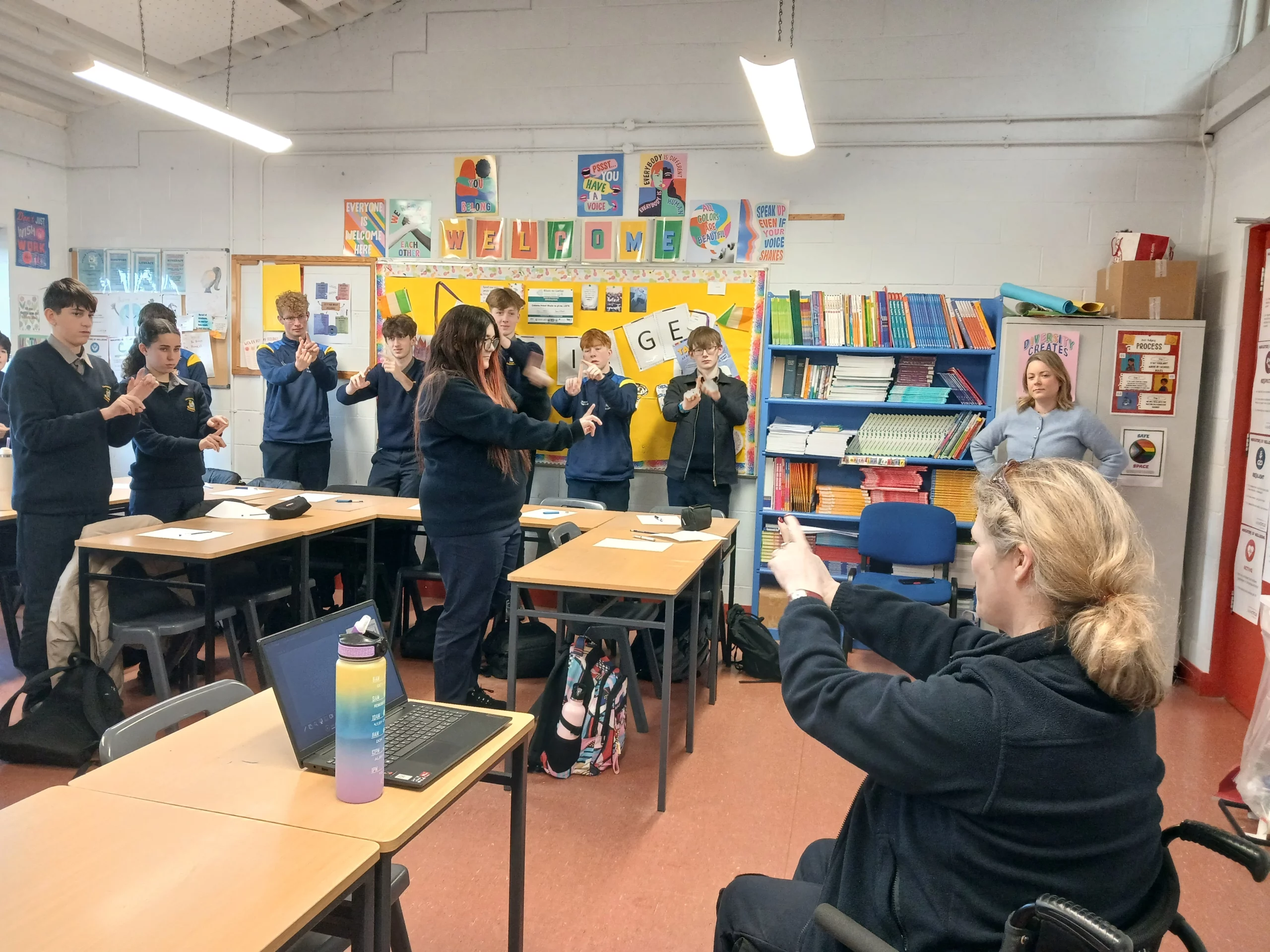
In one exercise, Edel encouraged students to take some time to think about places they wouldn’t be able to go if they were with a wheelchair user. Many were surprised to discover that places, including their own homes, are not wheelchair accessible. Students also took part in movement-based exercises with the idea of giving them some experience of what it might be like to have a physical disability.

Students give their reaction

Talking to Spoke Out after the training, TY students said they had a newfound understanding of disability.

“I feel like I might be more knowledgeable now of the issues with lack of accessibility for people, especially in rural areas,” said TY student Brandon.

Another student, called Sarah, said: “I feel pretty bad to realise that a lot of people don’t have enough resources to go from one place to another. I didn’t even realise people in wheelchairs needed to get a special car sometimes just to travel.”

Another student, also called Sarah, said: “I definitely will help my grandad a lot more because he’s done so much and he’s so lucky to be able to get these resources that he wouldn’t have been able to get 15 or 20 years ago.”

Zach said he would pay more attention to accessibility issues in school as a result of the training.

“Walking home or walking around school, I’ll be noticing things that’d be more difficult for someone in a wheelchair or on crutches.”

Another student, Jayden, added: “Personally, I’d probably be more mindful of people who may have disabilities, and the places that you might not be able to access if you have a disability.”

The importance of disability awareness

Edel Carey, who delivered the session, said the DAISY Project continues to be hugely important for young people across the country.

“Since taking up the role of Schools Liaison Officer three years ago, I have come to realise how important it is to advocate for the inclusion of Disability Awareness training in the primary and secondary curriculum, particularly for Transition Years as it is a great opportunity for our future leaders, legislators, builders, planners, carers and parents of the future to think about how disability may impact on their future studies, careers and lives.”

A female wheelchair user demonstrating to a class of teenage students, using hand gestures
Edel Carey pictured delivering the DAISY project to students of Castlepollard Community College in Westmeath.

Help your students thrive by booking DAISY disability awareness training for your school through IWA’s DAISY website

Page 7

Valentine’s Day: Celebrating those we love

Whether you love it or loathe it, Valentine’s Day is upon us – and it’s one of the biggest events in the month of February.

To mark Valentine’s Day, Spoke Out is shining a spotlight on love in all its forms. Valentine’s Day doesn’t have to just be about romantic love – it’s also an opportunity to celebrate the people who mean the most to us, whether that’s a friend, a family member, or a partner.

We spoke to two IWA members to hear about special people in their lives and what these relationships mean to them.

Nicola Dore

Nicola Dore had only been with her partner Ciaran five months when he popped the question – but she knew straight away what her answer was.

“When you know, you know, as they say,” Nicola tells Spoke Out. “We went for a romantic break away in Wexford. On the second day he had prosecco and chocolates sent up to the room and asked me to marry him. It was a beautiful moment, he was a little nervous, but I said yes!”

The couple met in August 2022 after Nicola watched an IWA video that Ciaran was featured in. There was “something interesting about him”, Nicola says, so she reached out.

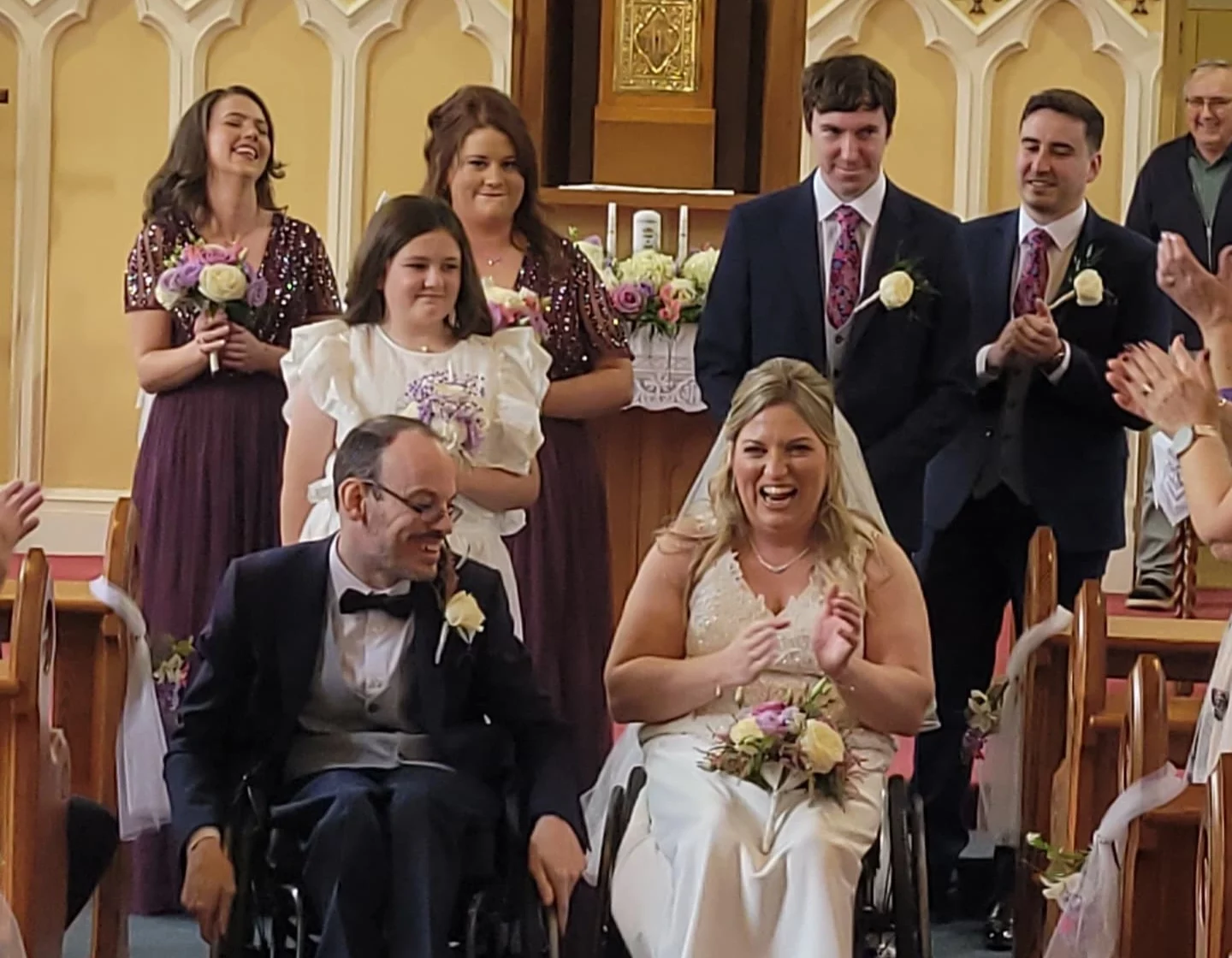
Picture of a bride and groom in wheelchairs, surrounded by their wedding party
Nicola Dore and her husband Ciaran on their wedding day with their bridal party.

Their relationship quickly blossomed, and just three years later, they were getting married in Nicola’s parish church in Kilcornan, Co Limerick.

“The whole day was amazing from start to finish. The sun shone for us that day, it was beautiful. We laughed all day.”

It was a beautiful day, and it underscored for Nicola just how important it is to cultivate relationships with loved ones.

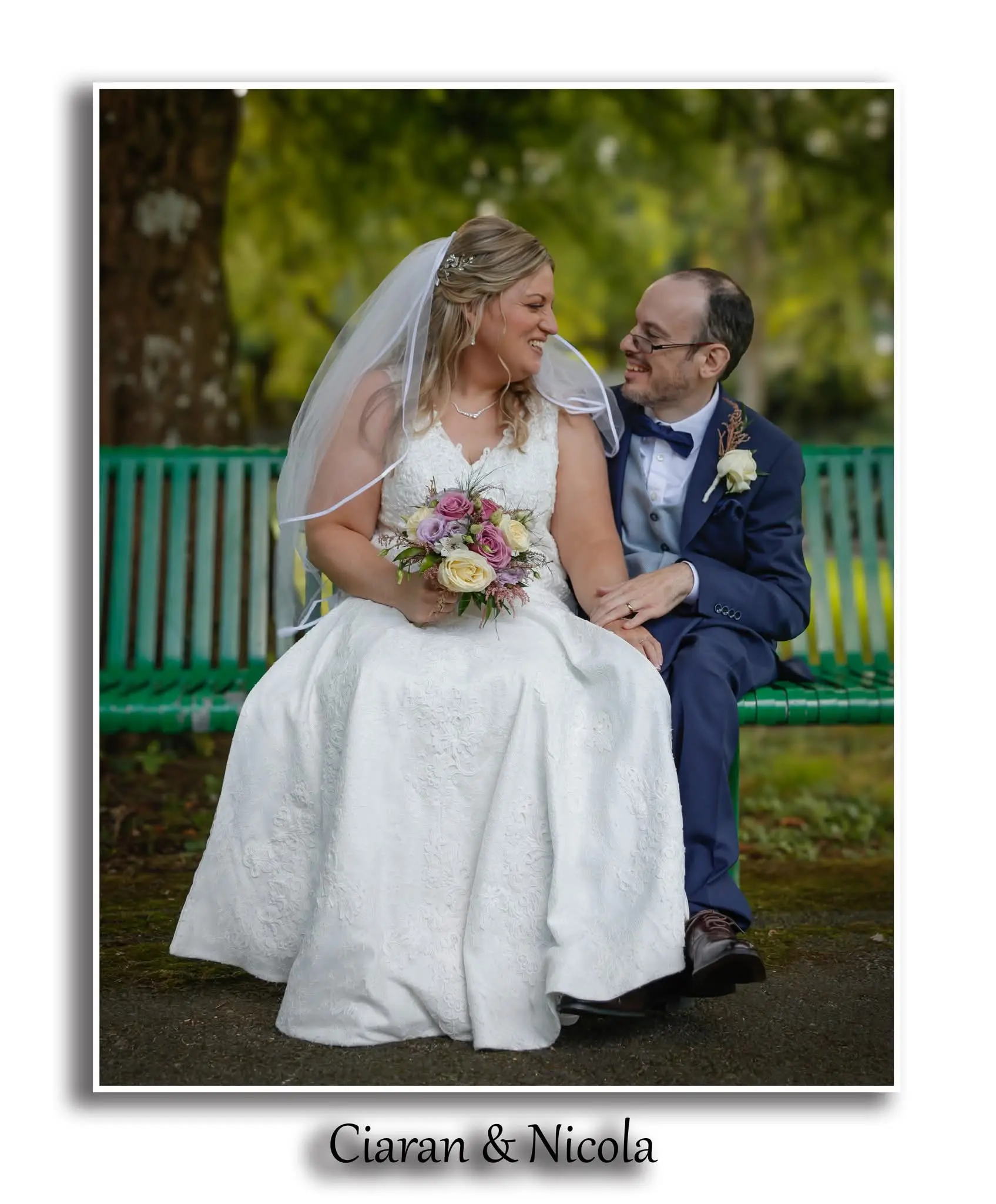
Picture of a bride and groom on their wedding day, They are both sitting on a bench.

“Relationships in general are so important because life is so short. We believe in telling each other we love one another every day because you never know what’s around the corner. Like all relationships we have our ups and downs, but it’s important to work through it together.”

She adds: “There is sometimes a stigma attached to disabilities and finding love. Society sometimes has a misconception that because we have a disability we are not capable of love, but myself and Ciaran have shown that it’s very possible if it’s something you want in life. It’s nice to have that connection like everyone else.”

Abbie Lynch

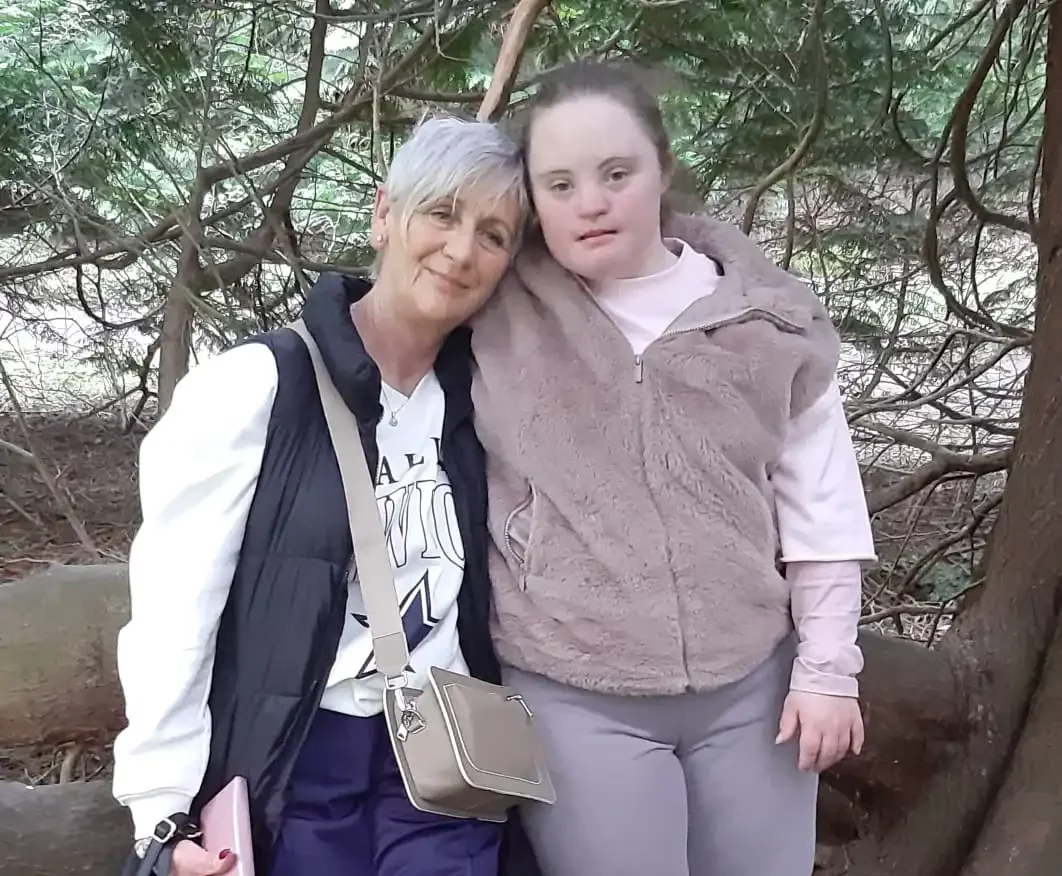
Abbie Lynch is an IWA member in Dundalk, Co Louth, and this Valentine’s Day, she wants to celebrate her mother Patricia, who she says is always there for her.

“She is my biggest supporter and my best friend,” Abbie tells Spoke Out. “We do movie nights and cook together, we also co-parent our dog Milly. I’m stricter on Milly than mam is!”

She adds: “My mam always makes time for me and never fails to make me laugh. She gives me the space I need to grow and be independent, but she is always there when I need her.”

A picture of two women, one older, and one younger who appear very close.
Abbie Lynch and her mam Patricia who is Abbie's biggest supporter.

Asked about her thoughts on Valentine’s Day, Abbie says she sees it as being “fun and a bit silly”.

“I enjoy receiving flowers, chocolates, and a stack of cards, and of course, the attention! Even if I don’t have a boyfriend, my mam always makes the day special for me. Love is love at the end of the day; it doesn’t matter if it’s romantic or not.”

Abbie has already made Valentine’s Day plans, and she’s excited for the big day.

“I’m going on a dinner date, and I know I’ll be getting a lovely present too – I like being spoiled on Valentine’s Day. I will enjoy dressing up and enjoy good food with great company. My mam always says I deserve to be treated like the queen I am!”

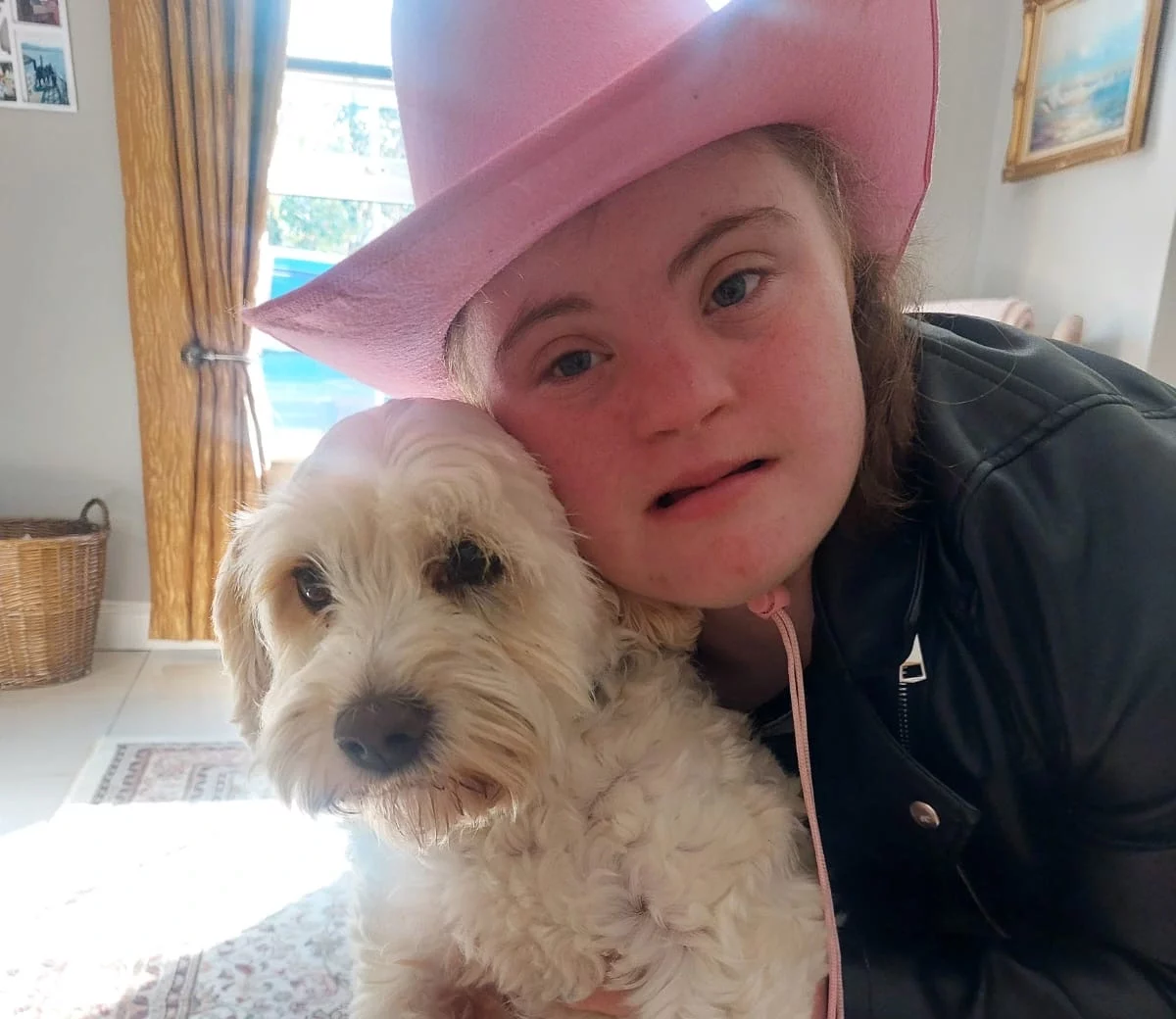
A young woman wearing a pink hat holding a small white dog.
Abbie with her beloved dog Millie, who she co-parents with her mam.
Page 3

Chadwicks supports IWA to get it done!

Charity partner helping to transform IWA facilities and centres nationwide.
Many of our members and staff around the country may have noticed some repairs and renovations to their local community centres over the past few years.

Many of these upgrades have been undertaken thanks to IWA’s generous charity partner Chadwicks Group, which has supported us for approximately five years; transforming facilities and centres from Letterkenny to Cork.

Over the past two years alone Chadwicks Group has contributed close to €100,000 to IWA with another €44,000 (approximately) already planned for early 2026. The majority of Chadwicks Group support is donated in building materials and supplies from the company’s 50 local branches across the country. These have been donated to specific renovation projects for our regional community centres, which has allowed us to carry out much needed repairs and renovations at a fraction of the cost.

Local Chadwicks branches in Mayo, Limerick, Donegal, Cork, Kilkenny, Dublin, Tipperary, Waterford, Galway, Kildare, Kerry, Roscommon, Sligo and beyond have worked tirelessly with our local IWA Community Centres over the past few years with some great results for members and staff alike.

For example, in Limerick, our Dunraven Centre has been totally transformed into two new office spaces, which has given staff more space to work and also offers space for members for digital learning, webinars and job hunting. In our Belmullet centre in Mayo the flooring in the hallways and main office was becoming a hazard so it has been replaced with a new laminate flooring. The centre is now not only safer, but it has been completely revitalised for members.

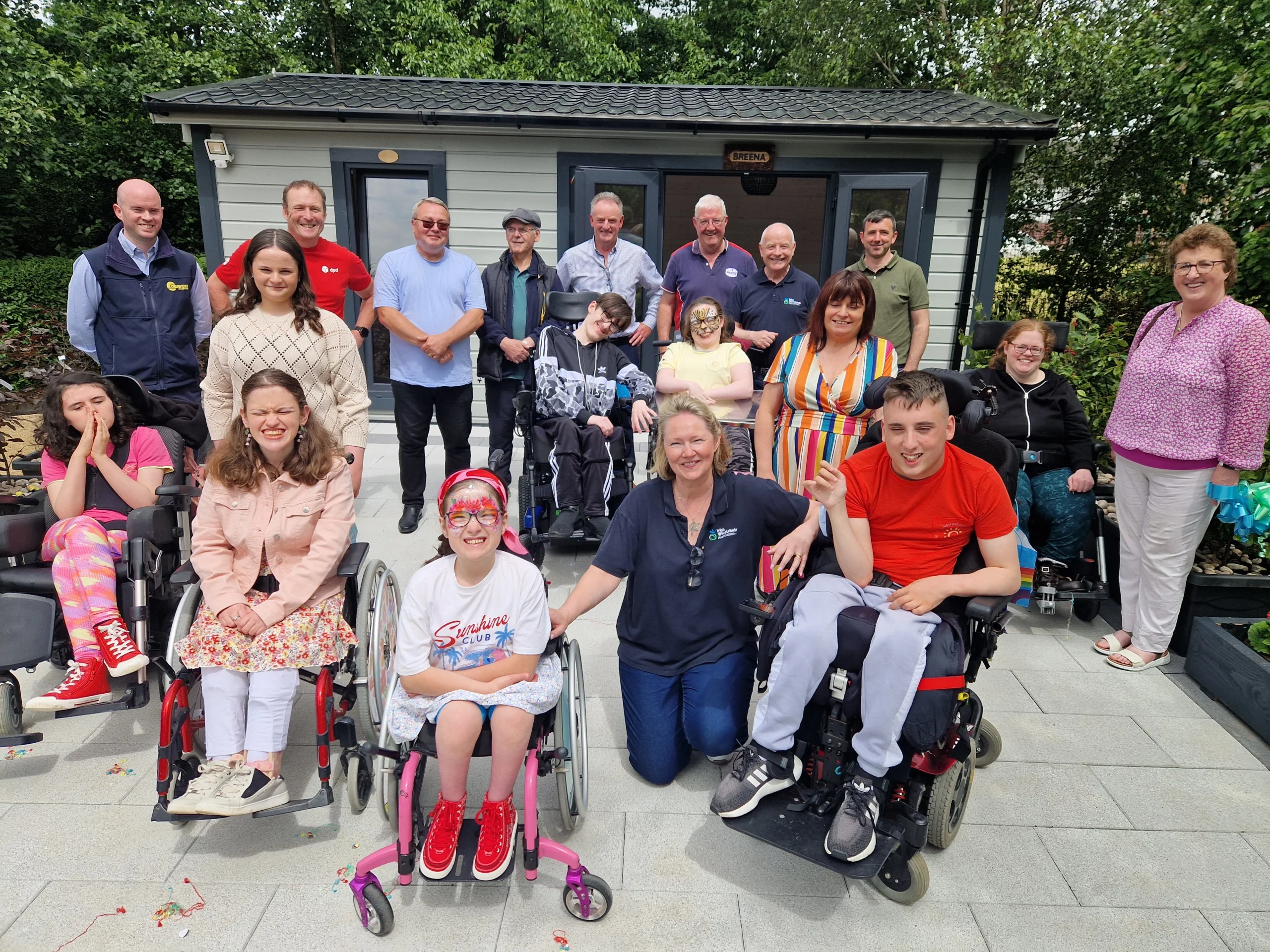
A large group of people in an outdoor space including a number of wheelchair users
Members, staff and supporters of IWA Athlone pictured at the opening of their new 'Seomra' garden room, which was generously supported by Chadwicks Ballinasloe.

In Letterkenny, despite being a hub for up to 100 members throughout the week, our centre only had one fully accessible bathroom. Now, thanks to Chadwicks a storage room has been converted into a new fully accessible bathroom for members. In Athlone, nearby Chadwicks Ballinasloe supported the Seomra Garden Project, providing materials for a new sensory room in the garden for members to access the outdoors all year round. Meanwhile, in Clontarf, Dublin, substantial flooring projects have been underway to upgrade old, worn flooring for the accessibility of our members.

Niamh Heaney, Marketing Manager with Chadwicks Group, has been part of this invaluable charity partnership since the beginning. “When we were looking at charity partners initially, we were trying to find a charity that met with our values… but we didn’t want to just donate money. We also wanted to get our branches on board. We wanted them to be included and give something back to their local communities. What’s great is that our Chadwicks branch network pretty much maps onto IWA’s network, so our branches could get involved locally,” said Niamh.

Always happy to help

Chadwick’s branches nationwide are very busy places, but according to Niamh, they are still always enthusiastic about supporting IWA projects. “Our branches are always really happy to be able to help. They’ve always made the time for it. They can see the difference that it’s making in the local community,” she added.

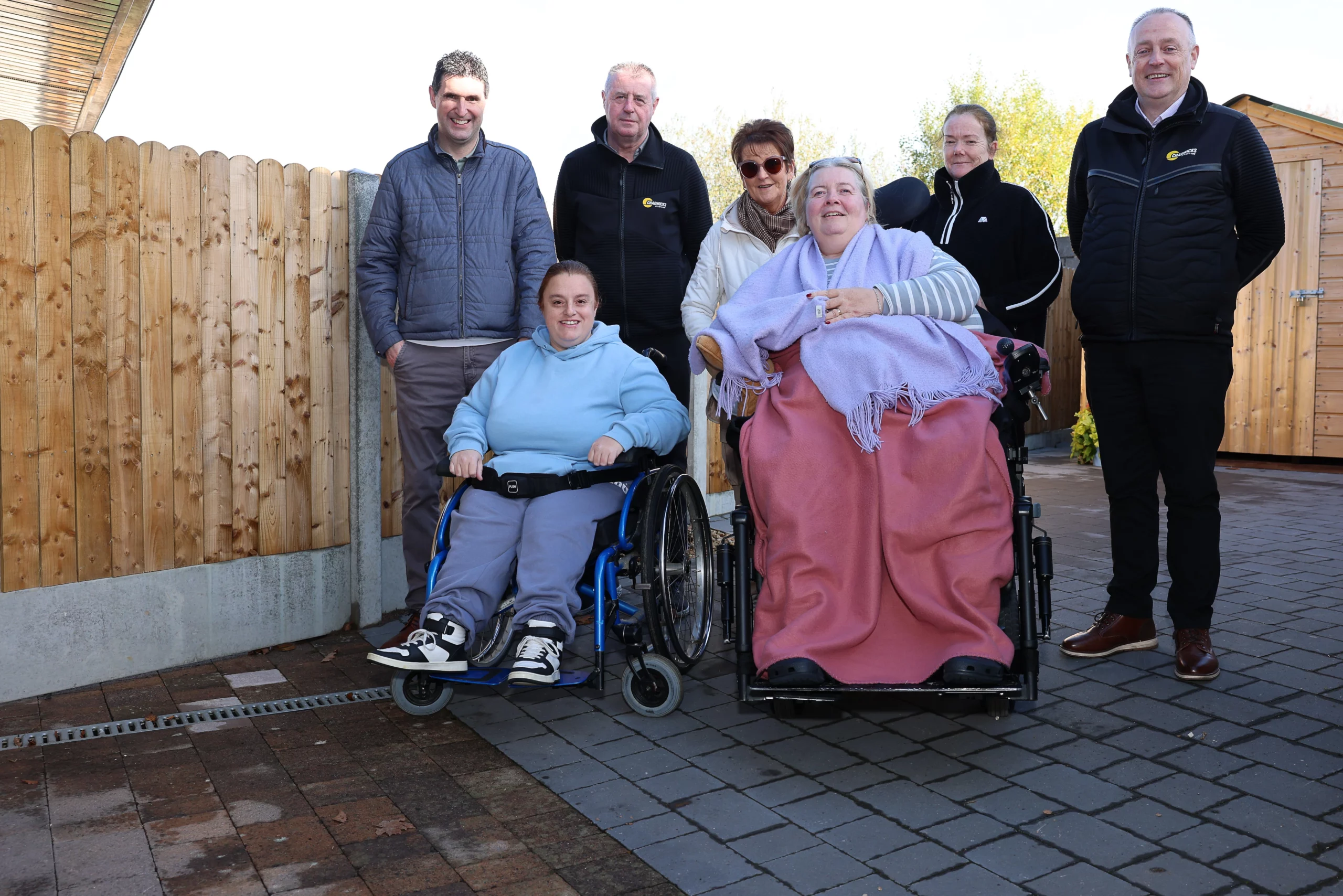
Sean O’Sullivan, Chadwicks’ Clonmel Branch Manager, has been supporting the IWA partnership since the beginning. The most recent project they completed was an outdoor renovation of gardens for independent living accommodation in Cashel. The job involved paving, painting, panels and various outdoor materials to transform the outside area for members living in the accommodation.

A group of people, including two wheelchair users, in an outdoor space in front of a fence.
Chadwicks Clonmel's Sean O'Sullivan and Seamus Delahunty joined the residents of IWA's independent living scheme in Cashel recently to celebrate the outdoor refurbishment of the communal garden area.

Sean is very enthusiastic about the IWA partnership and why it is such a priority for Chadwicks despite being so busy with day-to-day work. “We know that our customers pay our wages. So we understand about giving back to the local community. We make sure to always treat it professionally. We get the list all approved, we order it in, get it in, arrange delivery, and get it delivered. So we’ve to organise all that as well. But it’s great.”

Sean brought some of his team to Cashel before Christmas to meet residents and see the finished project at the official launch, and understand how much the support means to people. “It was lovely. And then we got to meet the people that are living in the houses as well,” he said, pointing out that the feedback is really important and welcomed by his team.

The teams love to see the impact of their work

Patrick Atkinson is the CEO of Chadwicks Group and remains personally committed to the charity partnership with IWA. “There are hundreds and hundreds of really good charities and really good causes out there. But we wanted to do something practical that aligned with the type of business that we had and in the communities that we operate in. The people who work in our branches are local people who are dealing with their neighbours, their relatives, the people in their local GAA club. At Chadwicks we have really clear messages… that within the communities in which we operate, we will leave them in at least a better place than they were when we first entered. So that we continually want to commit to improving the communities in which we live in a positive way.”

Patrick says his teams love to see the impact of their work and are looking forward to future projects together. “You know, I think the fact that we’ve continued on the partnership for the five years is probably a indication that we’re happy with the partnership… but let’s see how we can do more and do better,” he said.

According to Niamh Heaney, the success of the partnership can be attributed to the strong planning and commitment demonstrated across IWA centres and teams. “It has become much more structured over the last couple of years,” Niamh explained. “Previously, we would receive a list of proposed projects and select the ones we felt we could take on. Now, the process is far more streamlined. We receive a shortlist of fully developed projects, cost the required materials, and then move forward for donation approval.”

She added that local collaboration plays a key role in ensuring each project progresses smoothly. “We work closely with our branches to complete the costing, and once approvals are in place, the branch coordinates directly with the local IWA centre to organise deliveries. In some cases, we’re also able to involve colleagues as volunteers to support the labour side of the project,” she said.

A group of four individuals outside a building. A male wheelchair user, wearing a green jumper, is in conversation with a man who is wearing a suit. The other two people are walking behind having a conversation
Chadwicks Group CEO Patrick Atkinson and Niamh Heaney, Marketing Manager pictured visiting IWA Clontarf with IWA's John Fulham and Ash Puri to learn more about our members and our work.

IWA centres across Ireland are feeling the benefits

Ash Puri, IWA’s Fundraising and Partnerships Manager says the Chadwicks Group partnership has really developed over the last number of years and IWA centres across Ireland are really feeling the benefits. “In recent years we are thrilled we’ve been able to get centres involved from Letterkenny to Clonakilty, the support isn’t just in Dublin alone. This is mostly thanks to the work we have done here in IWA getting an efficient process in place so it is as easy as possible for centres to get the support they need. Chadwicks across Ireland have been ready and waiting to support us and it’s great to see centres managing projects and getting such value and support for their effort.”

Ann Marie O’Grady, CEO of IWA, said:  “We all know that charity partnerships are only as strong as the enthusiasm of the people who are managing them. We are so lucky that the teams in Chadwicks Group are so personally committed to this relationship. There is no way that our members and staff would have benefited from all the recent renovations without the dedication of Chadwicks Group staff.”

Page 6

Entering the workplace: ‘I can do anything I put my mind to’

Having a job comes with a whole host of benefits, from financial independence to personal fulfilment – and for IWA members Conor Murphy and Gary Byrne, being able to work has transformed their lives.

Conor, 25, works two days a week in the IWA gym in Clontarf, and he works an additional three days a week for an organisation called ExWell Medical, which offers a community-based chronic illness exercise rehabilitation programme. He loves both of his jobs, and he feels huge pride about what he does – but getting there wasn’t always easy.

Growing up, Conor felt like he had to prove to people that he was “capable of doing stuff” because of his disability. After finishing school, he started a programme with IWA which allowed him to come up with some personal goals and work towards achieving them.

“I was like, I need a job, I need to look for experience, I want to get out and improve myself. Leslie Timmins and Sarah Gregson (from IWA) helped me very much in the way of setting me up in the fact that I was able to find a job. They were on hand, encouraging me towards where I wanted to go.”

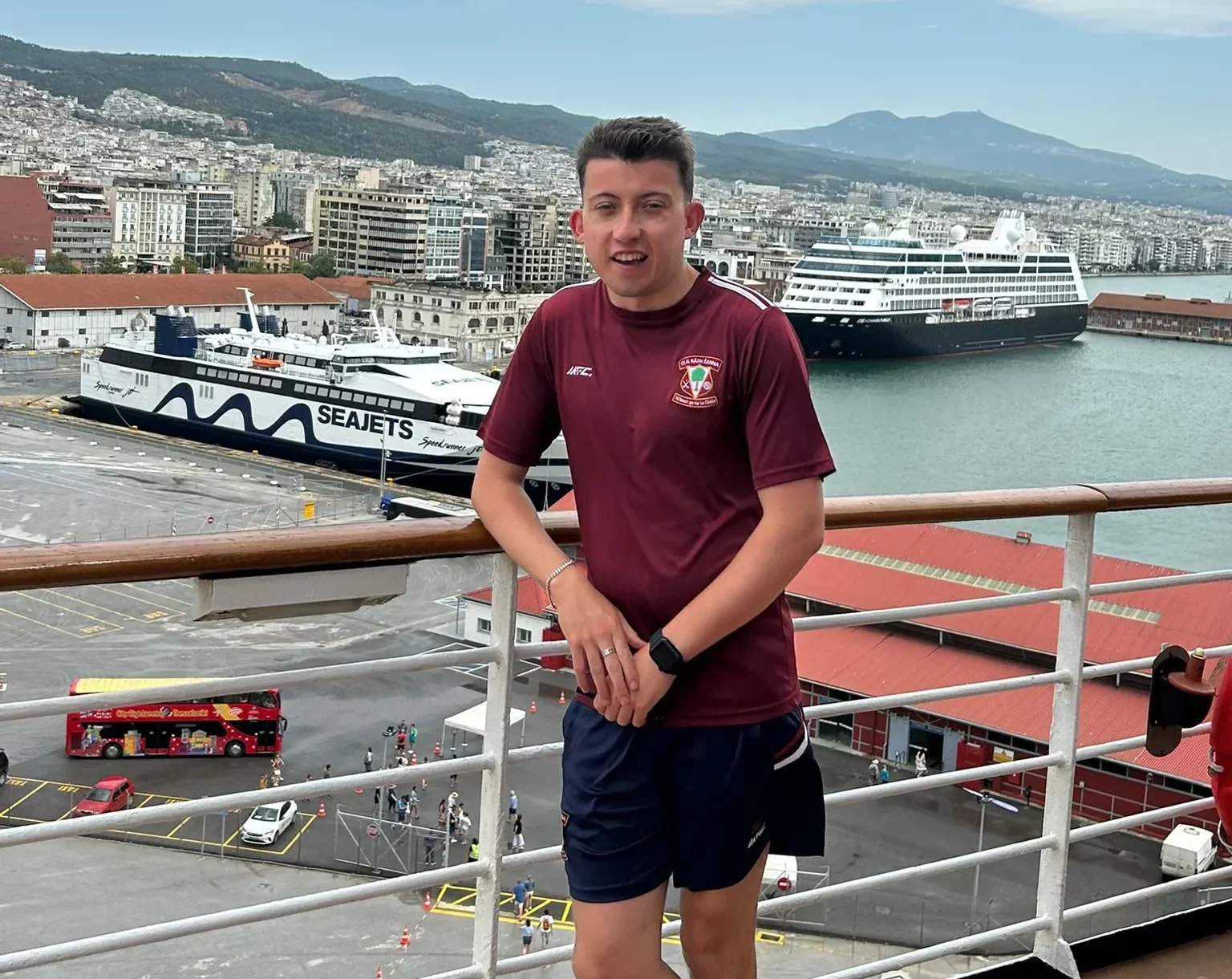
Picture of a male in t shirt and shorts with what appears to be a harbour in the background
Growing up, Conor Murphy felt like he had to prove to people that he was “capable of doing stuff” because of his disability.

Couldn't be happier

Leslie and Sarah supported Conor as he figured out what he wanted to do – and he couldn’t be happier with how things have panned out.

“I like helping other people reach their potential, and I like guiding people in the right way,” he explains. “It’s always nice to push other people, and them being able to push you, so I like being able to help people with chronic illnesses because I can show them that I’ve been through what they might be going through.”

He adds, “All credit to Leslie Timons and Sarah Gregson for helping push me towards what I am now because I don’t think I would be in the position I am now if it wasn’t for them.”

Gary Byrne

Gary Byrne, also from Dublin, spent six years with IWA, where he worked on developing his skills and building his confidence. Today, he works for a packing company.

“It’s a good job,” Gary says. “I’ve gained a lot of experience from doing different things there and I’ve got a good relationship with the people who work there. It’s made me more confident in myself to go to work and has made me feel like I’m moving on more.”

He adds: “I found that when I started, I was very nervous, but as time went on I gained the confidence to talk to people and meet new people and become closer to them. It’s kind of like having a work family.”

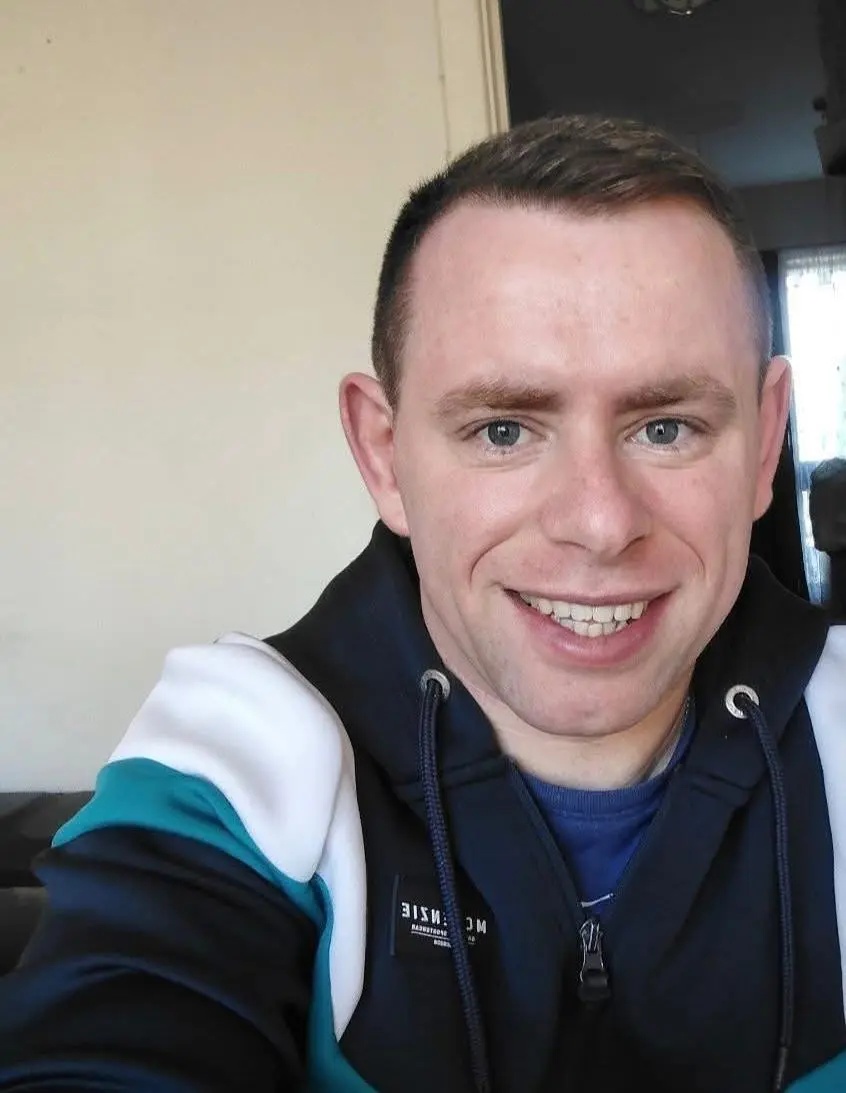
Head and shoulders pic of a male who is smiling with dark hair.
Having a job has given Gary Byrne a huge confidence boost.

Having a job has given Gary a huge confidence boost. “It’s kind of opened my eyes to see that I can do anything I put my mind to. It gives you that feeling that you know you can move on in life.”

Looking back on his journey over the past few years, Gary is glad he took the chance and became an IWA member when he did.

“I can’t believe how far I’ve come since I started IWA. When I started six years ago, it gave me so much belief that I can do a lot of things that I never thought I would have been able to do… It has made me realise that sometimes you need that little encouragement in life that makes you realise that you’re able to move on, and I’m happy with where I am today.”

For more information on vocational training and support, explore the IWA Ability Programme for jobseekers, designed to help you gain the skills needed for the modern workplace.

Page 5

Small Changes Can Protect the Environment and Save you Money

Sustainability is in all our interest
With what seems like an increased frequency in storm and weather incidents, it feels like now more than ever we need to take care of our environment.

At IWA, we’ve embarked on a climate journey and members and staff across the country are also doing their bit to help.

Sustainability is in all our interest. Our centres are putting a huge effort into reducing food waste, printing only when necessary, eliminating single-use items, cutting down on unnecessary electricity use, and properly sorting waste to ensure as much of our rubbish is recycled or composted as possible.

Focus on recycling

One centre that’s leading the charge on this work is the Drogheda IWA centre. Sara McKeown, Service Coordinator in Louth, tells Spoke Out that members and staff in the centre have been putting sustainability front and centre, with a focus on recycling.

“We get so much from the earth, we should give a little back and protect our environment,” Sara says. “Don’t have big giant landfills or beaches in beautiful exotic places that are destroyed with plastic. The message is, you’ve used something, now make sure to either reuse it or recycle it if possible.”

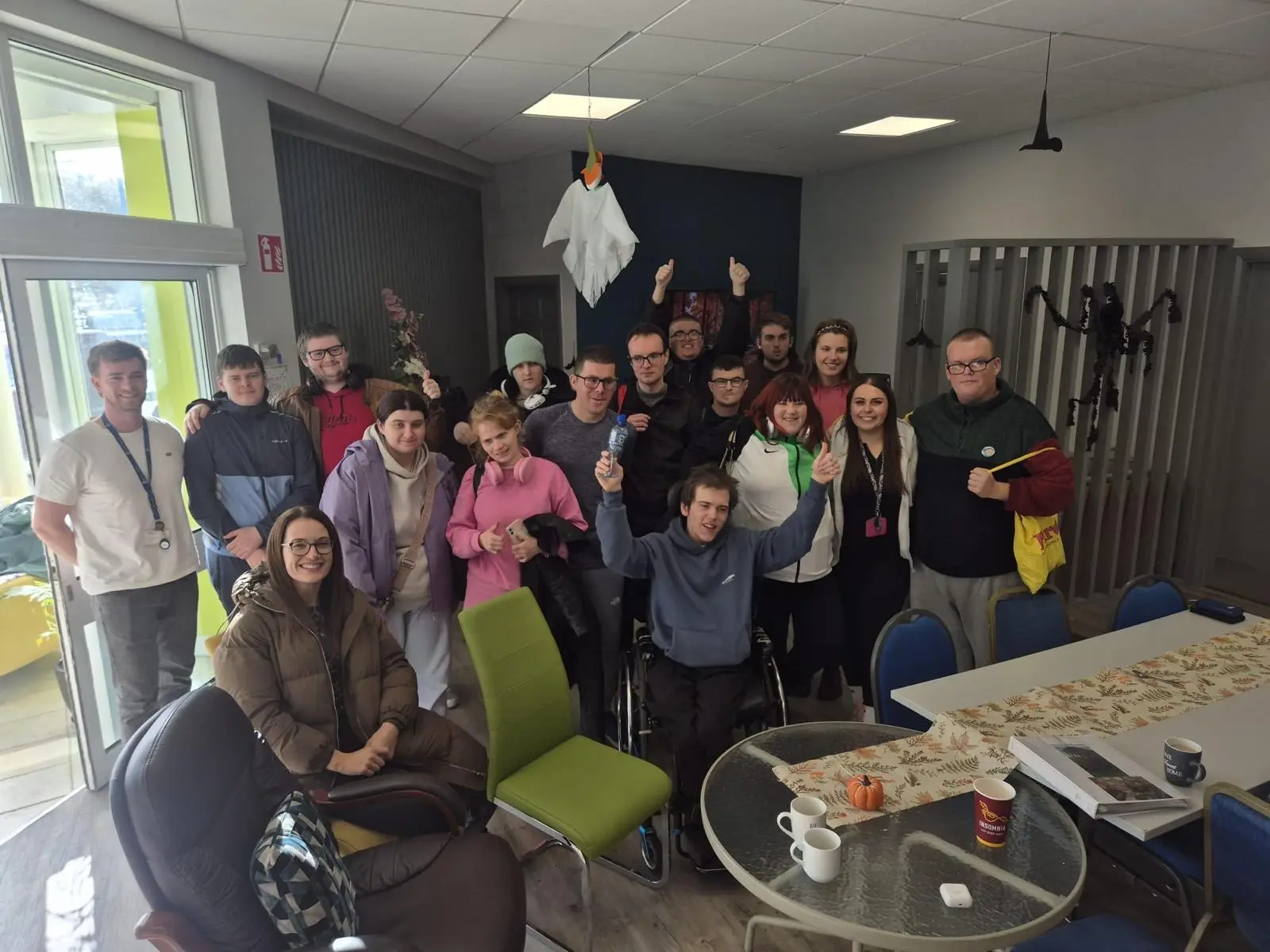
A large group of young people gathered in a room.
Drogheda IWA members and staff have been putting sustainability front and centre.

The good news is that there are ways we can protect the environment while also saving money. Read on to find out how you can cut your bills while doing something for the planet.

Cooking up a storm

The kitchen is the heart of the home, but it can also be costly to run – your kitchen accounts for around 20 per cent of your energy bill. Small changes like using the air fryer instead of the oven or steaming veg in the microwave instead of on the cooker could save you a lot of money over the course of a year.

Light bulbs aren’t all the same

In the dark winter months, you can have house lights on for up to 10 hours per day – and if you’re not using LED bulbs, you could be paying a fortune for no reason. Simply swapping out old-fashioned lightbulbs for LEDs could save you at least €2.60 per week, and USB powered lamps could save you even more.

Ditch the dryer

We all know by now how expensive the tumble dryer is, and the cost can really rack up in the wet winter months. If you can, consider using a clothes horse instead, or if you have a garden and a dry day, try hanging your clothes on the line. You can also save on your washing by setting the temperature to 30 degrees and fully filling your drum. Use the eco setting on your washing machine for even bigger savings.

Fill the dishwasher

The dishwasher can be expensive to run, especially if you’re turning it on when it’s not full. By loading it to the max, you could cut down from six to three cycles per week, using less power in the process.

Scale back shower time

Reducing your time in the shower by just five minutes could save you up to €1.70 per week, and by dialling down the temperature you could save even more. Simply using a hair dryer for 10 minutes daily could cost around 80 cent per week so towel dry your hair for longer and trim your blow-dry to five minutes to halve costs. Together, a shorter morning routine could save you almost €10 per month and give you 10 minutes extra in bed each day!

Other ways to cut costs

It’s not all about cutting your electricity use – you can also reduce your bills by switching suppliers. Shop around for the best possible deal and you could save hundreds of euro each year. The same is true for your broadband and mobile provider – you can get good deals if you switch regularly.

Page 9

Thanks for your company

If you like what you're reading, please spread the word!

Share Spokeout February 2026


Share this article on Facebook Share this article on Instagram Share this article on LinkedIn Share this article on X

Remember:
Your voice, your choice! We're all ears for your feedback, thoughts, and suggestions.
Share what topics intrigue you the most and what you'd love to see in future magazine features.

Share your feedback here

Spokeout Cover Image Logo
SpokeOut is Irish Wheelchair Association's lifestyle magazine published every month for our members.
© Irish Wheelchair Association 2025.